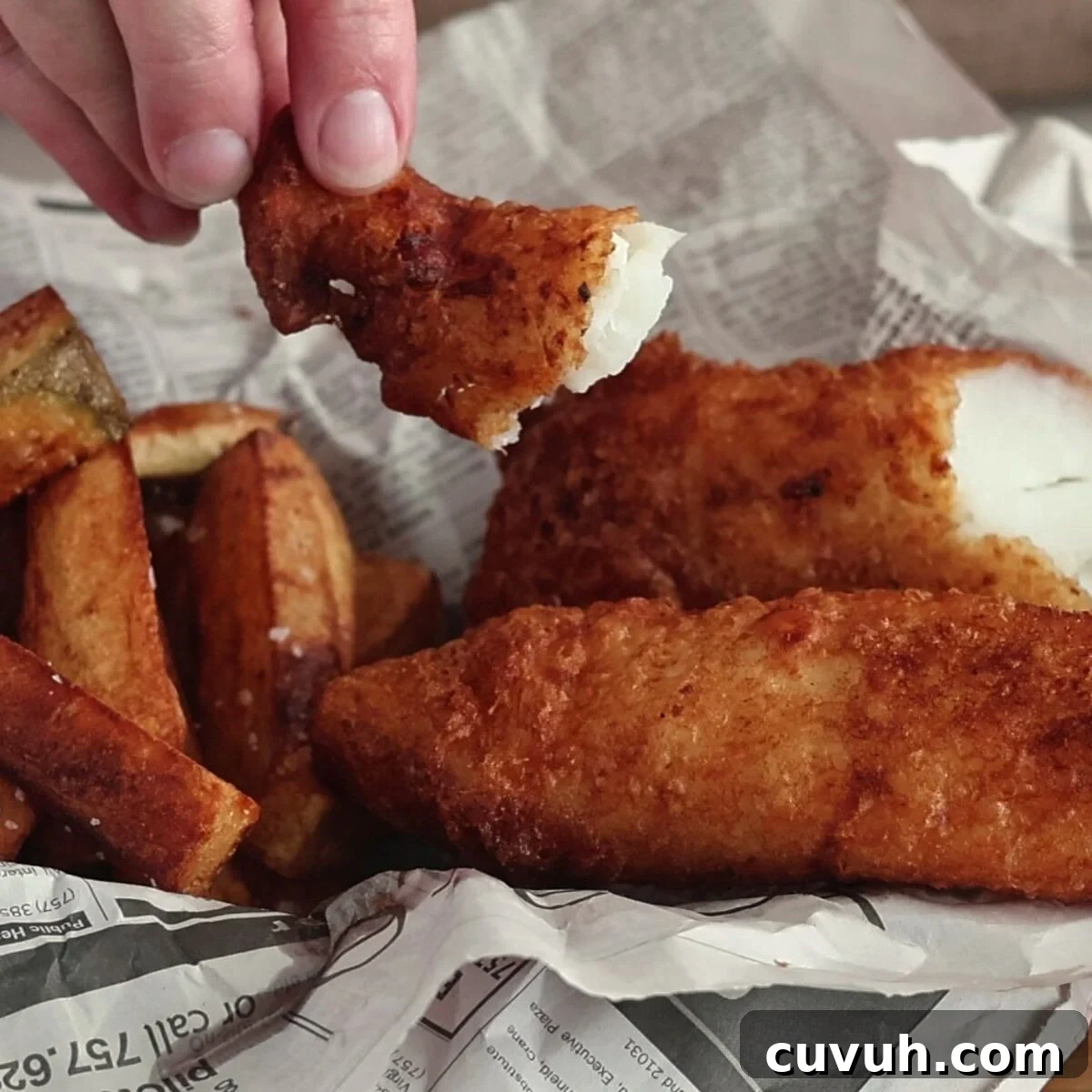
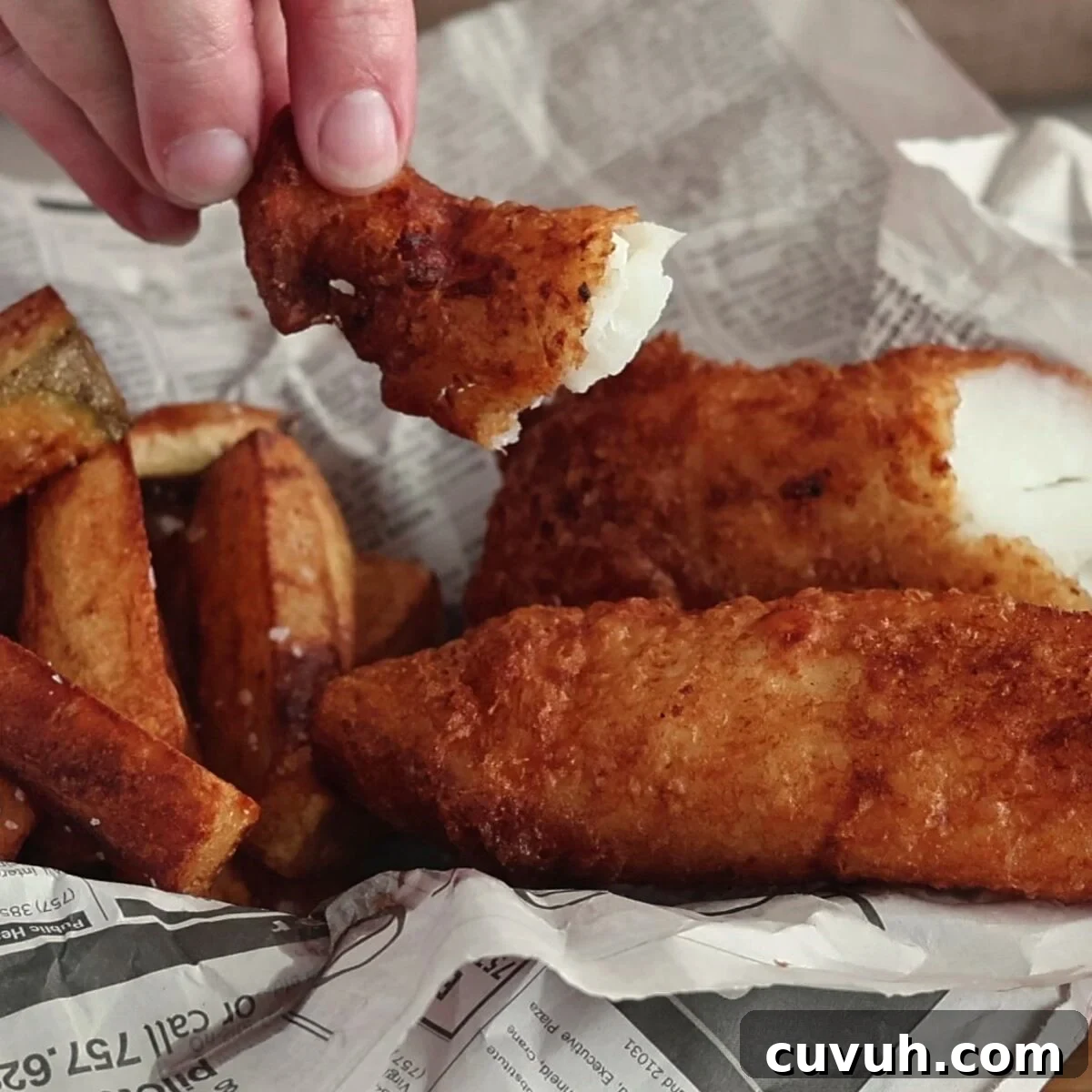
This gluten free fish and chips recipe delivers the ideal combination of crisp, golden beer-battered fish and crunchy, salty chips — a true take on the British classic adapted for a gluten-free diet.
Some items mentioned may be available through affiliate partners; purchases made through those references may earn a small commission at no extra cost to you.
If you’ve been avoiding deep-fried, battered fish because of gluten, you don’t have to anymore. This recipe produces a light, airy, and ultra-crispy batter that stays crunchy long enough to serve, with fries that are salty, fluffy inside, and perfectly crisp outside. Once you try it, you’ll see how straightforward it is to make restaurant-quality gluten free fish and chips at home.
Below I walk through ingredients, techniques for frying fish and chips, helpful deep-frying tips, frequently asked questions, and detailed step-by-step instructions so you can replicate this at home with confidence.
ingredients for fish and chips
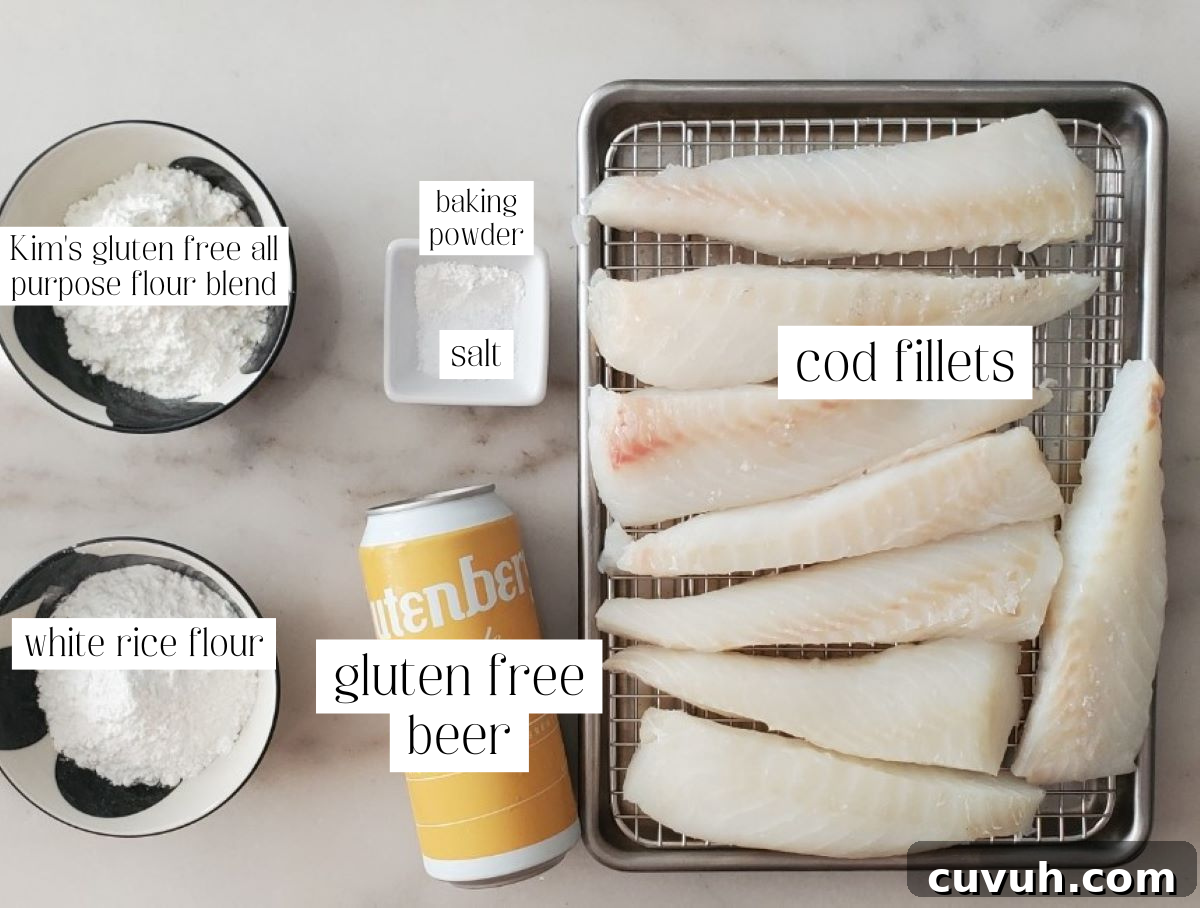
- Gluten free all-purpose flour blend — a reliable store-bought blend will work, though the recipe was developed using the author’s blend.
- Gluten free beer or seltzer — gluten free beer adds flavor and carbonation; if unavailable, seltzer or club soda can be substituted for lift in the batter.
- Firm white fish fillets — cod is traditional and recommended, but haddock, pollock, or halibut are good alternatives.
- White rice flour — used in combination with the flour blend to create a very crisp coating that holds up well after frying.
frying battered fish
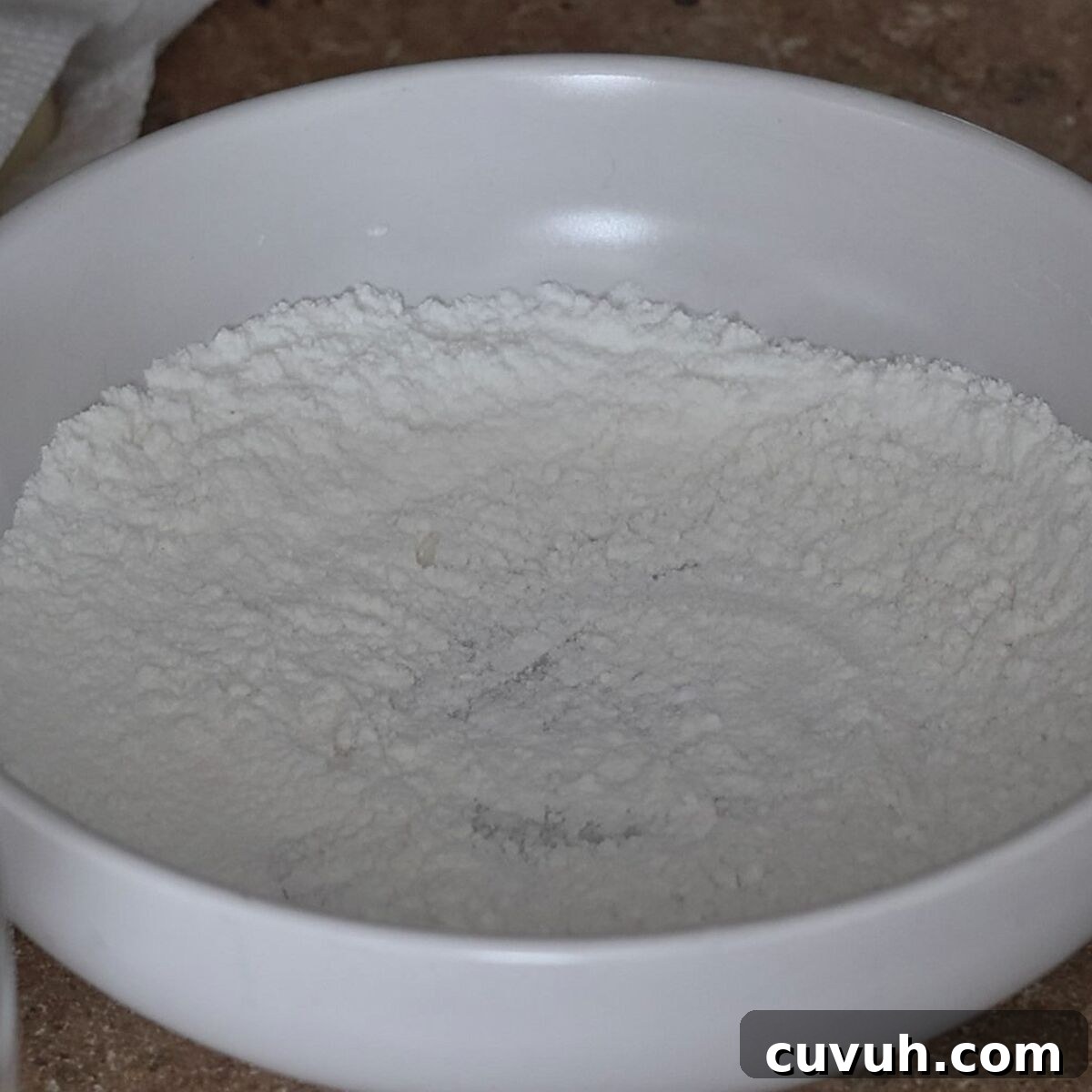
Combine equal parts gluten free all-purpose flour and white rice flour in a shallow bowl; mix until evenly blended. This dry mixture is used to dredge the fish before dipping in batter.
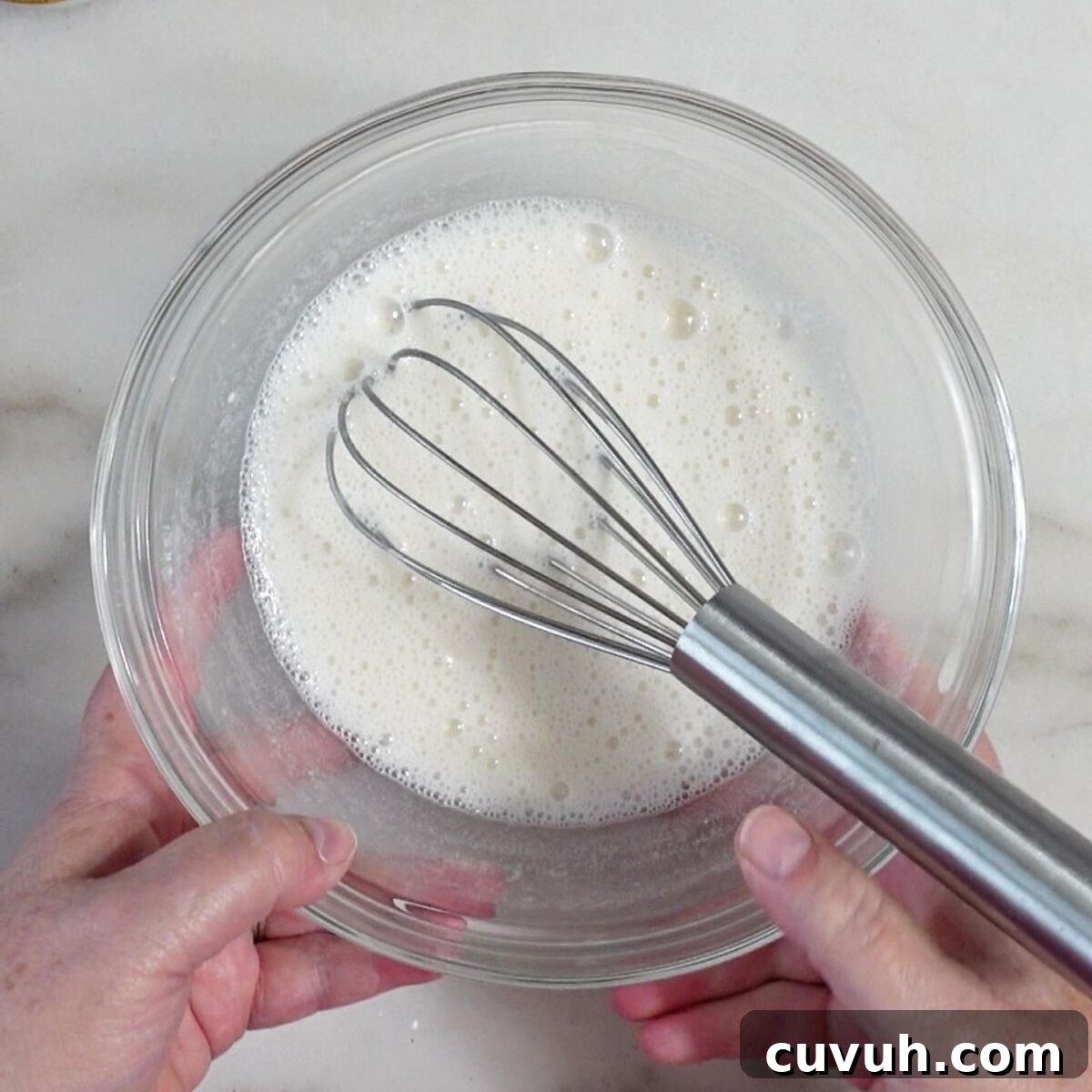
In a separate bowl, whisk together the flour blend, rice flour, salt and baking powder, then slowly whisk in chilled gluten free beer (or seltzer) until you have a very thin, pancake-like batter. Chill the batter briefly in the refrigerator.
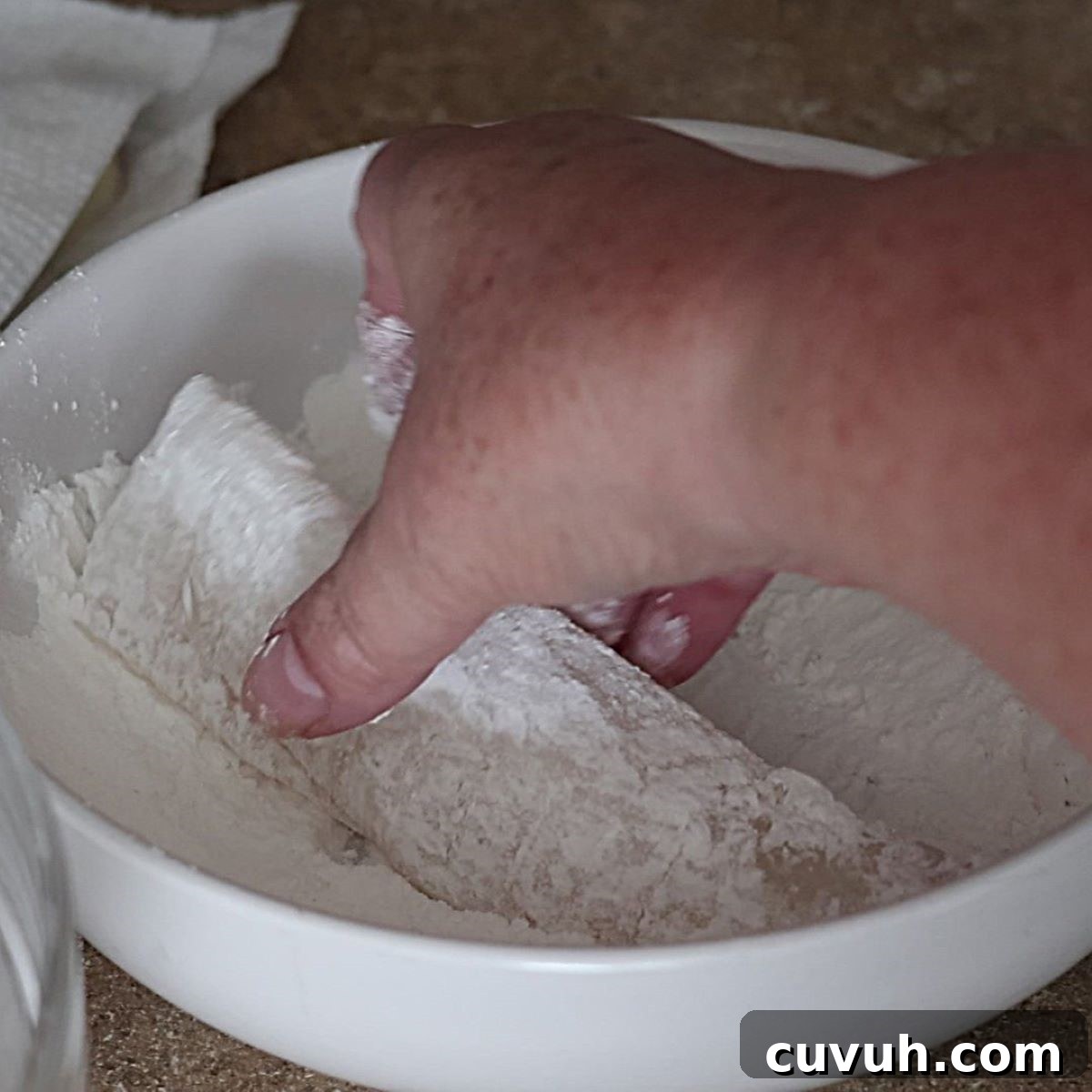
Dredge each fish fillet in the dry flour mixture, shaking off excess so the batter adheres evenly.
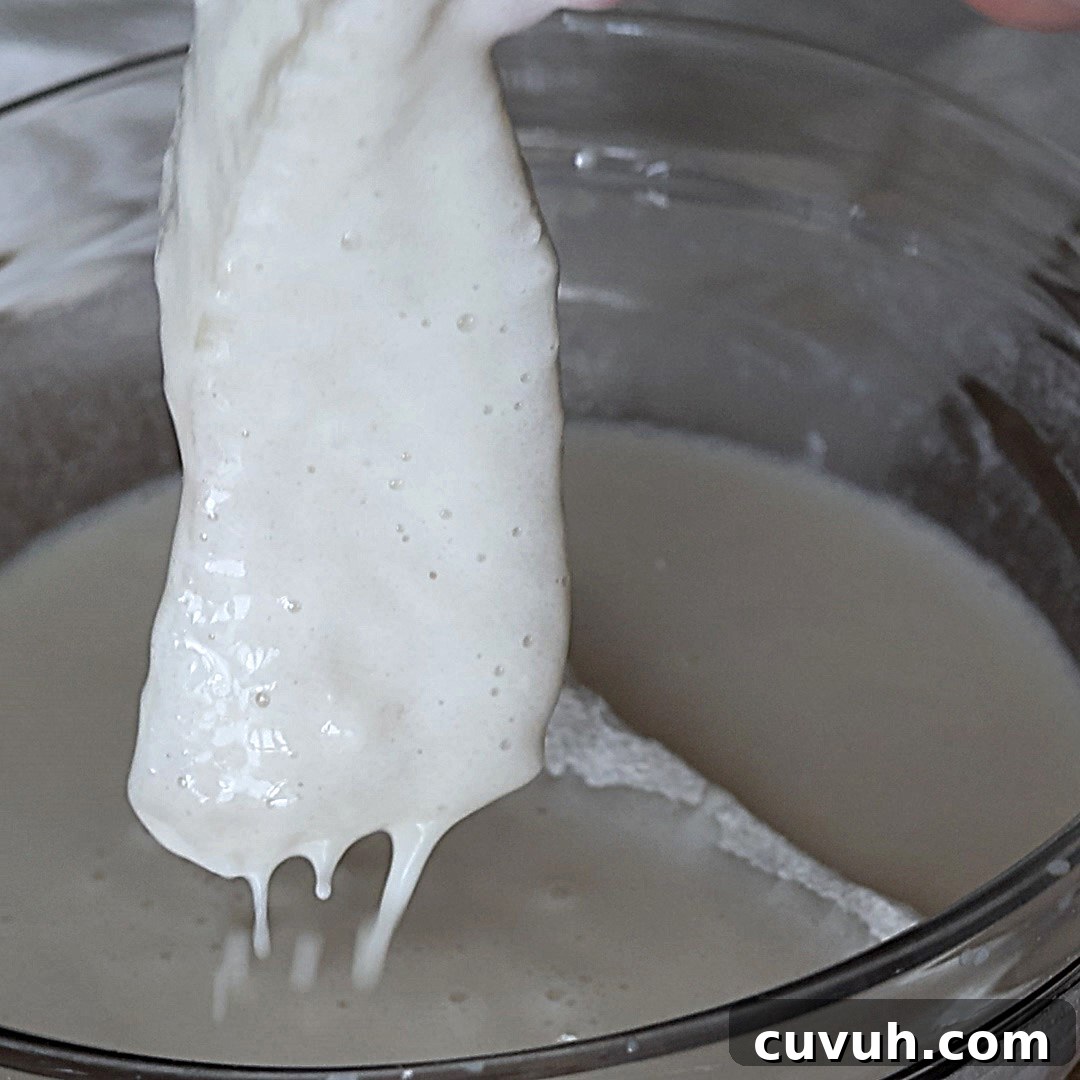
Dip the dredged fillets into the thin beer batter, allowing excess to drip off. The thin batter creates an airy, crisp crust when fried.
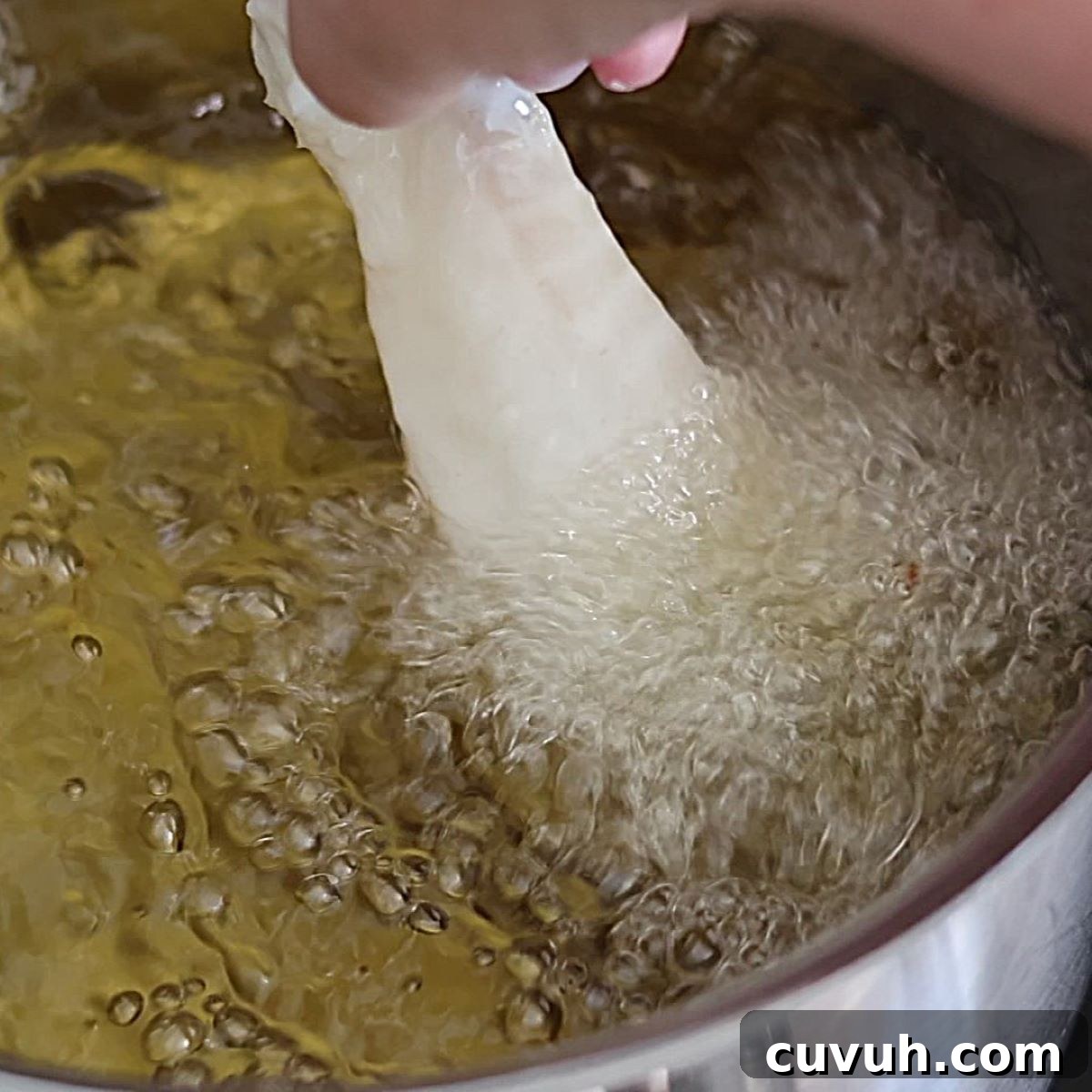
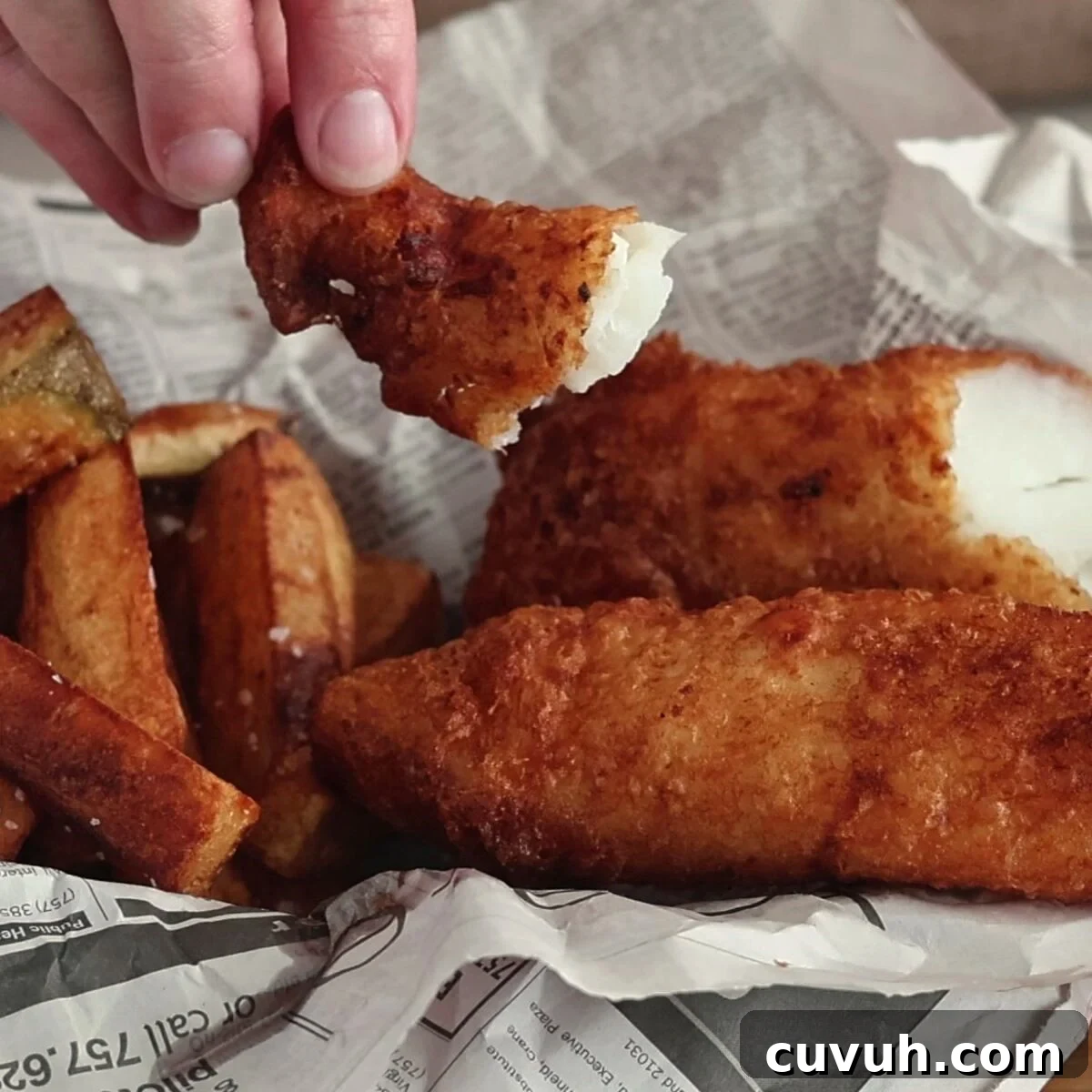
Carefully lower battered fillets into preheated oil, two at a time, dropping them away from you to avoid splatter. Fry for about 4 minutes, or until the batter is deeply golden and the fish flakes easily.
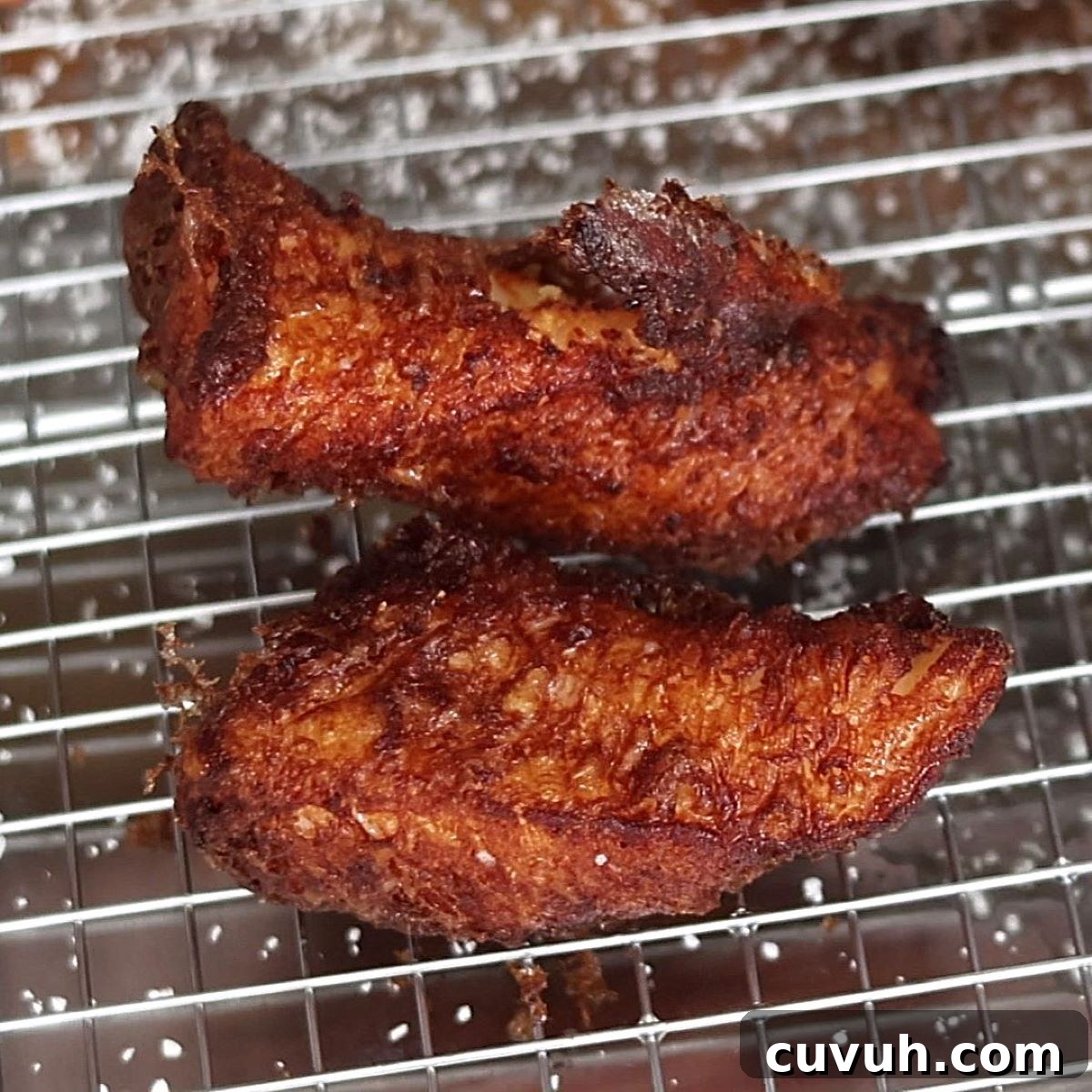
Remove the fish to a wire rack set over a baking sheet to drain. Immediately season lightly with salt while still hot so it adheres to the batter.
making “chips” aka french fries
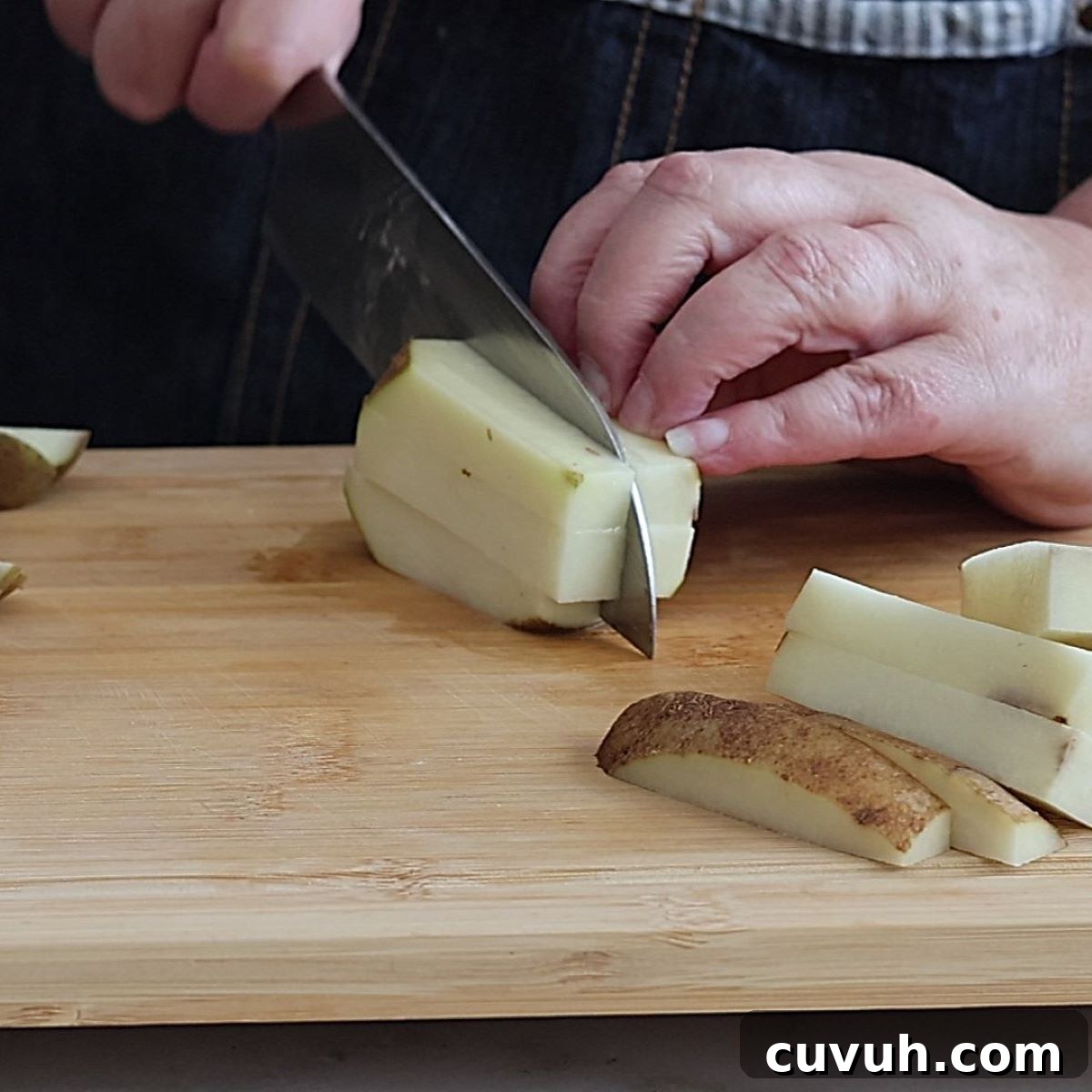
Cut russet potatoes into thick ½–¾ inch sticks for true “chips.” Trim the rounded sides and ends before cutting for uniform pieces that cook evenly.
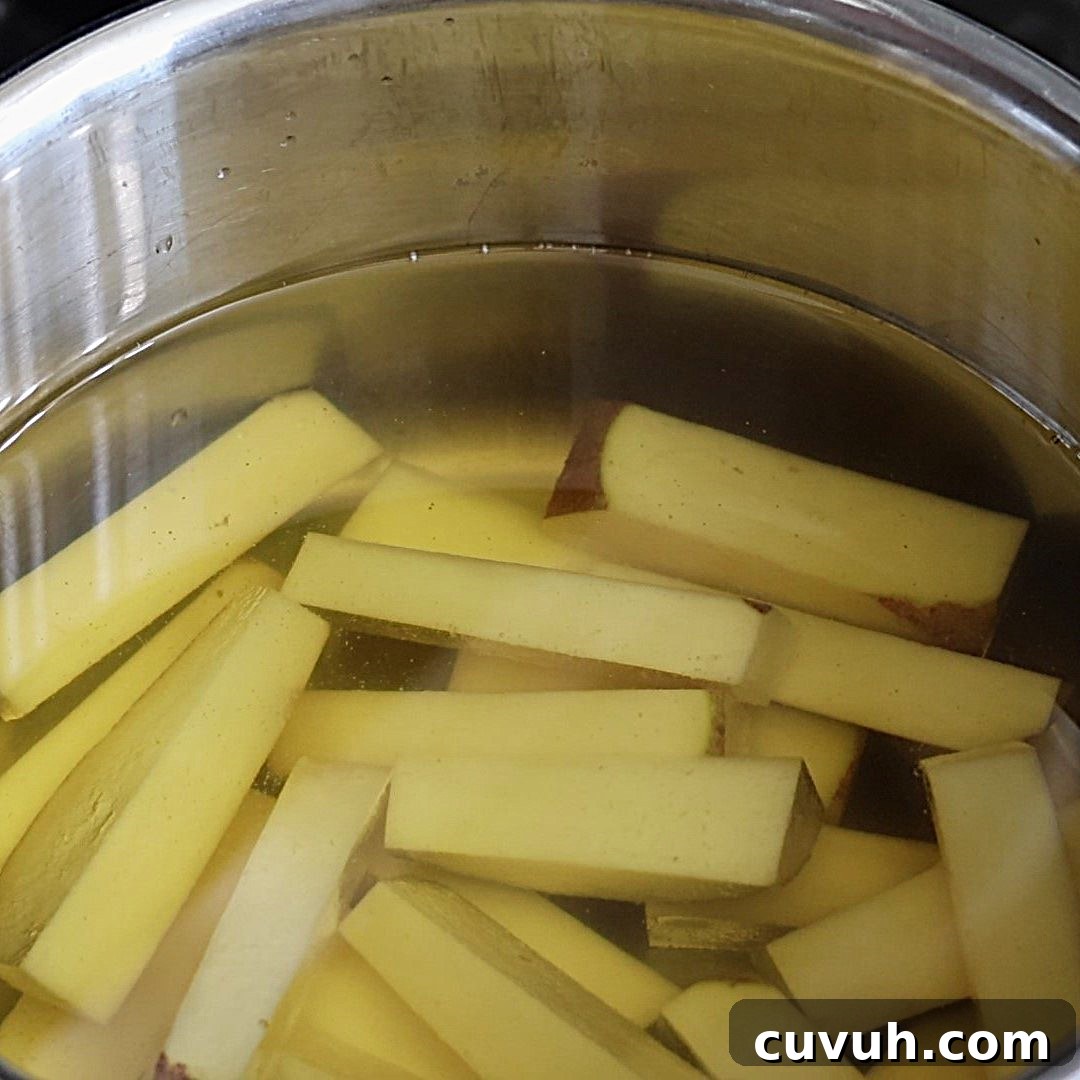
Place the cut potatoes into a heavy-bottomed Dutch oven or saucepan and cover with cold oil by about an inch. Turn the heat to high and allow the oil to come up slowly; the fries will begin cooking as the oil heats.
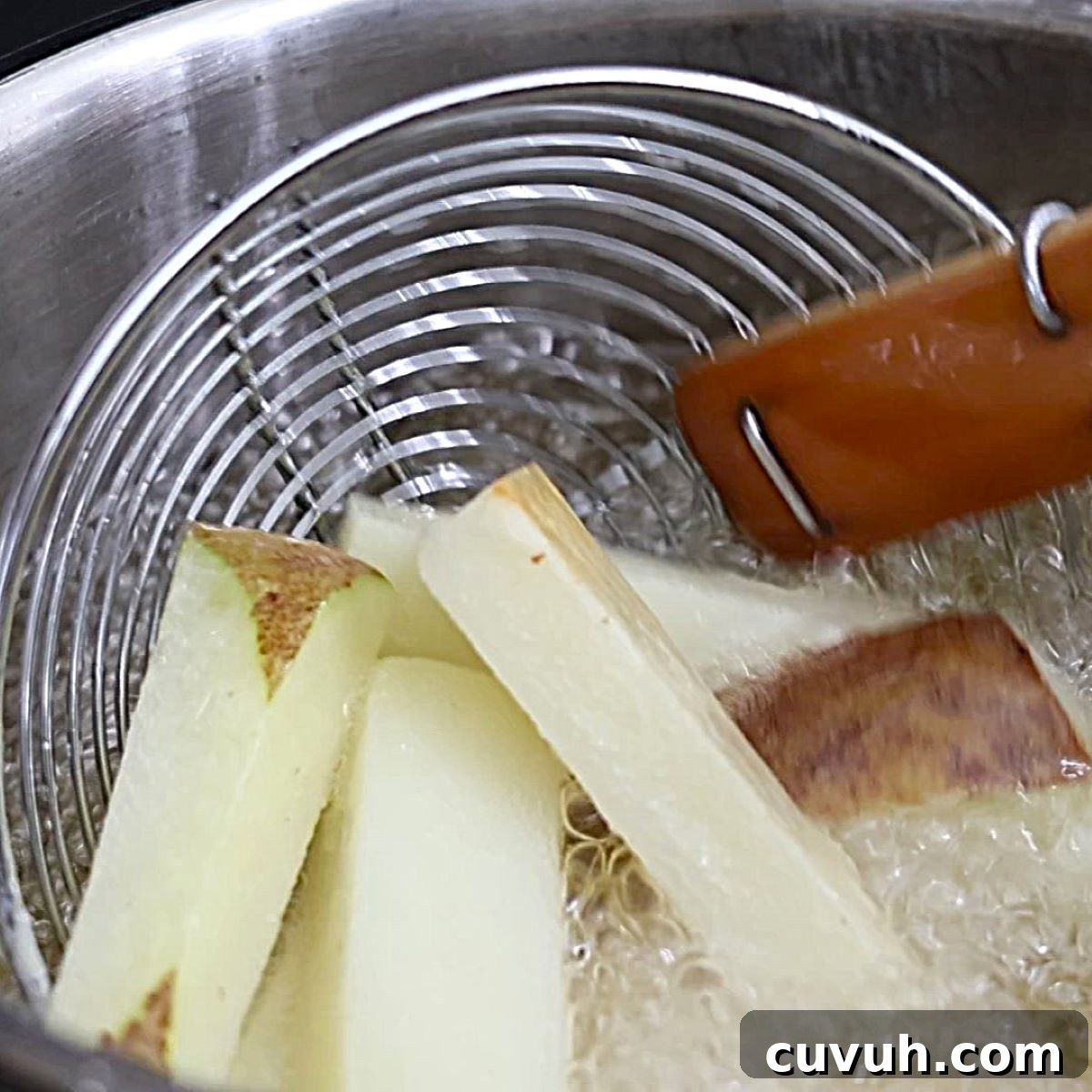
Stir the fries gently about halfway through cooking to prevent sticking. The gradual heating method gives tender interiors and crisp exteriors without complicated double frying.
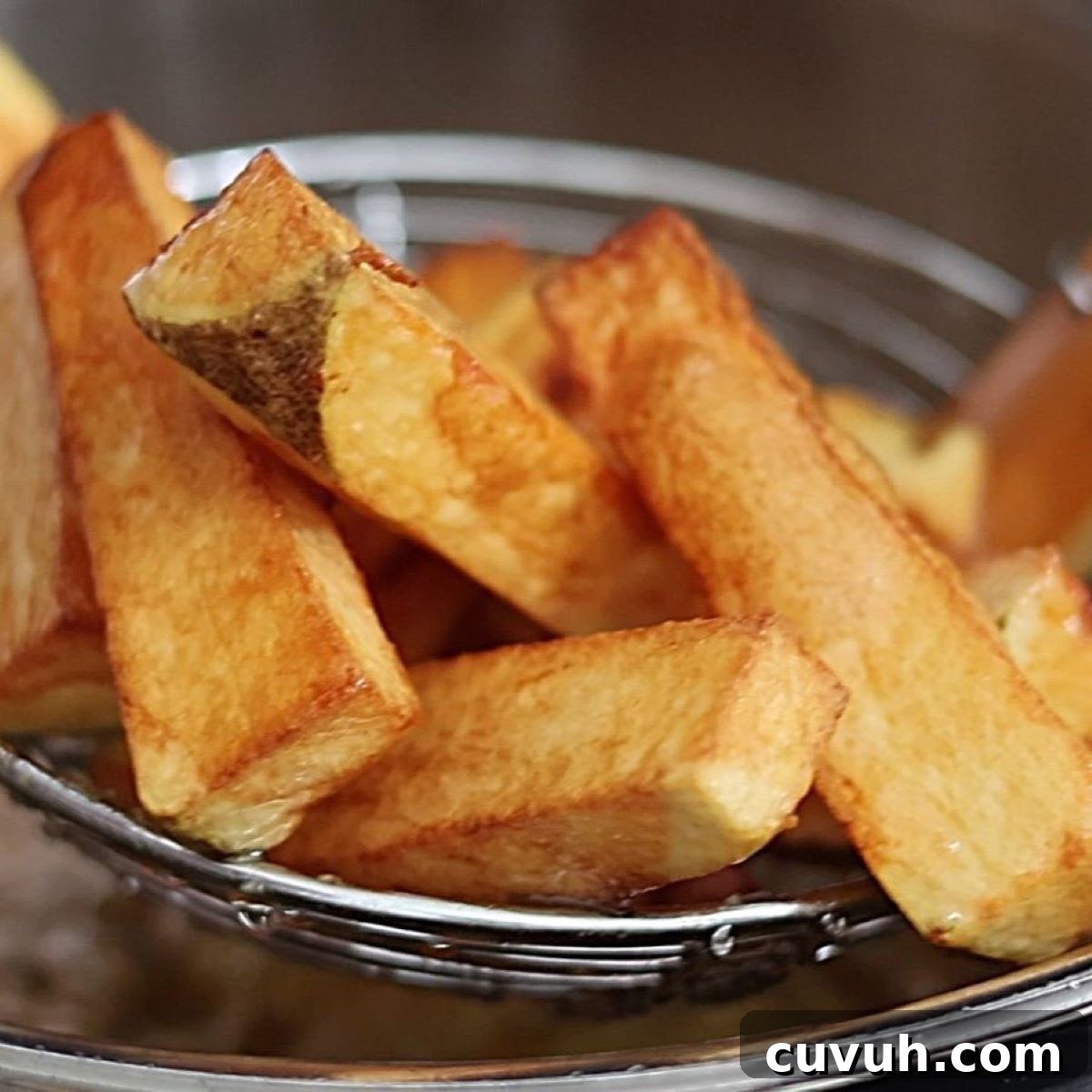
When fries are golden brown and crispy, remove them to a wire rack, season with salt immediately, and keep warm in a low oven (about 250°F) while you fry the fish.
deep frying 101
Deep frying can feel intimidating, but it rewards you with unmatched crispness. Batter-coated foods in particular achieve a light, crunchy texture that air fryers have a hard time replicating. Follow these practical guidelines to fry safely and successfully:
- Prepare everything before you start — have your dredging, batter, wire racks, and seasonings ready.
- Fry the chips first so they don’t pick up any fish flavor from the oil. Keep them warm on a wire rack in a 250°F oven while you fry fish.
- Start fries in cold oil and heat slowly; this method is simple and produces consistent results without double frying or constant temperature checking.
- Fry fish at a higher temperature (around 350–375°F) so the coating crisps quickly while the fish inside stays moist and flaky.
- Limit the number of fillets in the oil at once; overcrowding drastically lowers oil temperature and yields soggy, oily coating.
- For safety, move the frying vessel to a back burner while cooling to reduce accident risk around children and pets.
- Once fully cooled, strain used oil through cheesecloth or a fine filter to remove debris and store in a labeled container for reuse with seafood a couple of times.
fish and chips FAQs
Any firm, white-fleshed fish is suitable: cod, haddock, halibut, or pollock. Cod is the traditional choice and works wonderfully here.
A frying temperature around 375°F gives the crispest results while cooking the fish quickly and evenly.
Air fryers can produce decent fries, but battered fish does not crisp the same way in an air fryer. For authentic texture, deep frying is recommended.
more gluten free seafood recipes
- Gluten free she crab soup
- Best ever gluten free crab cakes
- Crispy gluten free coconut shrimp
- Amazing grilled lemon butter shrimp
- Homemade gluten free lobster rolls
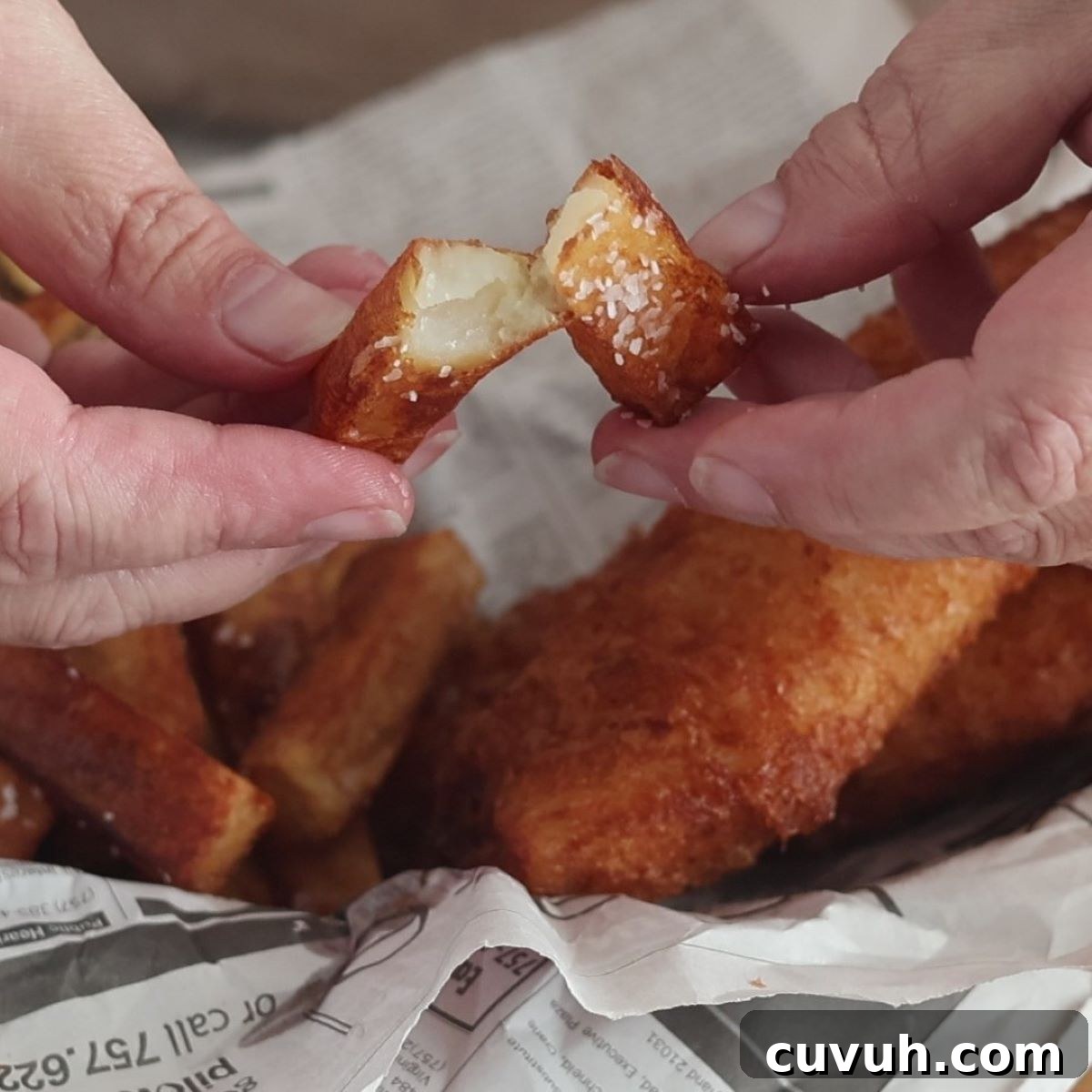
You don’t have to give up fried fish. With this gluten free fish and chips recipe you can enjoy every crispy bite and crunchy chip right at home.
Gluten Free Fish and Chips Recipe
Equipment
- Dutch oven or heavy-bottom large saucepan
- baking sheet with wire rack
- candy or deep-fry thermometer
- shallow bowls
- spider or slotted spoon
Ingredients
Chips
- 3–4 lbs russet potatoes
- Peanut oil or another neutral oil for frying
Fish
- 2 lbs fresh cod fillets (or other firm white fish)
- 16 oz gluten free beer (or seltzer/club soda)
- ¾ cup (105g) gluten free all-purpose flour blend
- ½ cup (100g) white rice flour
- ½ tsp kosher salt
- ½ tsp baking powder
- 2 tbsp additional white rice flour for dredging
Instructions
For the Chips
- Wash and dry the potatoes. Trim rounded sides and ends, then cut into ½–¾ inch sticks.
- Place the cut potatoes in a large Dutch oven or heavy saucepan and cover with oil about one inch above the potatoes.
- Turn the burner to high and allow the oil to come up to temperature slowly; the fries will begin frying as the oil heats. Cook for about 15–20 minutes total, stirring gently halfway through to prevent sticking.
- When fries are deep golden and crisp, remove with a spider to a wire rack set over a baking sheet in a single layer. Immediately season with salt and keep warm in a 250°F oven while you fry the fish.
For the Fish
- Pat the fish dry, cut into manageable pieces, and season both sides with salt. Let rest while you make the batter.
- Whisk together ½ cup gluten free all-purpose flour and ½ cup white rice flour with the salt and baking powder. Slowly stir in the beer or seltzer until a very thin, pancake-like batter forms. Refrigerate until ready to fry.
- Place the remaining dry flour mixture in a shallow bowl for dredging.
- Clip a thermometer to the pot and bring oil to 375°F for frying fish.
- When ready, dredge each piece of fish in the dry mix, shaking off excess, then dip into the chilled batter, allowing excess to drip away.
- Carefully lower the fish into hot oil, two pieces at a time. Fry for about 4 minutes, or until golden and cooked through. Remove to a wire rack and season with salt immediately.
- Finish frying remaining fish, then remove the chips from the oven. Serve fish and chips immediately; tartar sauce is optional.
Notes
Adapted from and inspired by Brian Lagerstrom’s Fish and Chips and America’s Test Kitchen’s Restaurant Quality French Fries.