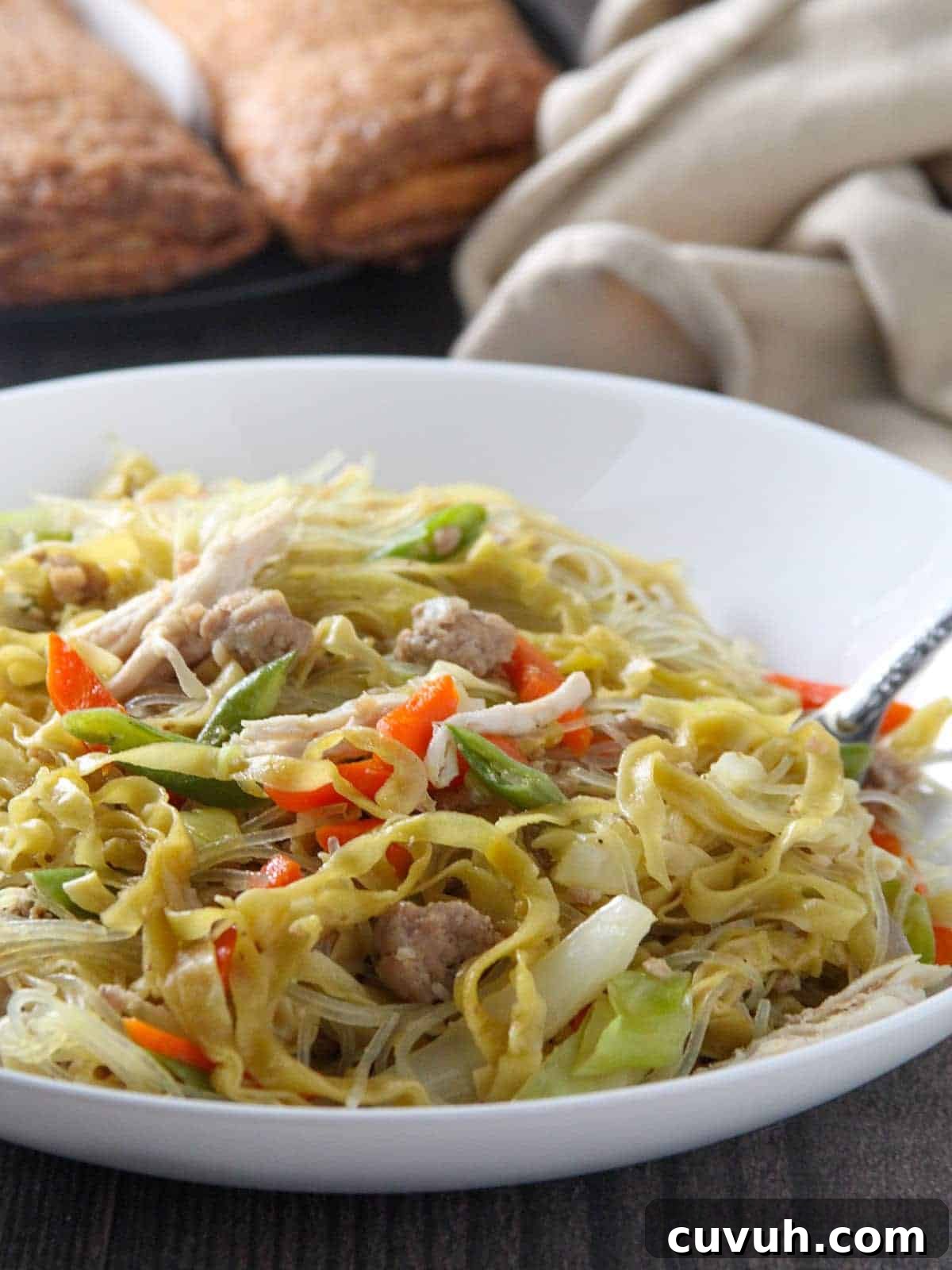
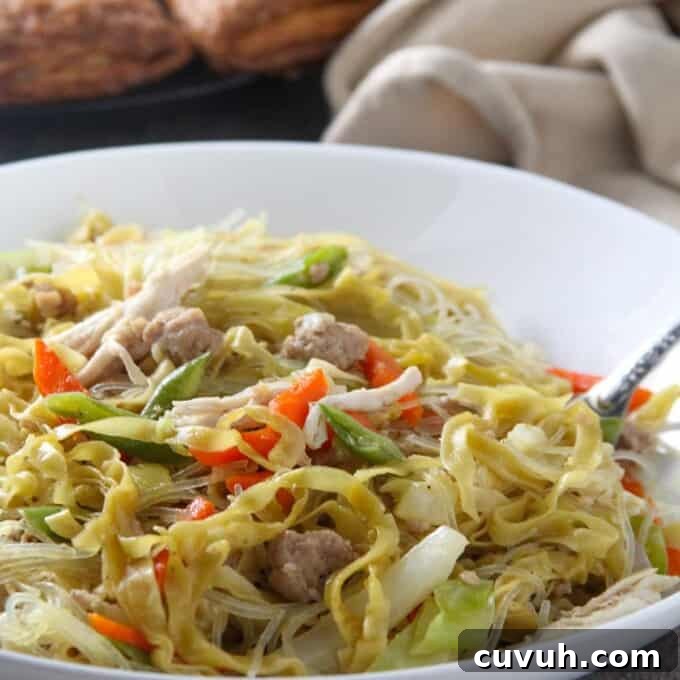
Pancit Langlang is a flavorful blend of fresh miki and cellophane noodles paired with ground pork, shredded chicken, and crisp-tender vegetables. This hearty Filipino noodle dish is ideal for family dinners, gatherings, or anytime you want a comforting, satisfying meal.
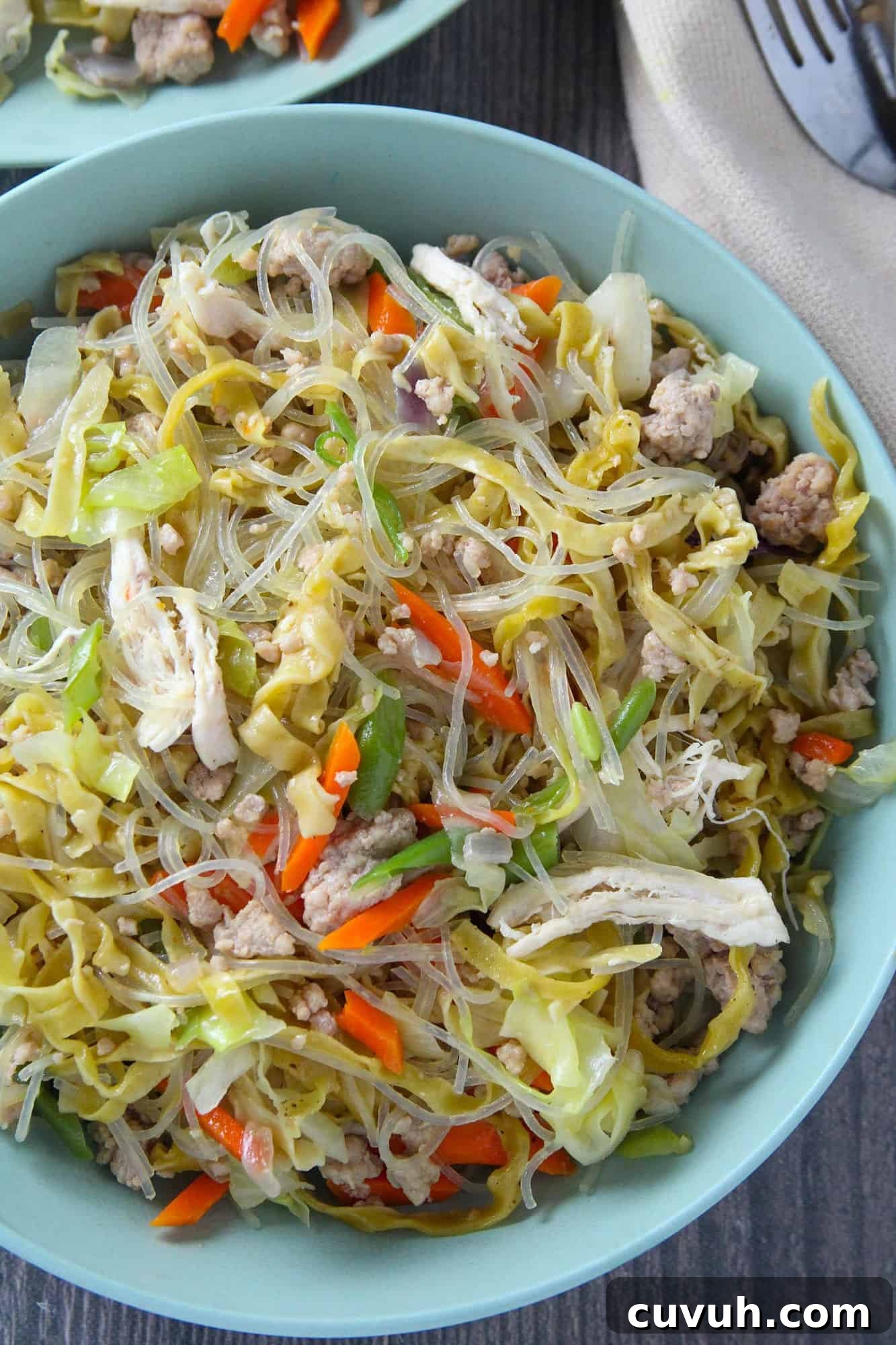
Recently I revisited several noodle recipes and realized it’s been a while since I shared a traditional Filipino pancit. Pancit Langlang caught my eye while I was researching regional noodle variations. Combining two noodle types—fresh miki and sotanghon—is common in some pancit styles, but the use of ground pork alongside shredded chicken and vegetables gives this version a distinct texture and flavor.
Legend has it that national hero Jose Rizal favored this pancit so much he requested the noodles be sent to him while he was abroad. Pancit Langlang even appears in his novel El Filibusterismo, where it is described as a comforting and well-loved dish—an appealing bit of culinary history that adds to the appeal of trying the recipe.
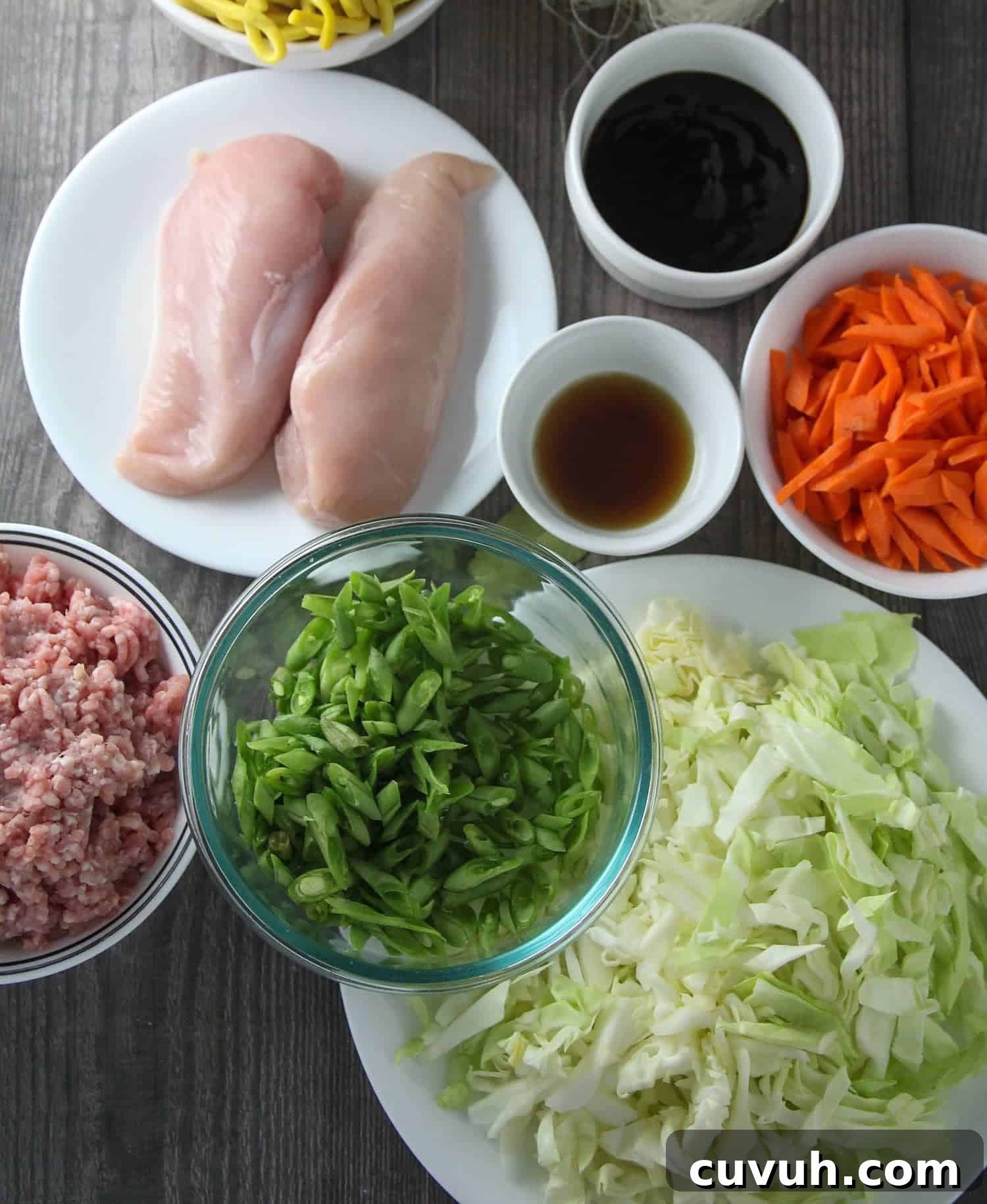
Different parts of the Philippines feature their own takes on Pancit Langlang. In Iloilo it can resemble a noodle soup, Cavite’s version is similar to mami, and Batangas often presents a stir-fried mix of miki with bihon or sotanghon. The recipe below follows a stir-fry style that keeps the vegetables bright and the noodles slightly saucy but not soupy.
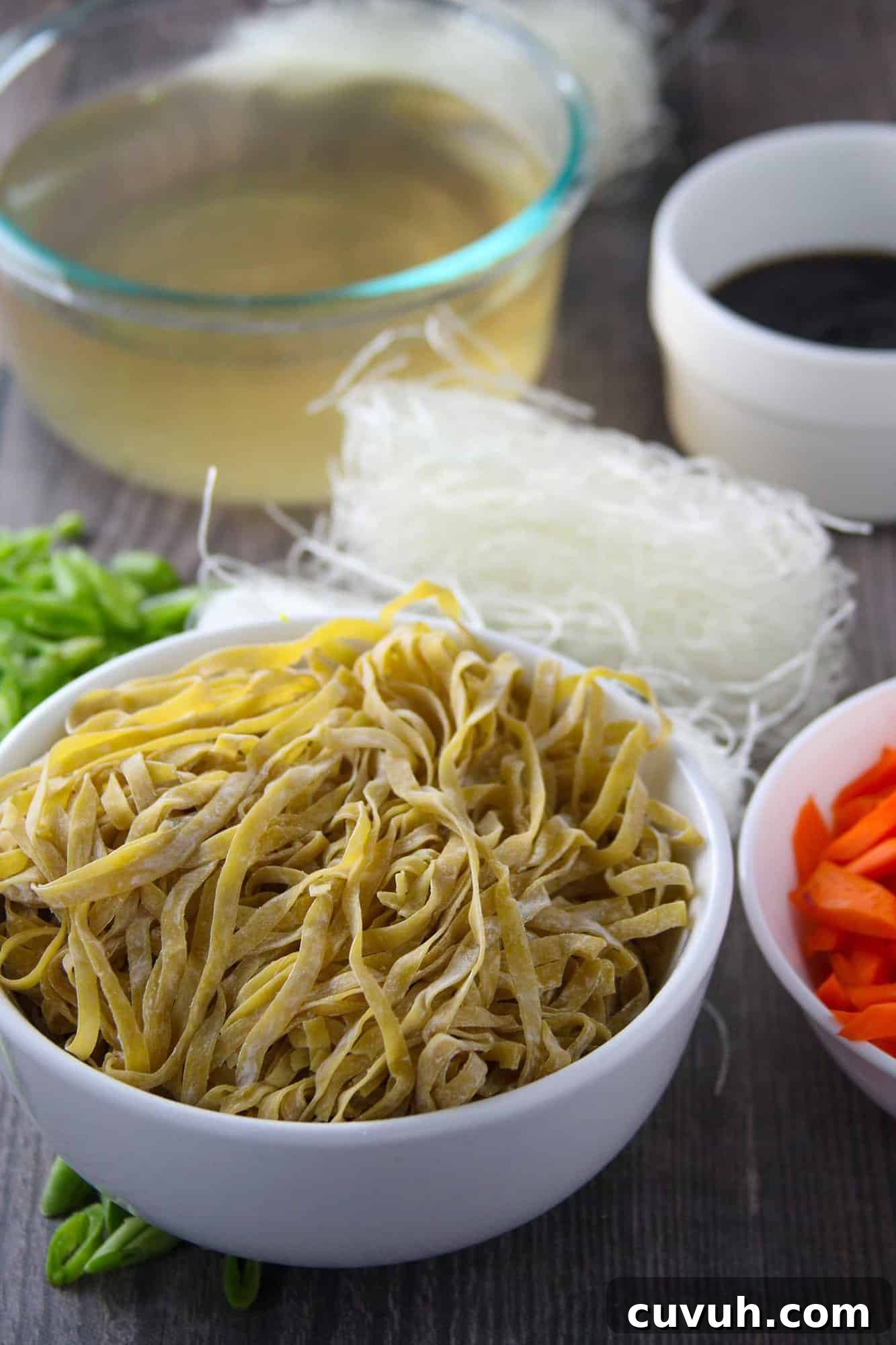
Whether you stick to the classic ingredients or adapt it with local additions, Pancit Langlang is versatile and forgiving. It’s a great way to use pantry staples and leftover proteins while still delivering a deeply satisfying plate of noodles.
Ingredient notes
- Ground pork is traditional, but you can substitute or add Chinese sausage, diced pork belly, shrimp, or tofu. Pancit Langlang welcomes a variety of proteins.
- Try adding kinchay (Chinese celery), dried shrimp, or black fungus for extra depth and texture.
- Top the finished dish with toasted garlic, chopped green onions, crushed chicharon, or diced lechon kawali for crunch and extra flavor.
Cooking tips
- Poach the chicken gently instead of boiling vigorously. Poaching keeps the meat moist and produces a flavorful broth to use for the noodles.
- Cut vegetables into uniform, bite-sized pieces so they cook quickly and evenly while remaining crisp-tender.
- Use a wok or large skillet with sloping sides to toss ingredients freely and prevent spills. Tongs help turn and combine noodles without breaking them.
How to serve and store
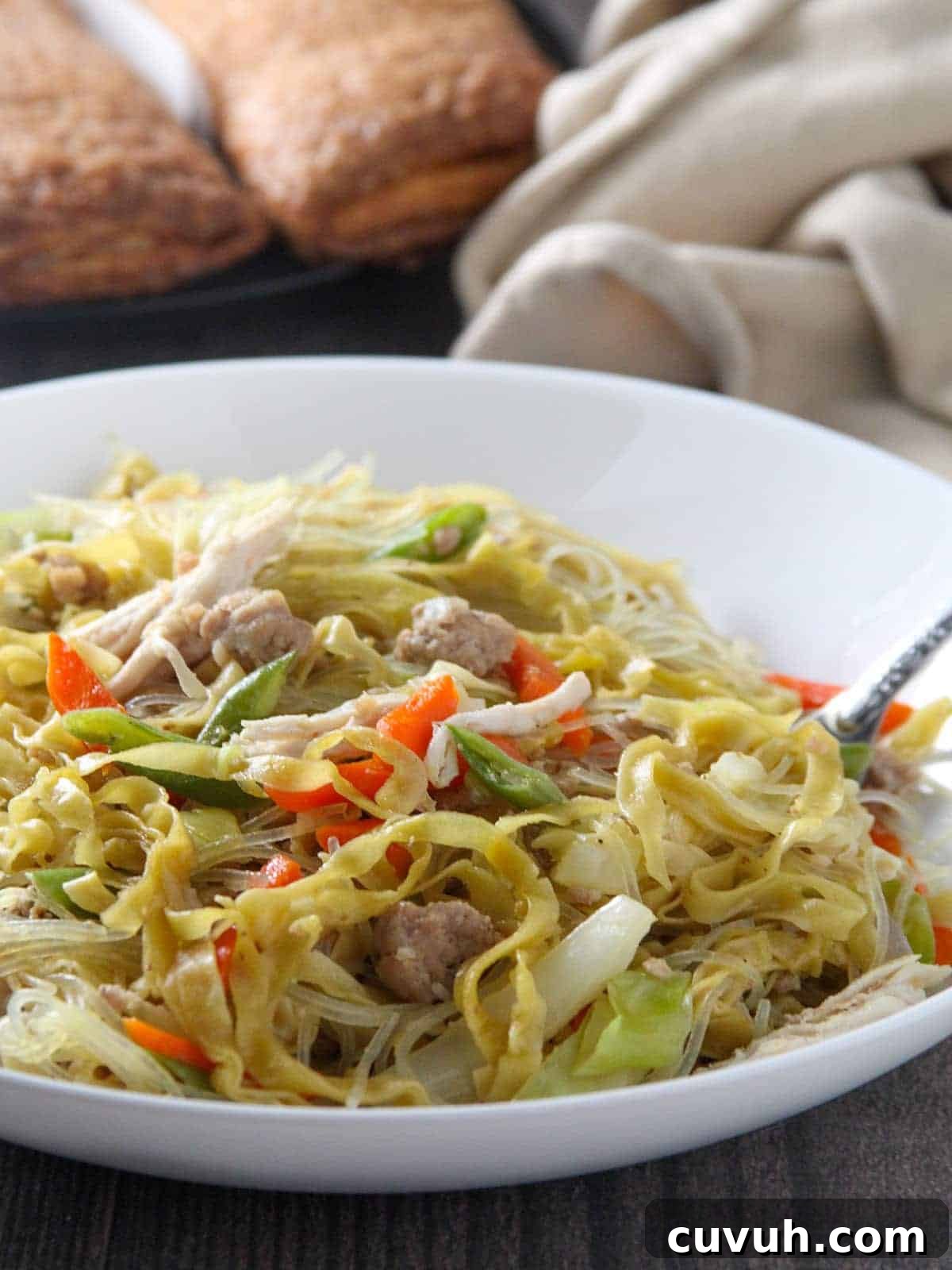
- Pancit Langlang works well as a main dish, a hearty midday meal, or part of a party spread. It’s filling and easy to share.
- Serve with puto, pandesal, or steamed rice, and offer calamansi or lemon for a bright finish if desired.
- Store leftovers in an airtight container in the refrigerator for up to 3 days. Reheat gently on the stovetop with a splash of broth to revive the noodles; this dish does not freeze well.
More pancit recipes
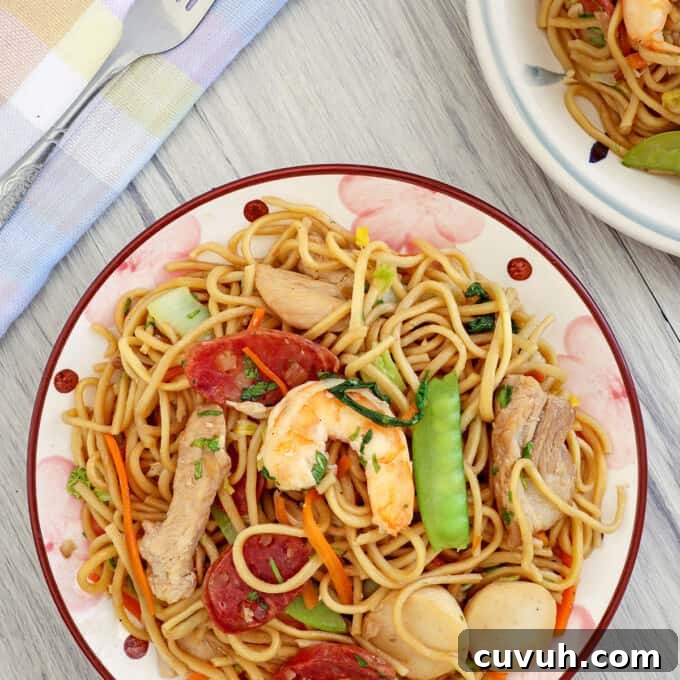
Filipino Pancit Canton is another crowd-pleasing noodle stir-fry made with wheat noodles, assorted meats, and vegetables—great for family dinners and special occasions.
Pancit Langlang
Ingredients
- 1 pound boneless, skinless chicken breasts
- 1 onion, peeled and quartered
- 1 teaspoon salt
- 1 teaspoon whole peppercorns
- 2 bay leaves
- 4 ounces cellophane noodles (sotanghon)
- 2 tablespoons vegetable or canola oil
- 1 onion, peeled and chopped
- 3 cloves garlic, minced
- 1 pound ground pork
- 1/4 cup oyster sauce
- 2 tablespoons sesame oil
- 1 cup carrots, peeled and julienned
- 1 cup green beans, cut thinly on the bias
- 1/2 small cabbage, sliced thinly
- 2 cups broth (reserved from poaching the chicken)
- 16 ounces fresh miki noodles (thin and flat)
Instructions
- Place chicken in a large pot in a single layer. Add the quartered onion, salt, peppercorns, and bay leaves.
- Add enough cold water to cover the chicken by about an inch (approximately 6 cups). Bring to a boil and skim off any foam.
- Cover, reduce heat to low, and gently simmer 10–15 minutes or until the chicken is just cooked through.
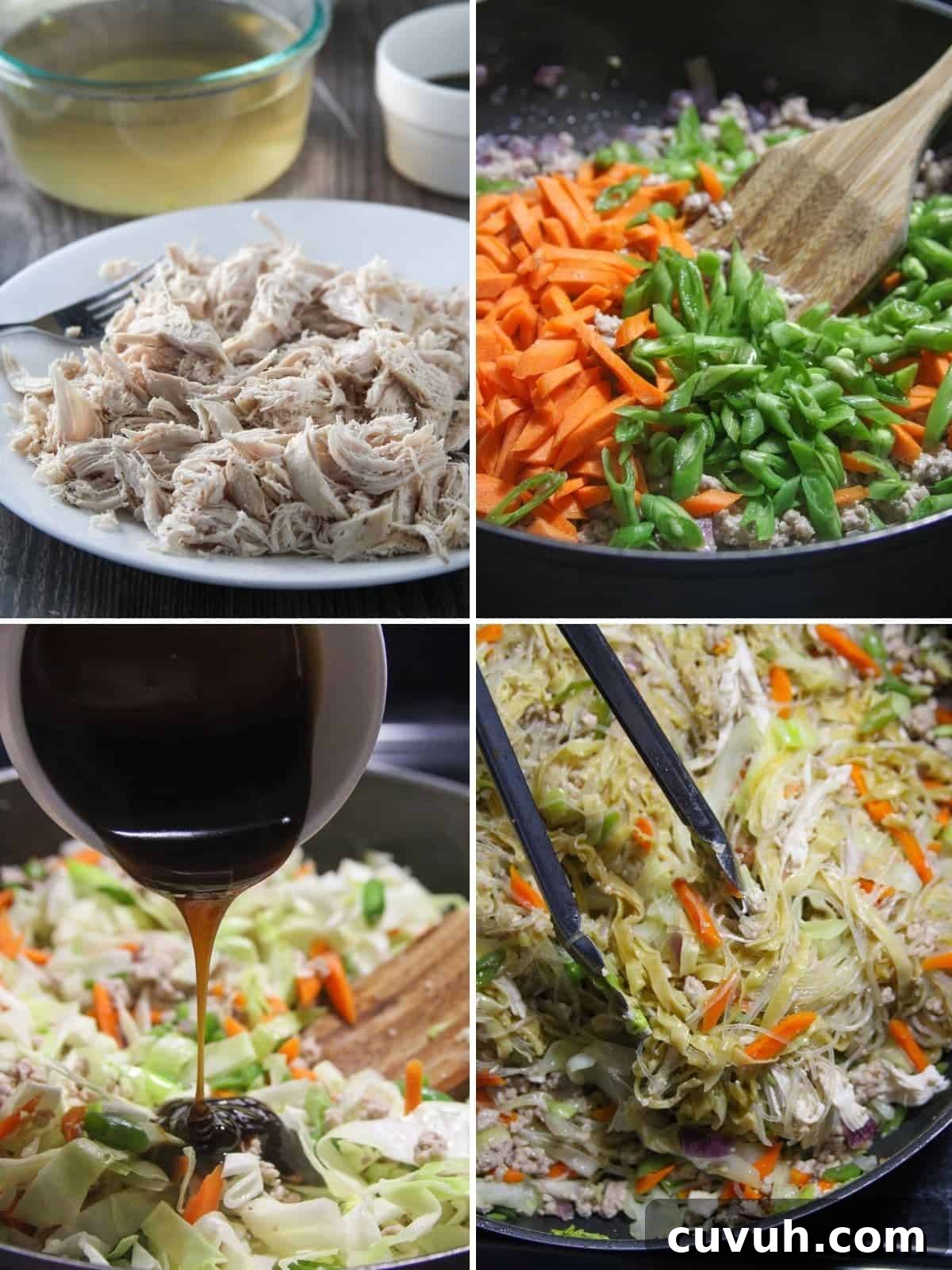
- Remove the chicken with a slotted spoon and let cool. Shred the chicken and set aside.
- Strain the poaching liquid and reserve about 2 cups of broth for the noodles.
- Soak the cellophane noodles in warm water until softened, then drain and set aside.
- In a wok or wide skillet over medium heat, heat the oil. Sauté the chopped onion and garlic until softened.
- Add the ground pork and cook, stirring occasionally, until lightly browned.
- Add the carrots and green beans and cook about 1 minute until they are half-done.
- Add the cabbage and cook another minute until slightly tender but still crisp.
- Stir in the oyster sauce and sesame oil to coat the meat and vegetables.
- Add the fresh miki and the softened cellophane noodles to the wok.
- Pour in the reserved broth, starting with 1 cup and adding more as needed to loosen the noodles.
- Add the shredded chicken back into the pan.
- Gently toss everything together with tongs until well combined. Season with salt and pepper to taste.
- Cook until the noodles are tender but still slightly firm to the bite, the liquid has mostly reduced, and the vegetables remain crisp-tender.
- Remove from heat and transfer to a serving platter. Garnish with toasted garlic and sliced green onions if desired. Serve hot.
Notes
Use tongs when tossing to help keep the noodles intact and minimize breakage.
Nutrition Information
Carbohydrates: 5 g,
Protein: 15 g,
Fat: 14 g