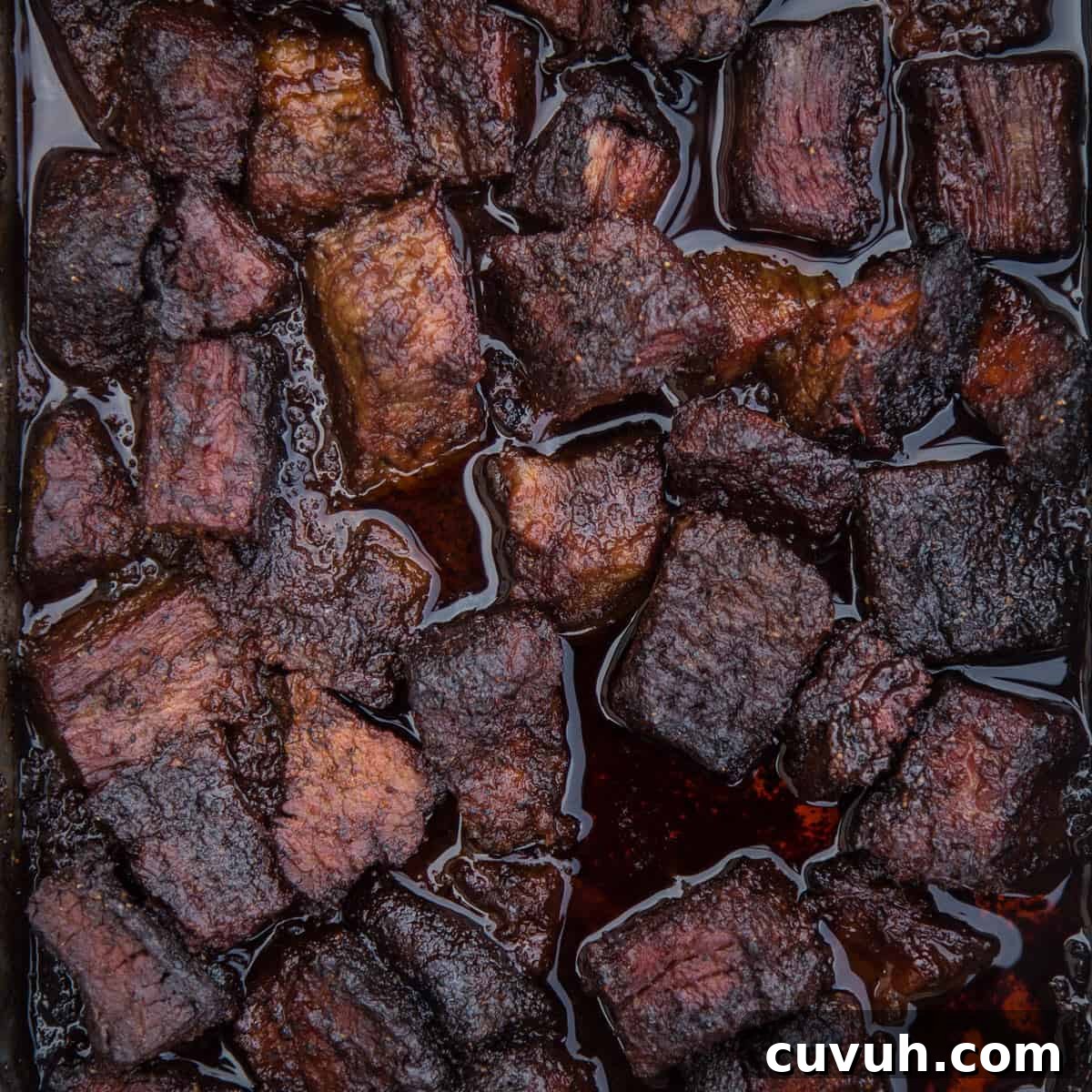
Beef Brisket Burnt Ends are a barbecue classic — rich, tender, and sweetly caramelized. Often called “meat candy,” burnt ends have a melt-in-your-mouth texture and a glossy, tangy glaze. This recipe shows how to smoke a whole packer brisket, separate the point, and transform it into classic burnt ends.
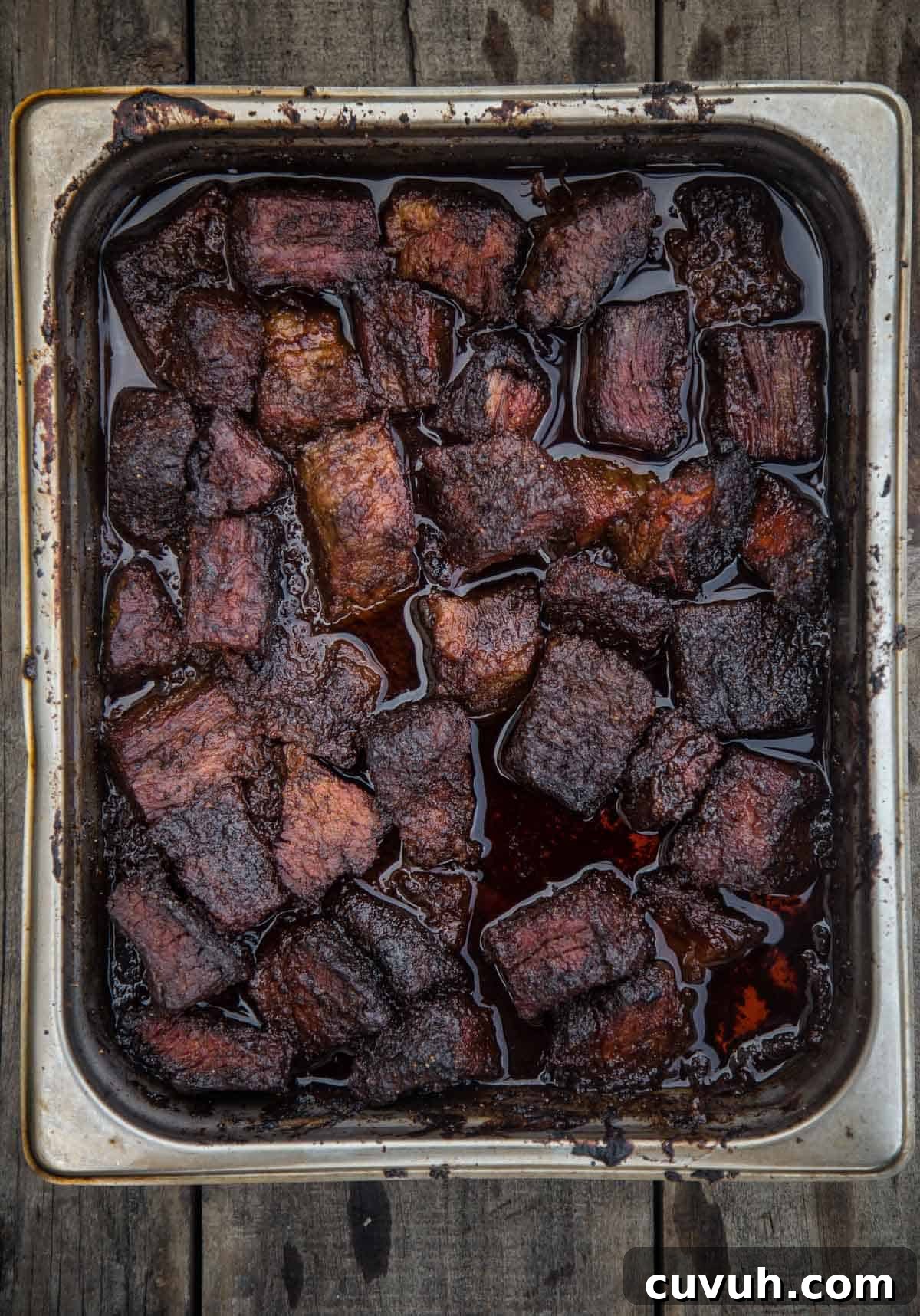
Table of Contents
- Brisket Burnt Ends Recipe Highlights
- Understanding a Packer Brisket
- What Are Burnt Ends?
- Ingredients
- How to Make Burnt Ends
- Preparation
- Smoke the Whole Brisket
- Separate The Point From the Flat
- Flavor and Sauce The Burnt Ends
- The Brisket Flat
- Wine Pairing For Brisket and Burnt Ends BBQ
- Other Brisket Inspired Recipes
- Side Ideas for Burnt Ends
- Frequently Asked Questions
- Easy Brisket Burnt Ends Recipe
Brisket Burnt Ends Recipe Highlights
- The brisket point (also called the deckle) is the best choice for traditional burnt ends because it’s well marbled and becomes incredibly tender when cooked low and slow. Chuck roast can be used as an alternative for a similar outcome.
- This method starts with a full packer brisket (point and flat). After smoking, you separate the two muscles so the point can be cut into cubes and finished as burnt ends while the flat is sliced.
- Burnt ends are smoked, cubed, tossed in a braising mix of barbecue sauce, butter and honey, then returned to the smoker to caramelize into sticky, flavorful bites.
Understanding a Packer Brisket
A full packer brisket has two distinct muscles: the point and the flat, separated by a thick fat seam. The point is richly marbled and the ideal portion for burnt ends, while the flat is leaner and slices beautifully. You can ask your butcher to sell just the point if you prefer to skip the flat.
What Are Burnt Ends?
Traditional burnt ends are cubed pieces from the brisket point that have been smoked, sauced, and returned to the smoker until the exterior caramelizes and the interior becomes tender. Despite the name, they are not actually burnt — the dark crust is flavorful bark formed by smoke and sugar caramelization.
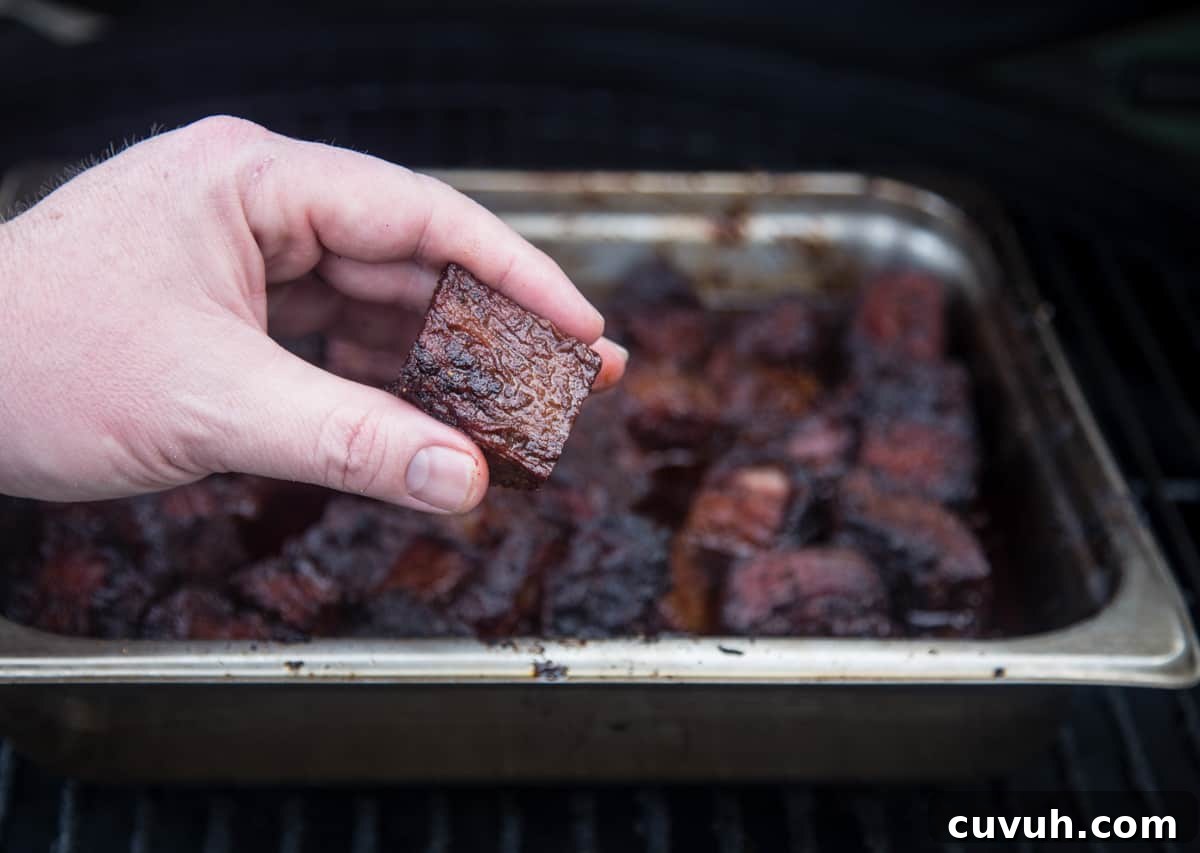
Burnt ends are associated with Kansas City barbecue but are now popular across the country. This guide shows how to smoke the whole brisket, separate the point for burnt ends, and serve the sliced flat alongside.
Ingredients
- Whole packer brisket — 12–14 pounds, trimmed. Choose the best quality you can afford; a Choice grade brisket provides good marbling for burnt ends.
- Binder — Extra virgin olive oil, beef broth, or a thin layer of mustard to help the rub adhere.
- Seasoning rub — A simple SPG rub (kosher salt, coarse black pepper, granulated garlic) works great. Reserve some rub to season the cubes later.
- Barbecue sauce — A Kansas City–style sauce or any favorite robust BBQ sauce to braise the cubes.
- Honey and butter — Honey adds sweetness that helps caramelize the glaze; butter adds richness and helps the sauce cling to the meat.
How to Make Burnt Ends
In short: smoke the brisket, separate the point, cube and sauce it, then finish the cubes in the smoker until soft and glossy. Below are the detailed steps.
- Smoke the brisket. You can smoke the whole packer together or cook the point separately, but we prefer cooking both muscles together and separating later.
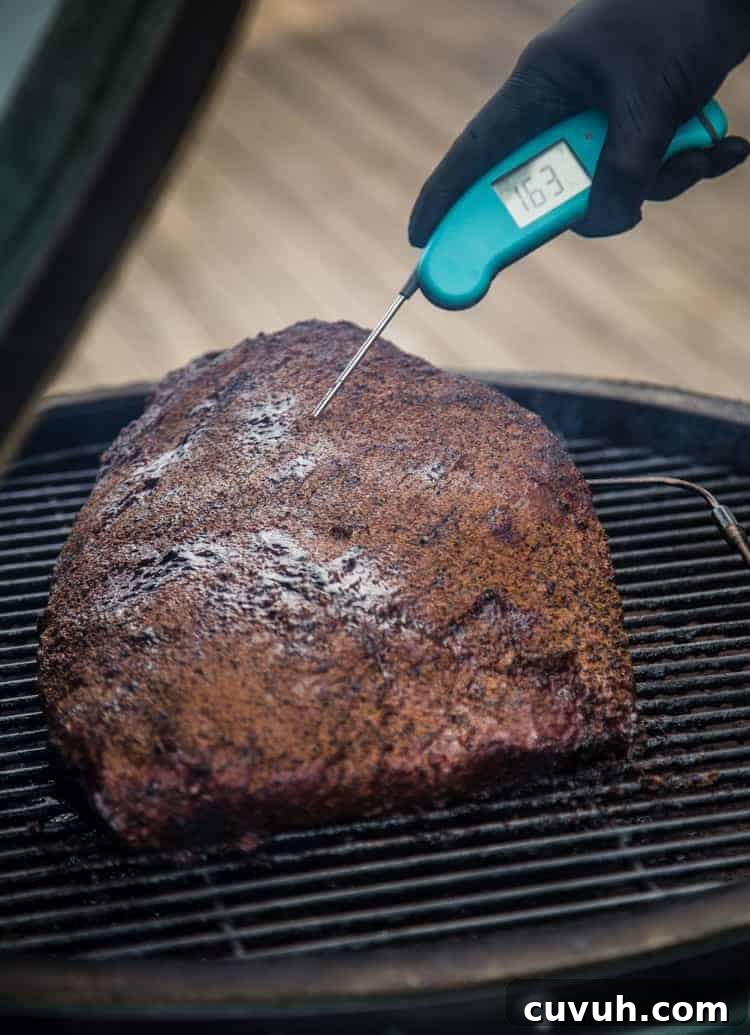
- Separate point and flat. When the brisket reaches about 165°F, slice along the fat seam to separate the muscles.
- Cube the point. Cut the point into 1 to 1½-inch cubes and place them in a smoker-safe tray.
- Sauce and finish. Toss the cubes with rub, barbecue sauce, butter and honey, then smoke uncovered for a couple of hours to render fat and reduce the sauce. Cover with foil and continue until the cubes probe like butter (about 190–205°F internal).
Preparation
Trim the full brisket on a large cutting board. Place a towel beneath the board to prevent slipping. Remove silver skin and excess fat. Leave roughly a 1/4-inch fat cap on top, trimming thicker pockets down. For a 12–13 pound brisket you may remove several pounds of fat during trimming.
Smoke the Whole Brisket
Preheat your smoker to 250°F and use a mild fruit wood such as apple or cherry for a balanced smoke flavor. Place the brisket fat cap down in the smoker and monitor the internal temperature. Smoke until the meat reaches about 165°F, which commonly takes several hours.
Separate The Point From the Flat
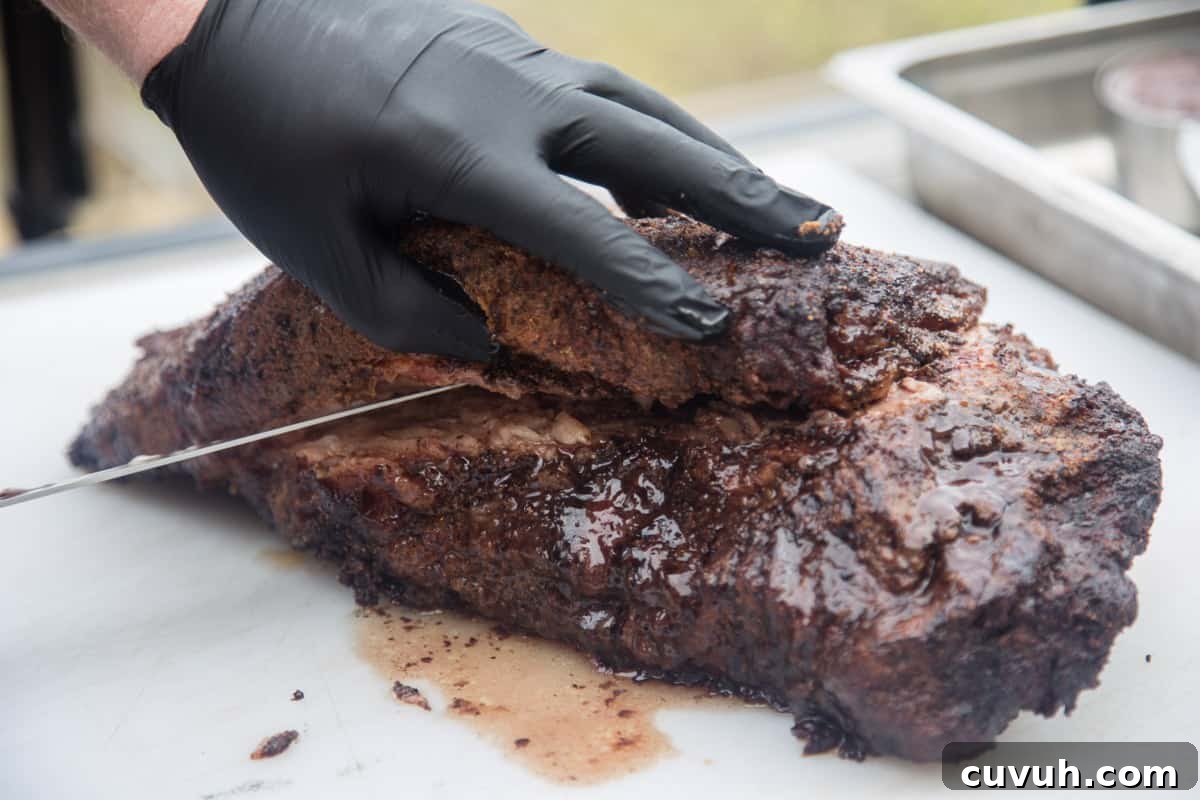
Once the brisket hits roughly 165°F — the point at the stage when many pitmasters would wrap — trim excess fat from the fat seam and cut the point away from the flat. Cube the point into 1½-inch pieces and transfer them to a pan. Wrap the flat in butcher paper or foil and return it to the smoker to continue cooking to tenderness.
Flavor and Sauce The Burnt Ends
Season the cubed point with reserved rub, then add barbecue sauce, butter and honey. Make sure the pan has enough sauce to coat all the cubes evenly so they cook consistently. Place the tray uncovered in the smoker for about two hours, stirring once or twice as the butter and honey melt and the sauce reduces.
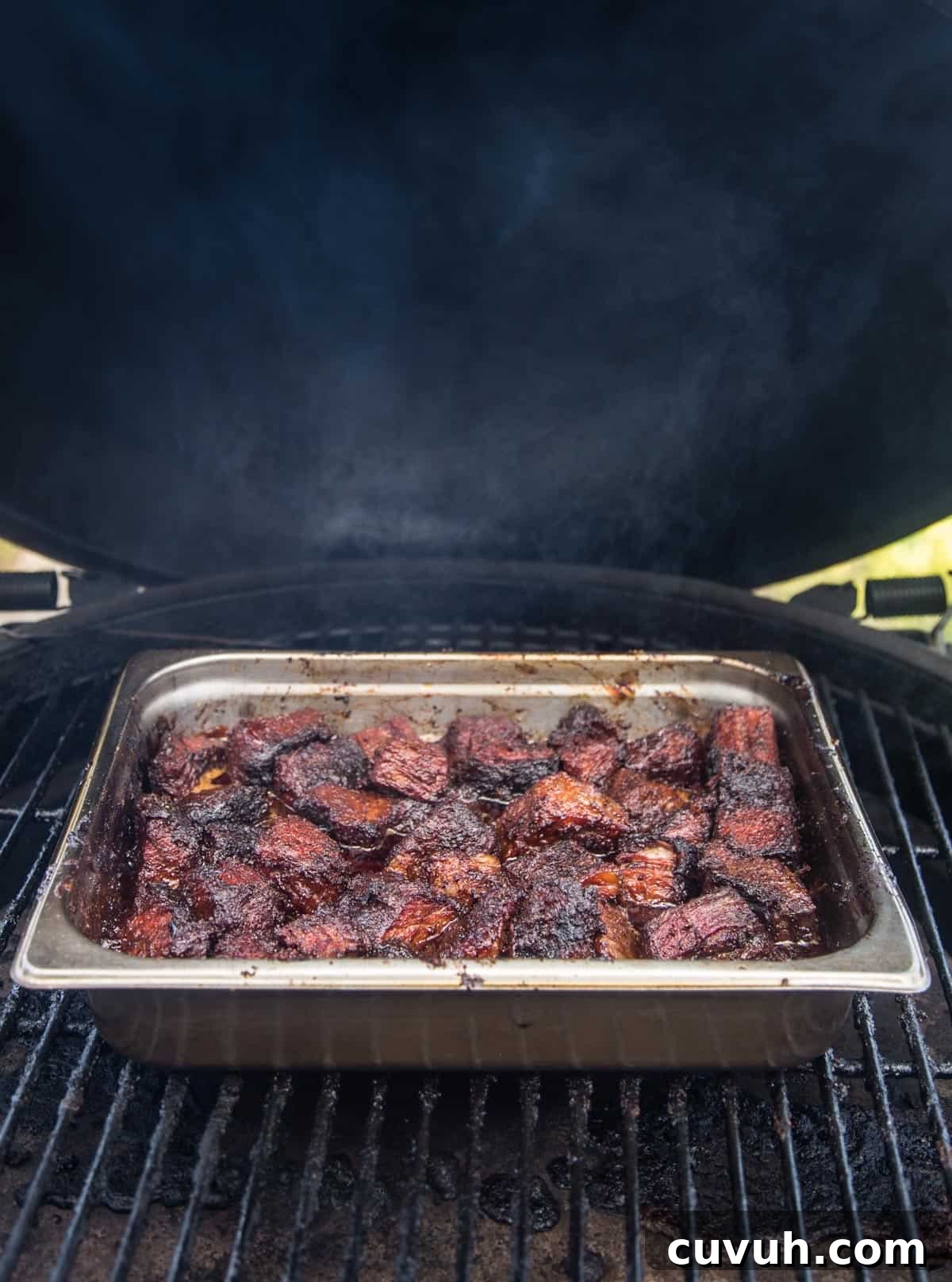
After two hours, cover the pan with foil and return to the smoker. Continue cooking until the burnt ends reach an internal temperature around 200°F and probe like soft butter. This can take another one to two hours; focus on texture and temperature rather than strict timing. Remove and let cool slightly before serving.
The Brisket Flat
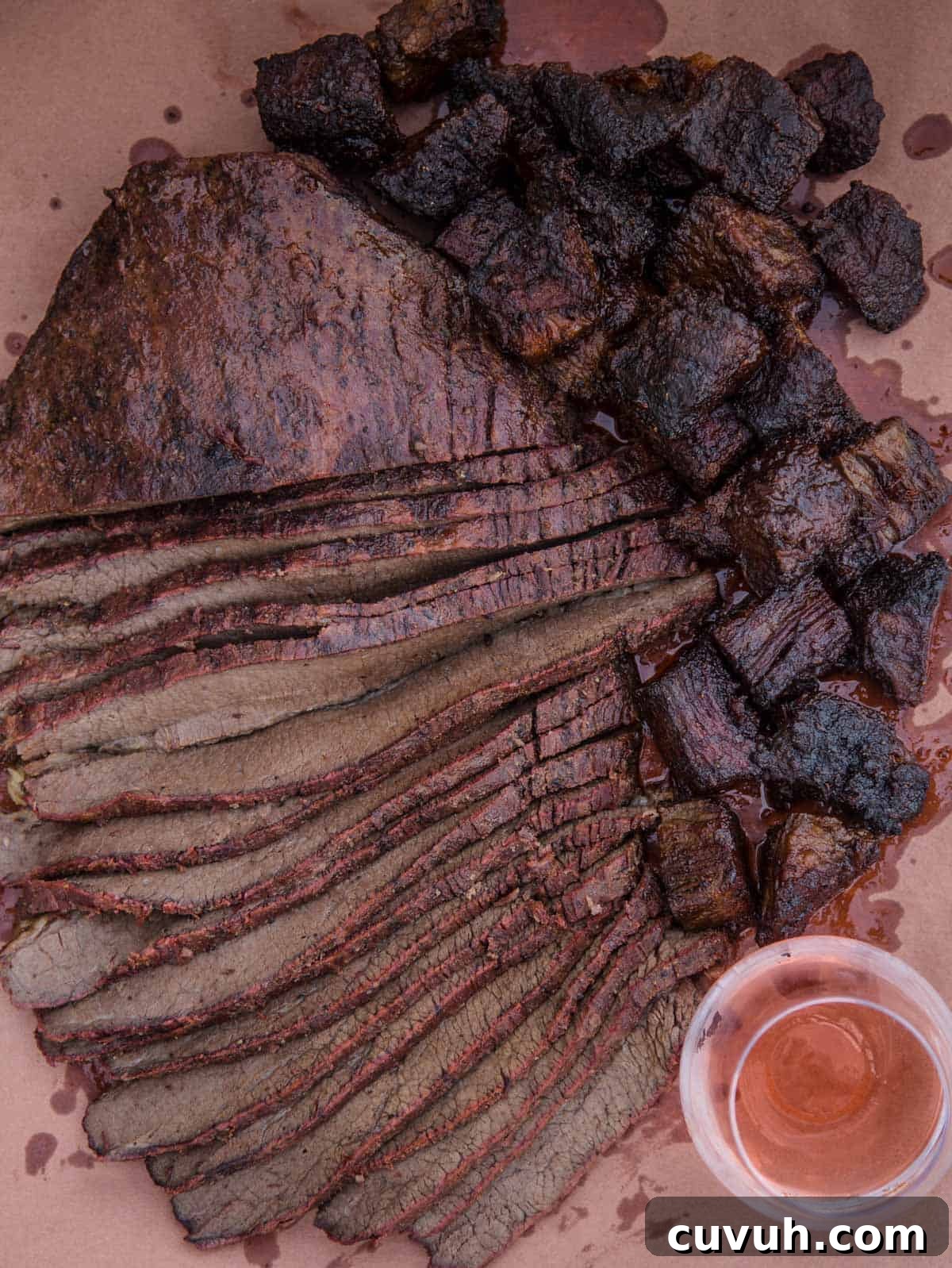
While the burnt ends finish, continue to smoke the wrapped flat until it reaches about 190°F and the probe slides in easily. Rest the wrapped flat in a cooler (no ice) for an hour, then slice against the grain and serve alongside or after your burnt ends.
Wine Pairing For Brisket and Burnt Ends BBQ
A dry rosé or a bold, fruit-forward red pairs nicely with smoked brisket and saucy burnt ends. The acidity and fruit components help cut through the richness and complement the smoky flavors.
Other Brisket Inspired Recipes
If you have leftovers or want more ways to enjoy brisket, try brisket grilled cheese, brisket chili, or brisket nachos — all great ways to showcase smoky, tender beef.
Side Ideas for Burnt Ends
- No-mayo coleslaw — a bright, tangy counterpoint to rich burnt ends.
- Skillet cornbread — warm, slightly sweet cornbread pairs beautifully with barbecue.
- BBQ baked beans — smoky, slow-cooked beans with bacon round out the meal.
Frequently Asked Questions
The point is the preferred portion because it has more intramuscular fat that renders during cooking, creating juicy, flavorful cubes. Chuck roast is a good alternative for a similar style.
Yes. Proper technique — low-and-slow smoking, cubing the point, saucing and finishing in the smoker — yields very tender burnt ends once the fat has rendered and the internal temperature reaches roughly 190–200°F.
The flat is much leaner and is not ideal for burnt ends because it can dry out or fall apart. Use the point or chuck roast instead.
Trim the point and cut it into roughly 1–1½-inch cubes with a sharp slicer or chef’s knife before saucing and returning the cubes to the smoker.
This post was originally published in April 2019 and updated in October 2024 with clarified steps. The recipe itself remains the same.
About Vindulge
Mary (a certified sommelier and recipe developer) and Sean (backyard pitmaster) are co-authors of the cookbooks Fire + Wine and Fire + Wine Backyard Pizza. They create recipes and content for Vindulge from their Oregon farm outside Portland.

Get a signed copy of our cookbook!
Tried this recipe? Give it a rating and share your results on social media with the tag #vindulge.
Easy Brisket Burnt Ends Recipe
Ingredients
- 1 12 to 14 pound packer brisket
- ⅓ cup extra virgin olive oil
- ⅓ cup kosher salt
- ⅓ cup coarse ground pepper
- ⅓ cup granulated garlic
- 1 cup KC barbecue sauce
- 4 tablespoons unsalted butter
- ¼ cup honey
Instructions
-
Prep brisket: The day before smoking, trim excess fat and silver skin. Leave about 1/4-inch fat cap. Coat the brisket with olive oil, then apply the dry rub liberally. Reserve 1/3 cup of rub for the burnt ends.
-
Preheat smoker: Heat to 250°F using apple or cherry wood. Place the brisket fat cap side down and monitor internal temperature with a probe thermometer.
-
Smoke: Smoke until the brisket reaches about 165°F. Remove and separate the point from the flat, trimming excess fat as needed.
For the Brisket Flat
-
Wrap the flat in butcher paper and return it to the smoker. Continue until the flat reaches about 190°F and the probe inserts easily. Rest wrapped for one hour, then slice against the grain.
For the Burnt Ends
-
Cut the point into 1½-inch cubes and place them in a smoker-safe pan. Season with the reserved rub, add barbecue sauce, butter and honey, and toss to coat.
-
Smoke the tray uncovered for 2 hours, stirring once or twice. After two hours cover the pan with foil and continue smoking until the cubes reach 190–205°F or probe like butter (about 1–2 more hours).
-
Serve immediately.
Notes
Nutrition
Nutrition information is an approximation.
Additional Info
Like this recipe? Leave a comment below!