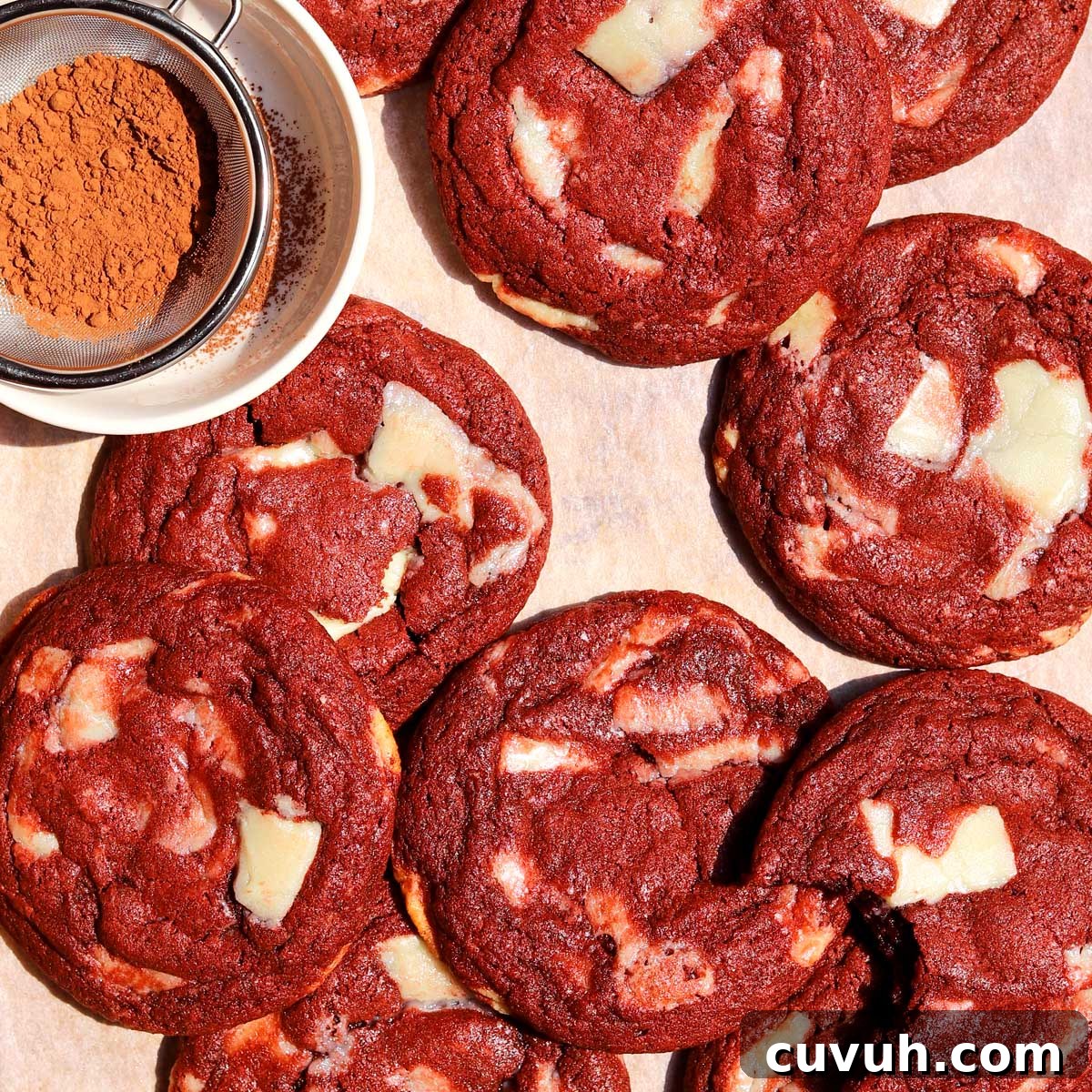
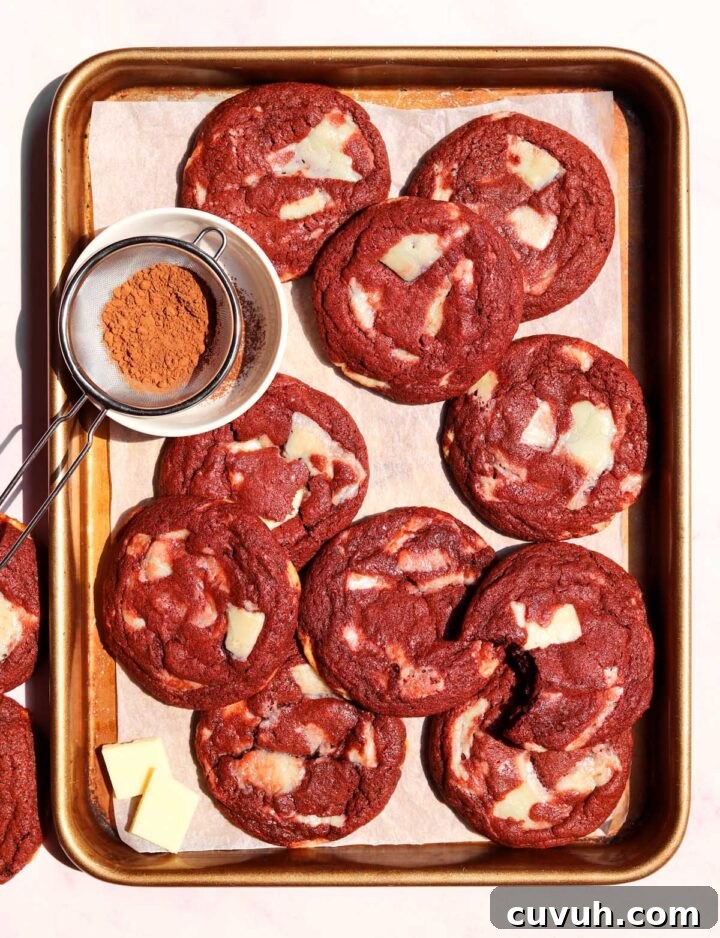
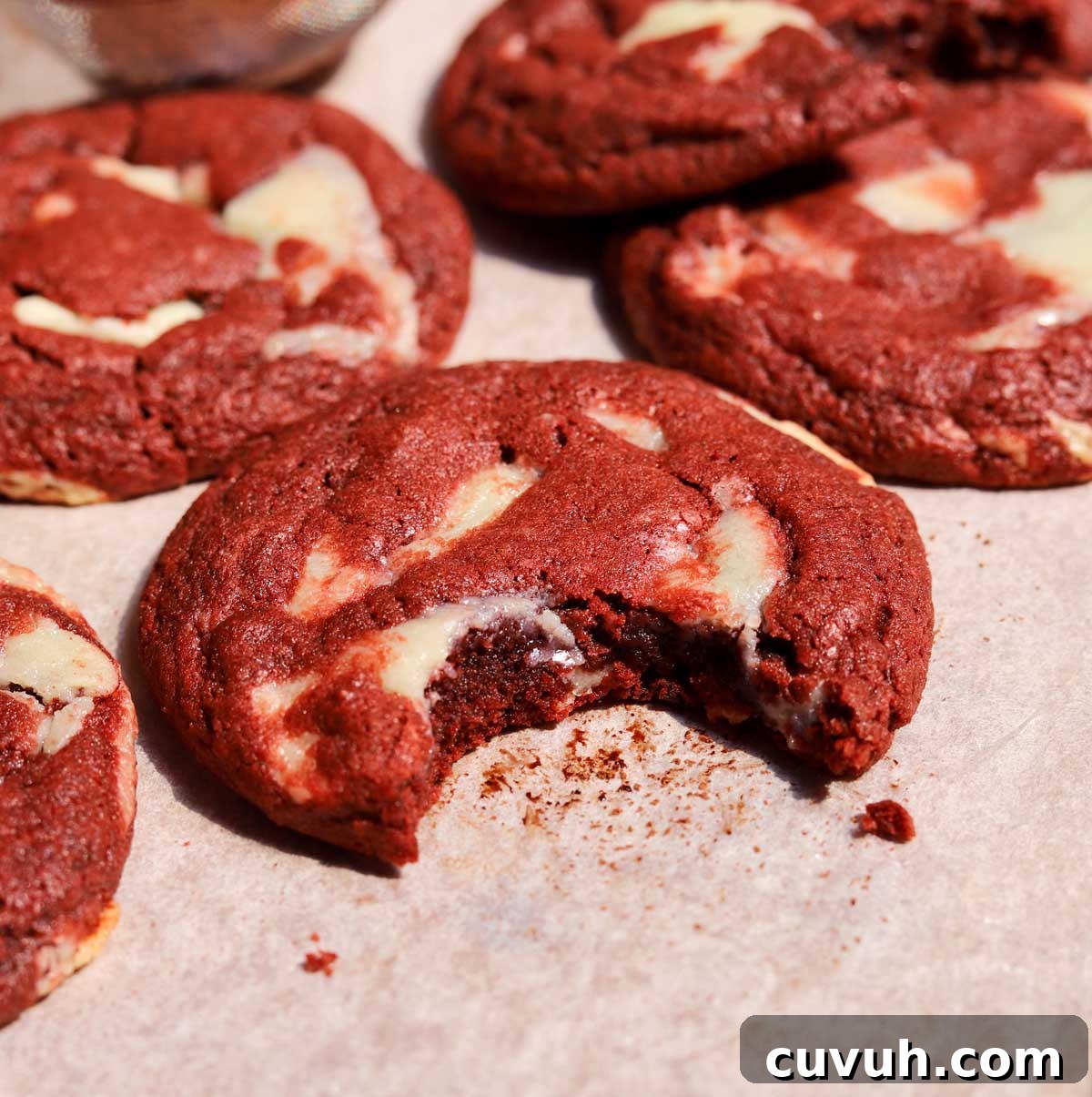
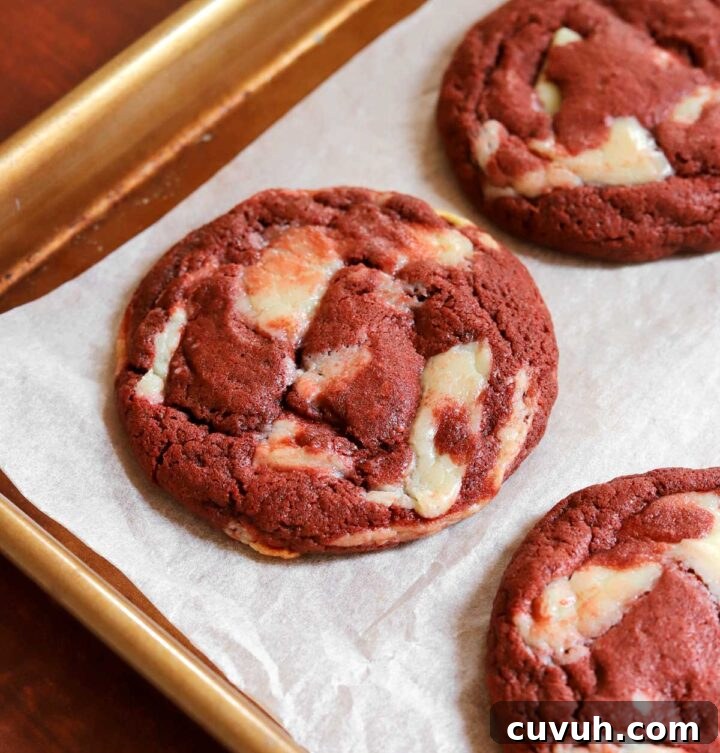
These Red Velvet Cookies deliver the tangy vanilla notes, moist fudgy texture, and rich red color of classic red velvet cake—reimagined as cookies. The dough uses sour cream and a splash of vinegar to recreate the cultured dairy tang of buttermilk, while natural cocoa powder adds subtle fruity cocoa flavor and a warm, rusty tint. Chopped white chocolate–cream cheese bark is folded into the dough so each bite tastes like cream cheese frosting baked inside a fudgy cookie. They’re irresistible for red velvet lovers.
Why this recipe works
- Fudgy texture – The cookies stay dense, tender, and moist, similar to the velvet crumb of traditional red velvet cake.
- Cream cheese bark – Melted white chocolate combined with softened cream cheese creates a sweet, tangy filling that bakes into a fudgy, cream-cheese-like ribbon inside the cookie.
- Tangy vanilla flavor – Sour cream (or yogurt) plus a touch of vinegar and pure vanilla reproduces the classic red velvet profile.
- Natural cocoa powder – Using unalkalized cocoa gives fruity cocoa notes and the subtle reddish-brown hue characteristic of traditional red velvet.

What does red velvet cake taste like?
Red velvet is primarily a tangy vanilla cake with a hint of chocolate. The small amount of natural cocoa contributes subtle chocolatey, fruity notes rather than strong roasted or caramel flavors. Historically, the cocoa and acidic batter created a mild reddish hue, which modern recipes often amplify with food coloring.
What is red velvet cake?
Red velvet is a tender, moist vanilla cake with a slightly tangy, delicate flavor from cultured dairy and vinegar plus a touch of cocoa. Originating in the southern United States, it’s prized for its soft, velvety crumb. Natural (unalkalized) cocoa in an acidic batter once produced the subtle reddish-brown color; today, many recipes use food coloring for a brighter red. The small amount of cocoa also contributes to a softer texture compared with plain vanilla cake.

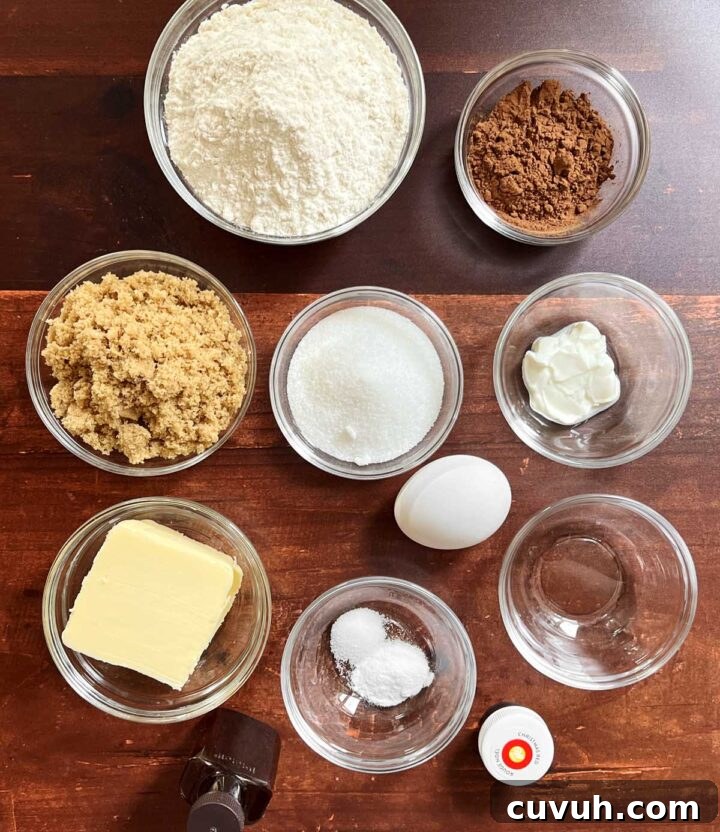
Ingredients for red velvet cookies
- Butter – Use real butter for flavor; it carries the vanilla and cocoa notes. If using salted butter, reduce added salt to 1/4 teaspoon.
- Granulated and brown sugar – A mix of white sugar for crisp edges and light brown sugar for chewiness provides ideal texture and balance.
- Egg – One large egg gives the right amount of moisture for a chewy, not cakey, cookie.
- Pure vanilla extract – Essential for the classic red velvet aroma.
- Sour cream or full-fat yogurt – Adds the cultured dairy tang of buttermilk without over-wetting the dough.
- Vinegar – A small amount supports the characteristic red velvet flavor and color chemistry when using natural cocoa.
- Red gel food coloring – A little gel coloring deepens the red. This recipe uses a modest amount to avoid any dye aftertaste.
- Salt – Enhances all the flavors and balances sweetness.
- All-purpose flour – Unbleached AP flour yields the best chewy texture.
- Natural cocoa powder – Prefer unalkalized cocoa for fruity notes and a lighter reddish hue; Dutch-processed cocoa will darken color and alter acidity.
- White chocolate – Use high-quality pure white chocolate (cocoa butter as the fat) so it melts smoothly with cream cheese.
- Cream cheese – Blended with white chocolate to make the cream cheese bark that’s folded into the dough.
Step-by-step instructions: how to make red velvet cookies
- Make the white chocolate cream cheese bark. Melt white chocolate gently in a heatproof bowl over barely simmering water. Cube very soft cream cheese and whisk in the melted chocolate until smooth and glossy, forming an emulsion. Spread the mixture on parchment to about 1/8–1/4 inch thick.
- Chill and cut the bark. Freeze the spread mixture for about 30 minutes until firm. Peel off parchment and cut into roughly 3/4-inch pieces. Return pieces to the freezer until ready to fold into dough.
- Combine dry ingredients. Whisk together flour, cocoa powder, baking soda, and salt in a medium bowl. Sift cocoa if lumpy.
- Combine wet ingredients. Cream softened butter with brown and granulated sugar until smooth and slightly pale. Mix in the egg, then add sour cream, vanilla, vinegar, and red food coloring until evenly combined.
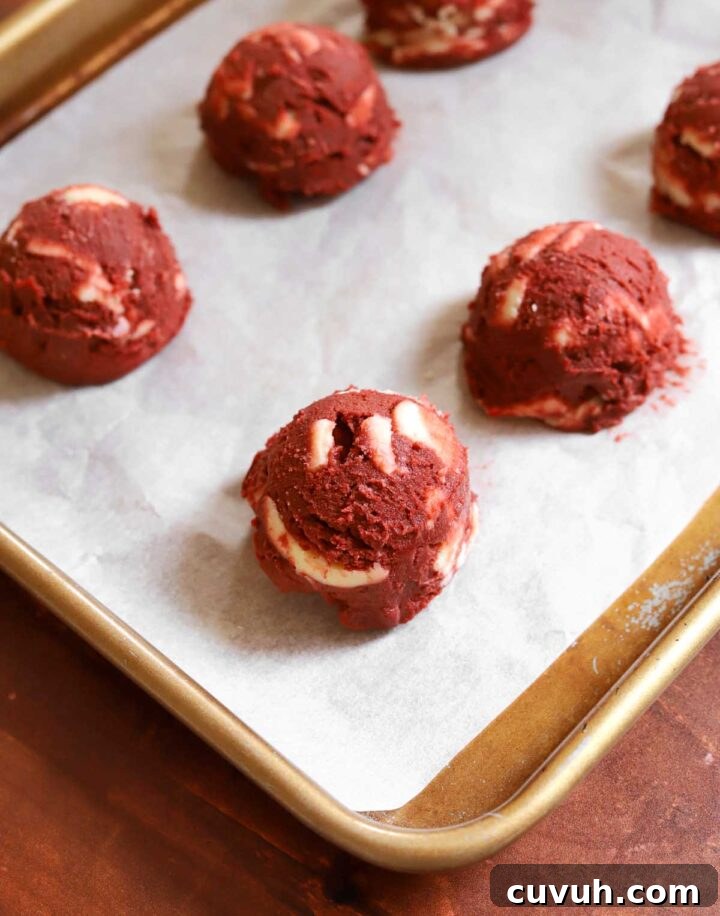
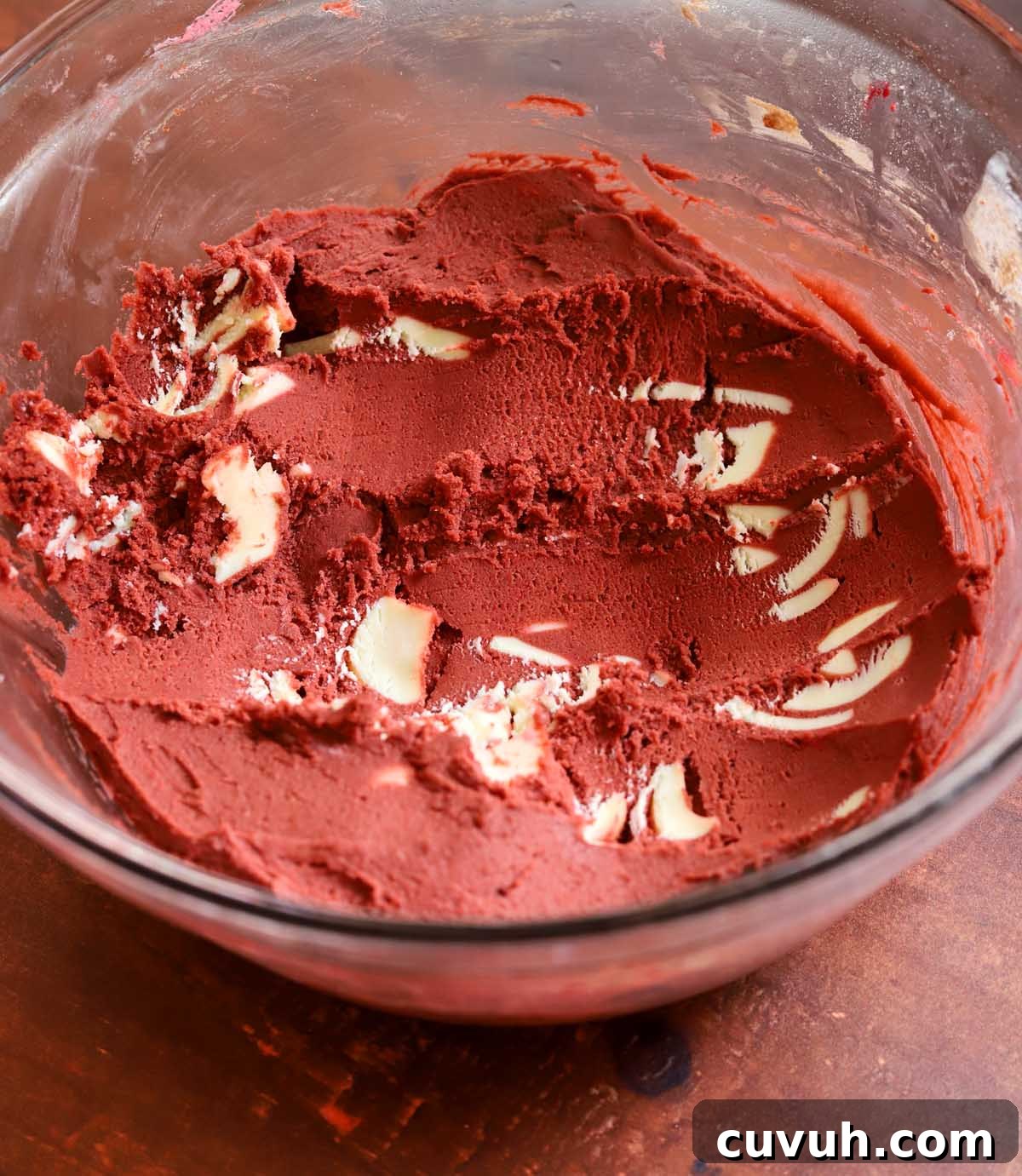
- Mix dough. Fold in the dry ingredients gently. Just before the flour is fully incorporated, fold in the chilled white chocolate–cream cheese pieces so they remain distinct pockets in the dough.
- Chill the dough. Cover and refrigerate for about 1 hour to firm up the dough and concentrate flavor.
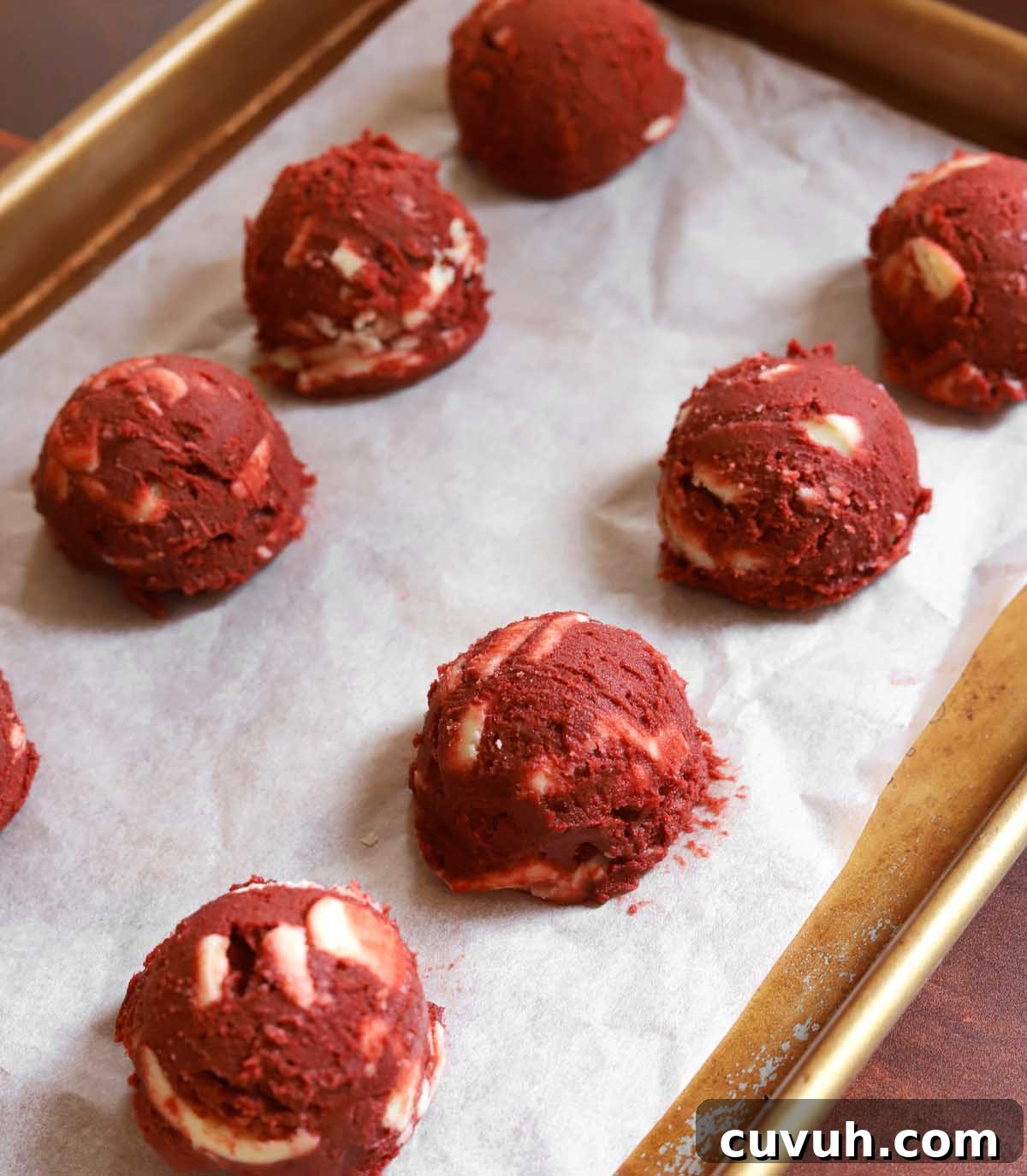
- Portion and bake. Preheat oven to 350°F (175°C). Use a 1.35-ounce cookie scoop (or similar) to portion dough and roll into smooth balls. Place on parchment-lined baking sheets at least 2 inches apart. Bake 10–12 minutes, until edges are set and centers remain slightly soft. Let cookies rest on the baking sheet for 2 minutes, then transfer to a wire rack to finish cooling.
Expert baking tips
- Do not overmix. Mix only until the flour is incorporated and the bark is evenly distributed; overmixing makes cookies less fudgy and can smear the bark.
- Measure flour accurately. Too much flour yields dry cookies; too little causes excessive spread.
- Soften the cream cheese completely. Very soft cream cheese blends smoothly with white chocolate for an even bark.
- Keep the bark frozen until use. The cream cheese bark softens quickly; keep it cold so it remains as distinct pieces in the dough rather than melting into it.
Recipe FAQ
Natural (unalkalized) cocoa is traditional because it keeps the reddish hue and offers fruity notes, but Dutch-processed cocoa also works—your cookies will be darker and the acidity will differ slightly.
Plain white distilled vinegar works well, and apple cider vinegar is a fine alternative if you prefer.
A small amount of acid historically preserved the reddish color of natural cocoa. Today it also contributes to the characteristic red velvet flavor rather than “tenderizing” the batter.
Add an extra 2 tablespoons (about 18 g) of flour to the dough for a thicker cookie.
Chilling for at least 1 hour (up to 4 hours) is recommended. It improves texture, flavor concentration, and yields chewier cookies that keep longer.
Excess flour or making very small dough portions can limit spread. This recipe yields about 14 cookies for the intended texture and shape.
Use pure white chocolate made with cocoa butter (not compound chocolate) for the best melting and flavor when making the cream cheese bark.
Storage and freezing
Store at room temperature in an airtight container for up to 2 days. For longer storage, refrigerate for up to a week—the cream cheese pieces keep them soft, and many enjoy them chilled.
Yes. Wrap dough or place portions in a zip-top freezer bag. For individual cookie balls, chill dough 1 hour, portion and freeze in a bag for up to 3 months.
If baking from a frozen block, thaw, portion, and bake as directed. For frozen dough balls, bake them directly and add 1–2 minutes to the bake time.
Craving more cookies?
If you love cookies, try other popular recipes such as chewy brown butter chocolate chip cookies, bakery-style chocolate chip cookies, salted pistachio chocolate chunk cookies, or Levain-style chocolate chip cookies.
Baking with white chocolate
White chocolate pairs beautifully with cream cheese and bright flavors—try it in other recipes featuring white chocolate for a creamy, sweet contrast.
Red Velvet Cookies
Christina Marsigliese, Food Scientist MSc.
Ingredients
White Chocolate Cream Cheese Bark:
- 6 oz (170 g) white chocolate (minimum 28% cocoa butter)
- 3 tbsp (45 g) full-fat cream cheese, softened
Red Velvet Cookie Dough:
- 1 1/4 cups (180 g) all-purpose flour
- 3 tbsp (18 g) natural cocoa powder
- 1/2 tsp baking soda
- 1/4 tsp salt
- 1/2 cup (113 g) unsalted butter
- 1/2 cup (110 g) packed light brown sugar
- 1/3 cup (65 g) granulated sugar
- 1 large egg, room temperature
- 1 tbsp (15 ml) full-fat sour cream or plain yogurt
- 1 tsp (5 ml) pure vanilla extract
- 1/4 tsp white vinegar
- 1/4 tsp red gel food coloring
Instructions
- Make the white chocolate cream cheese bark. Melt white chocolate gently over barely simmering water. Whisk together with very soft cream cheese until glossy. Spread on parchment to 1/8–1/4 inch and freeze 30 minutes. Cut into ~3/4-inch pieces and keep frozen.
- Mix dry ingredients. Whisk flour, cocoa, baking soda, and salt in a bowl.
- Cream wet ingredients. Cream butter with brown and granulated sugars until smooth. Add egg, then stir in sour cream, vanilla, vinegar, and red food coloring.
- Combine and fold in bark. Fold dry ingredients into wet. Just before fully incorporated, fold in the frozen cream cheese bark pieces. Cover and refrigerate dough for 1 hour.
- Bake. Preheat oven to 350°F (175°C). Portion dough with a 1.35-oz scoop, roll into balls, and space 2 inches apart on parchment-lined sheets. Bake 10–12 minutes until edges are set. Cool on trays 2 minutes, then transfer to a wire rack.