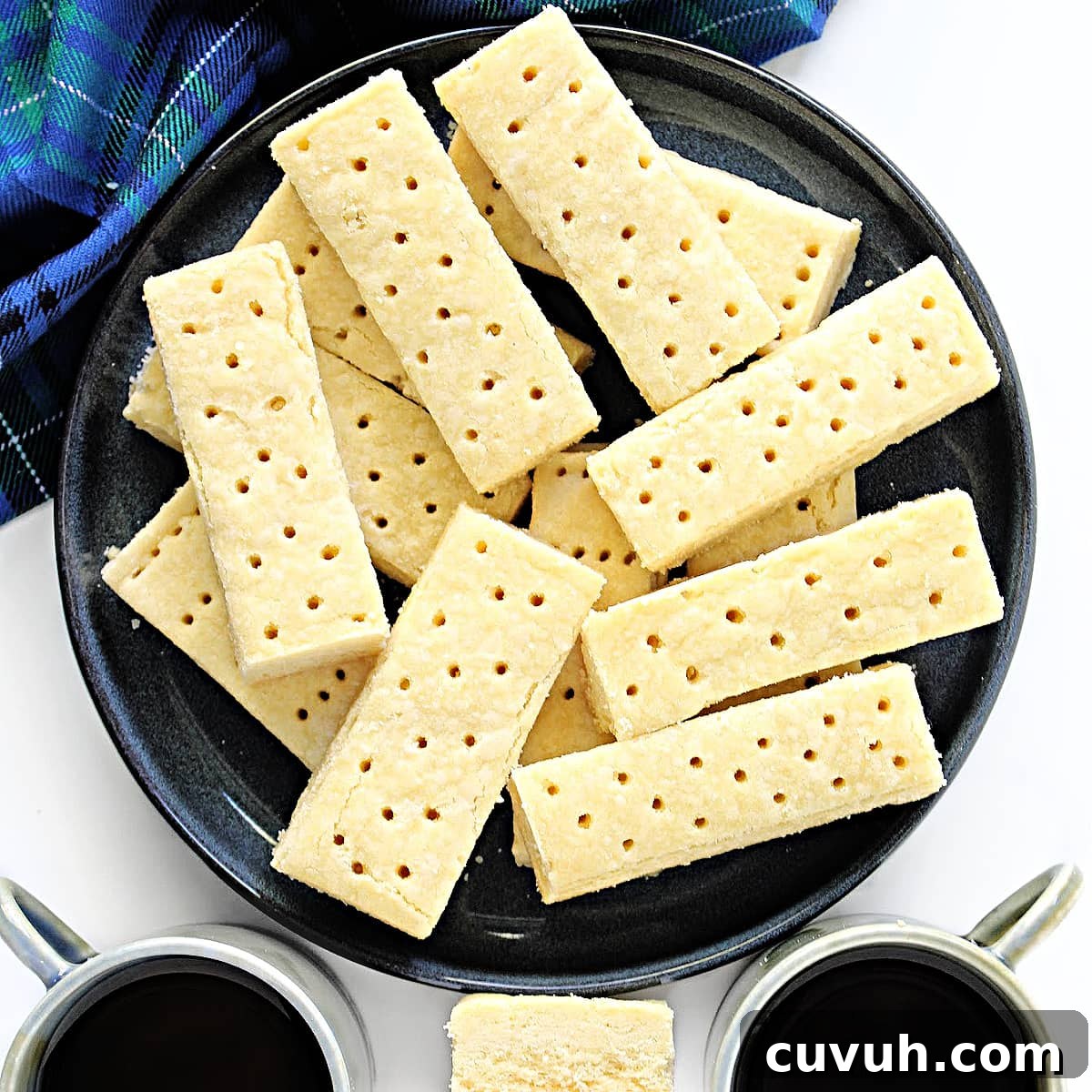
Melt-in-your-mouth Scottish shortbread is an ideal tea-time treat. These rich, buttery cookies require only four simple ingredients and can be ready in about 30 minutes from start to finish.
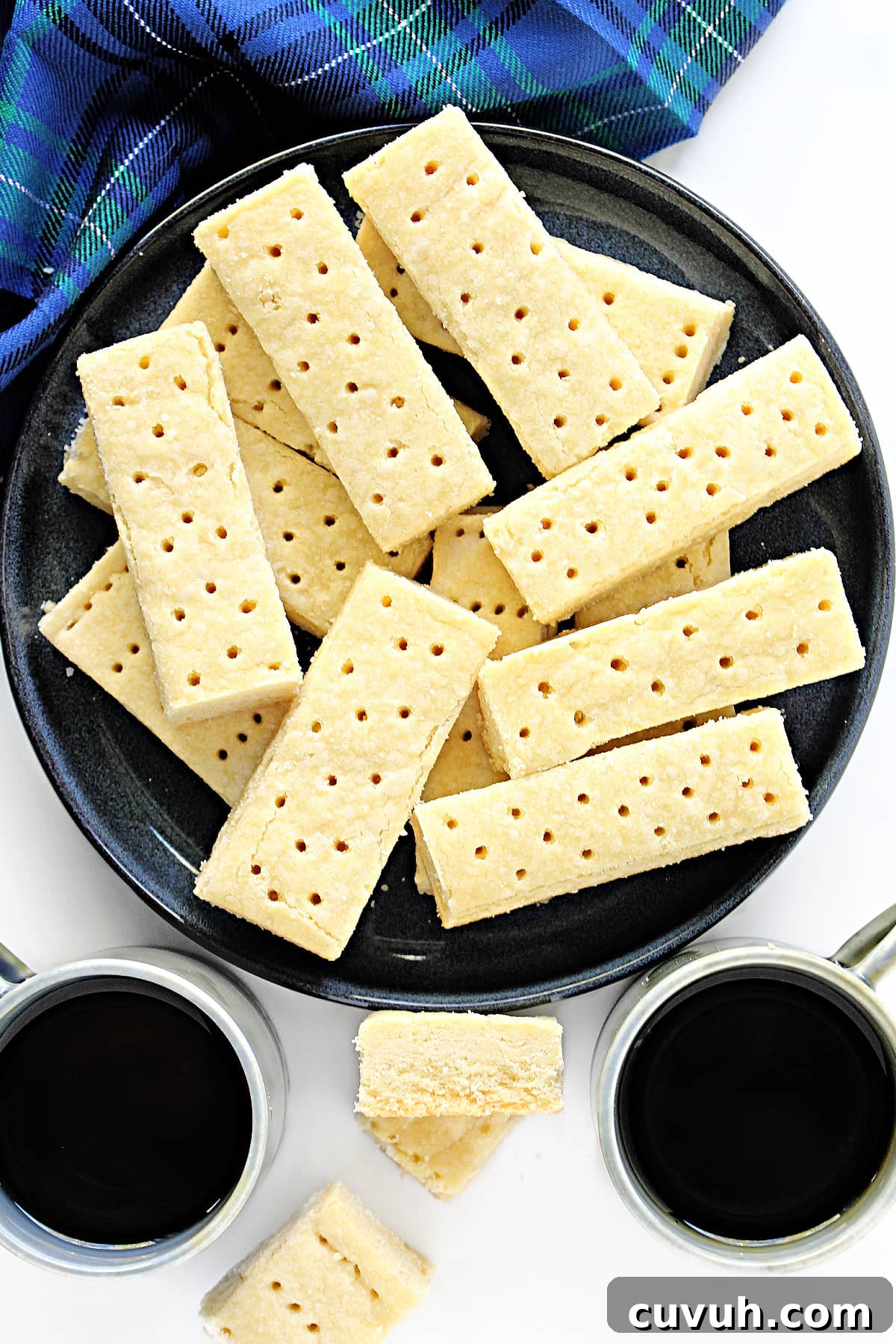
Why you’ll love this recipe
- Shortbread is one of the simplest cookies to make and uses only pantry-friendly ingredients.
- The flavor and texture mature with time—the cookies taste even better after a day or two.
- Shortbread freezes well, so you can make batches ahead for guests, holidays, or gift boxes.
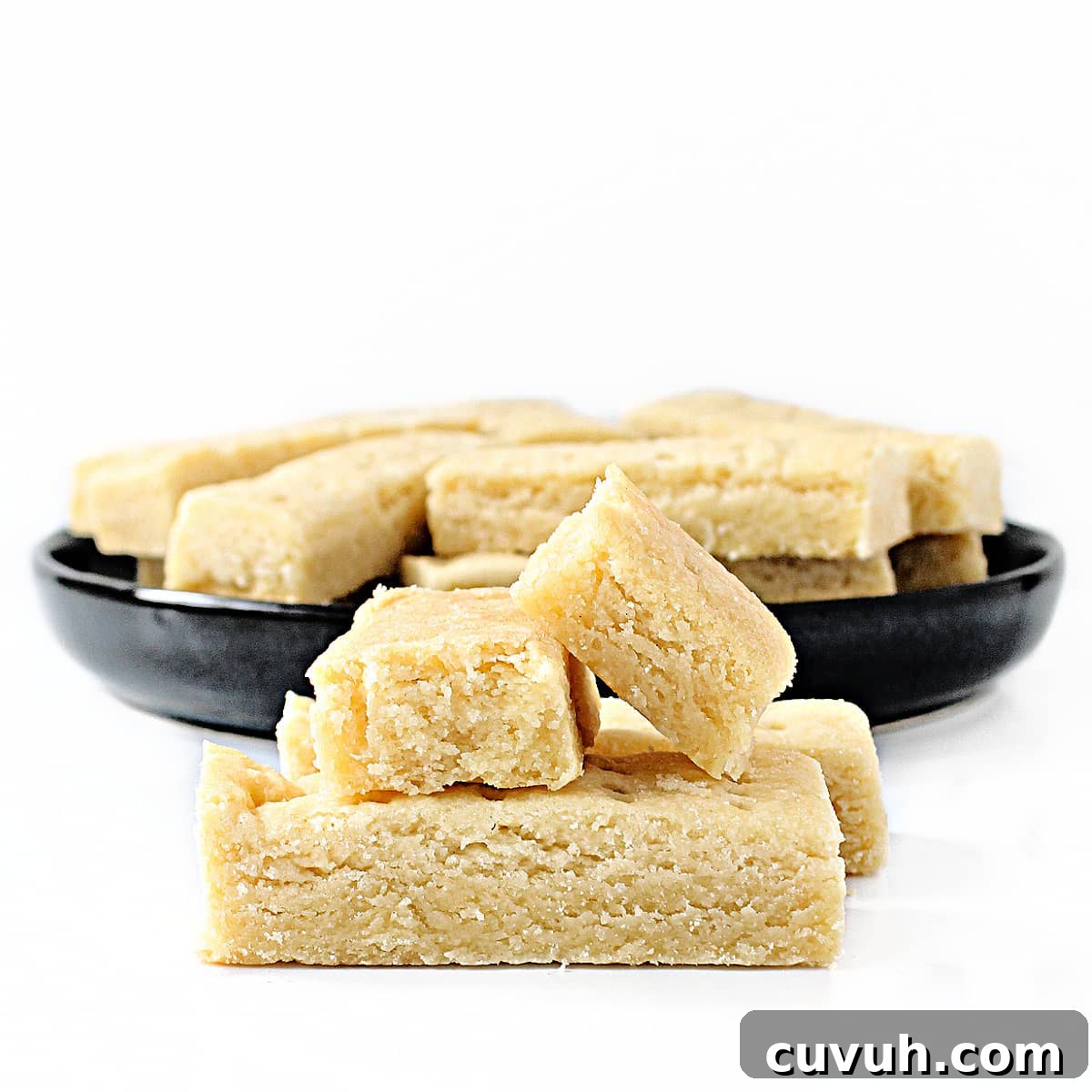
Traditional Scottish shortbread delivers a tender, melting crumb and a pronounced butter flavor. While variations like chocolate-espresso or peppermint shortbread are delightful, the classic recipe contains no added extracts so the butter remains the star.
For the best results, use a high-quality European-style butter with a higher butterfat content. That richer butter yields a more intense flavor and a smoother mouthfeel.
Stored in an airtight container at room temperature, shortbread keeps well for at least two weeks and often tastes richer after resting. Because of its high butter content, avoid shipping shortbread in hot weather; for warm-season gifts consider sugar cookies made with shortening instead.
Ingredients
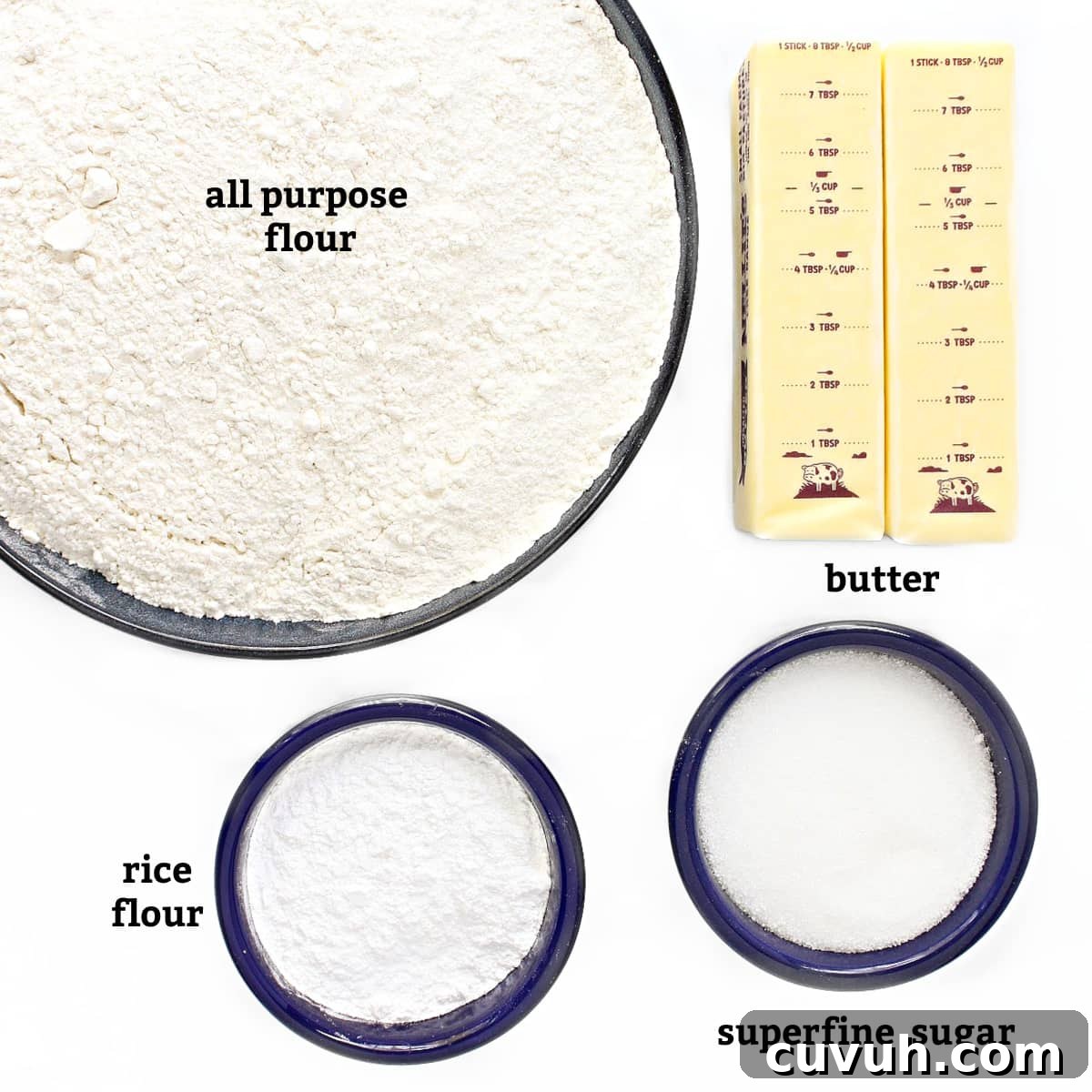
- If using unsalted butter, add ¼ teaspoon salt to the dry ingredients to balance the flavor; salted butter is traditional in Scotland.
- Rice flour (or cornstarch) is included to add a delicate crunch and to reduce crumbliness. Use dry-milled rice flour rather than wet-milled types.
- Superfine (caster) sugar is a finely ground granulated sugar—not powdered sugar. If you don’t have it, pulse granulated sugar in a food processor or blender until fine.
Instructions
This overview summarizes the method; complete step-by-step instructions follow in the recipe card below.
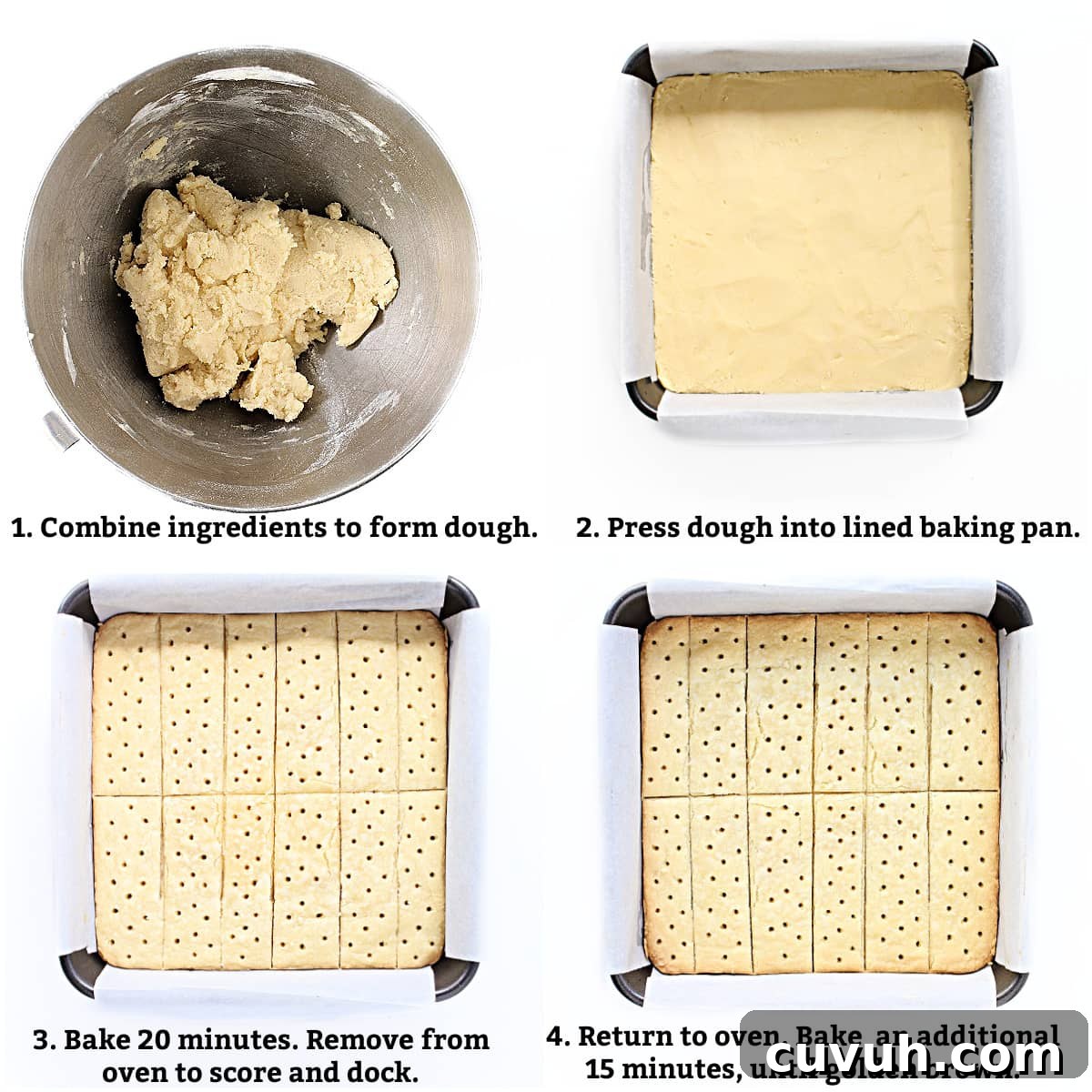
- Combine all ingredients in a stand mixer fitted with the paddle attachment or mix by hand until a cohesive dough forms.
- Press the dough evenly and firmly into an 8″ x 8″ pan lined with parchment paper.
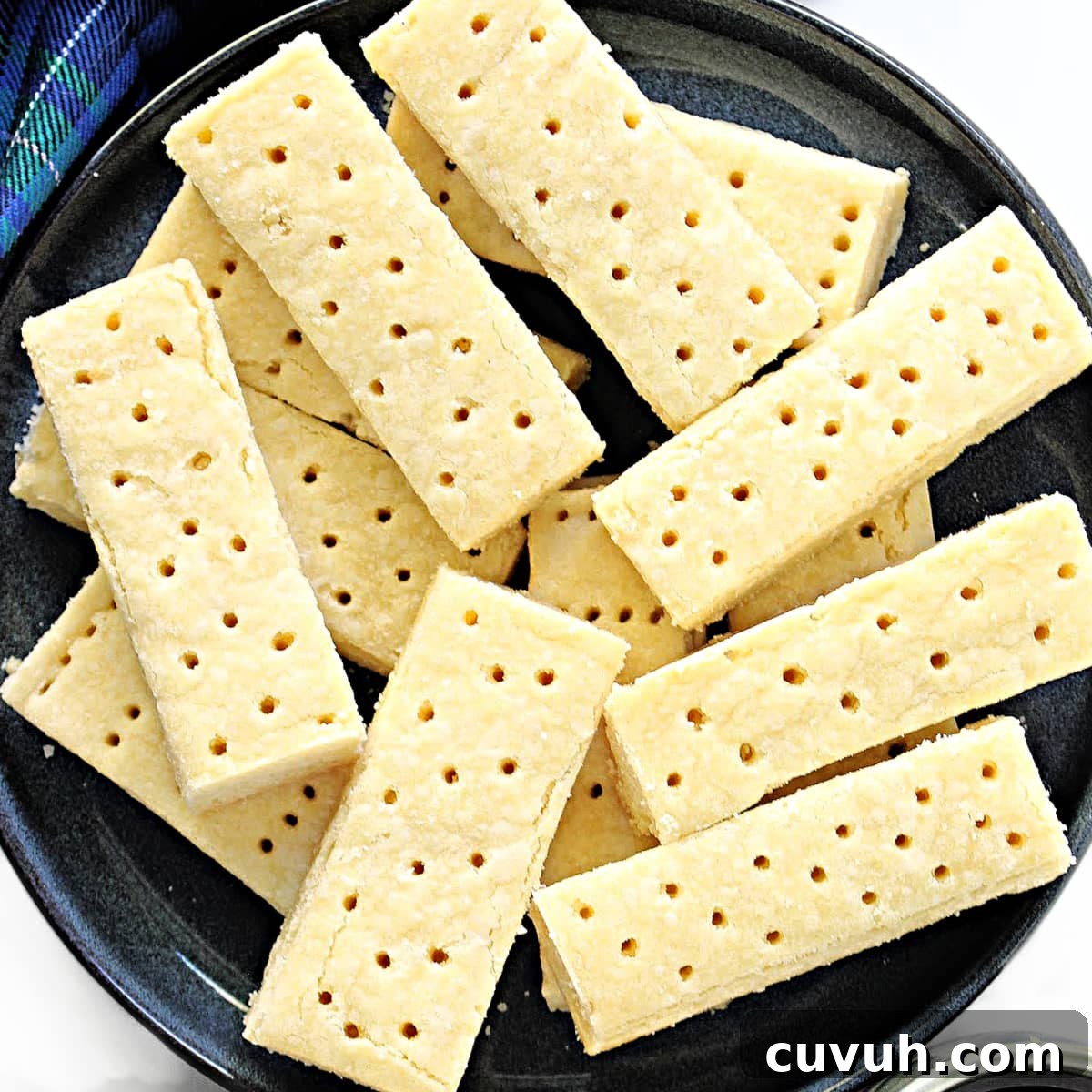
- Bake for 20 minutes, then remove the pan and quickly score the dough into bars by pressing a knife partway through. Prick the surface (dock) with a fork, chopstick, or skewer to allow steam to escape.
- Return the pan to the oven and bake an additional 15 minutes, or until the edges turn lightly golden.
Storage
Keep shortbread in an airtight container at room temperature for up to two weeks. For longer storage, freeze well-wrapped shortbread for several months.
Tips and variations
- Because these cookies are all about butter, use the best-tasting butter you can find.
- Do not substitute a different type of sugar—caster sugar produces the ideal texture. If necessary, make caster sugar by grinding regular granulated sugar until fine.
- Avoid overmixing; gentle handling keeps the crumb tender.
- To press the dough evenly into the pan, cover it with wax paper and press with the flat bottom of a measuring cup, drinking glass, or another pan.
- You can dock the dough before baking; the holes help steam escape but may close up during baking. For visible docking holes or scored lines after baking, score and dock partway through the bake when the dough has set.
- Make this recipe in an 8″ round pan or a shortbread mold and cut into wedges (petticoat tails) for a more traditional presentation.
Frequently asked questions
High-quality butter is the most important factor. Use a rich European-style butter for best flavor.
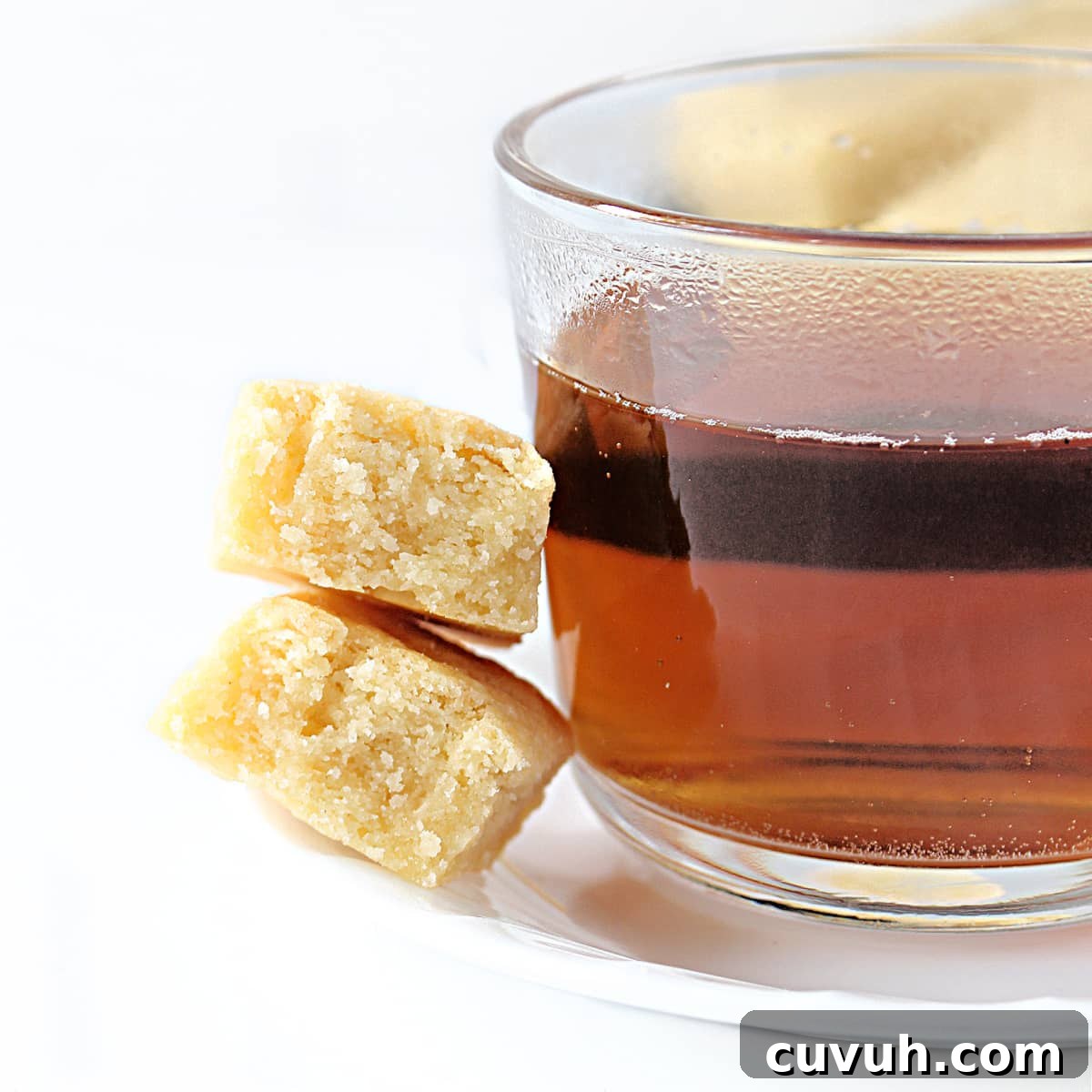
A small amount of rice flour or cornstarch produces a melt-in-the-mouth texture with a slight crunch and helps stabilize the cookie for mailing.
Omitting rice flour results in a denser, more crumbly crumb.
Caster (superfine) sugar is recommended for the proper texture. If you don’t have it, finely grind granulated sugar in a food processor or blender.
Pricking (docking) the top releases steam during baking so the thick dough bakes evenly and avoids cracking.
Because the dough contains a lot of butter it softens while baking and can close scored lines and holes. To keep markings visible, score and dock after an initial 20 minutes of baking when the dough has partially set, then return to the oven.
Shortbread pressed into a pan doesn’t need to be chilled because it won’t spread during baking.
More shortbread recipes
Chocolate Shortbread Cookies are ultra-chocolaty and studded with chocolate chips.
Vanilla Bean Shortbread Cookies offer a crisp, buttery bite with specks of vanilla bean for warm, classic flavor.
Slice-and-bake shortbread lets one dough make three different flavors—perfect for holiday trays and gifting.
Strawberry Shortbread Cookies are a bright, buttery choice for Valentine’s Day or anytime you want a fruity twist.
Browse a collection of shortbread recipes to find your favorite variations and serving ideas.
Scottish Shortbread Cookie Recipe
Ingredients
- 2 cups all purpose flour
- ¼ cup rice flour or cornstarch
- 1 cup butter European butter recommended. If using unsalted butter, add ¼ teaspoon salt to the dough.
- ⅔ cup extrafine (caster) sugar Also called bakers’ sugar or superfine sugar.
Instructions
-
Preheat the oven to 350°F (175°C). Line an 8″ x 8″ pan with parchment paper.
-
In a stand mixer fitted with the paddle attachment, combine the flour, rice flour (or cornstarch), caster sugar, and butter at medium speed until a dough forms. Mix only until combined to keep the crumb tender.
-
Press the dough firmly and evenly into the prepared pan, smoothing the surface.
-
Bake for 20 minutes, then remove from the oven and quickly score the dough into bars by pressing a sharp knife partially into the surface. Prick the dough within the scored lines using a fork, chopstick, or skewer.
-
Return the pan to the oven and bake another 15 minutes or until the edges are lightly golden brown.
-
Allow the shortbread to cool in the pan until warm, about 10 minutes, then cut along the scored lines and finish cooling completely before removing the pieces.
-
Store the cooled shortbread at room temperature in an airtight container for up to two weeks.
Notes
- Do not substitute a different sugar—caster sugar gives the best texture. If necessary, make your own by pulsing granulated sugar until fine.
- Handle the dough gently and avoid overmixing for the most tender crumb.
- To press the dough evenly into the pan, cover with wax paper and press with a flat-bottomed cup or glass.
- The dough can be docked before baking; the holes help release steam but may close up during baking.
- You can bake this recipe in an 8″ round pan or shortbread mold and cut into wedges (petticoat tails) for a traditional look.
Packing tips
- Double-wrap small stacks of cookies in plastic wrap.
- Place wrapped bundles snugly in an airtight container or freezer-weight zip-top bag for mailing.
Nutrition
|
Carbohydrates: 30g
|
Protein: 3g
|
Fat: 16g
First Published: December 23, 2013. Last Updated: November 2, 2024. Updated with clearer instructions, improved photos, and additional tips for readers.