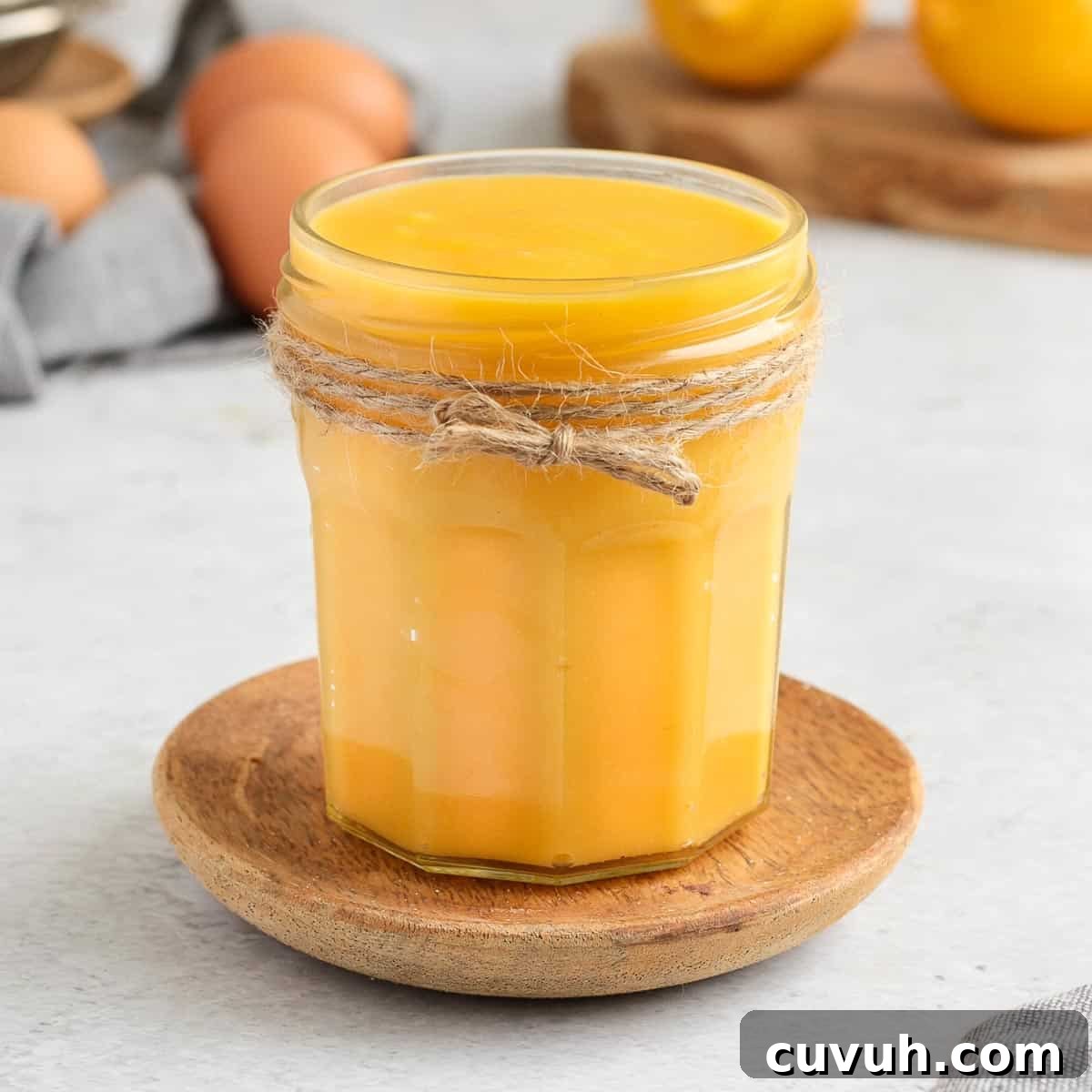
This super tangy lemon curd is a classic sweet spread that brightens breakfast and desserts alike. Use it on pancakes, scones or crêpes, as a cake filling or cheesecake topping — keep a jar of this low-sugar lemon curd in the fridge for whenever you need a bright, zesty touch.
Why we love this recipe
Lemon curd is a timeless favorite because it’s intensely flavorful and incredibly versatile. Homemade curd is quick to make and far superior to most store-bought jars — and you only need a few simple ingredients and basic tools to prepare it.
Making curd from scratch lets you control sweetness and acidity. This recipe is intentionally on the tangier side, so it’s a great low-sugar version if you prefer a bright citrus punch.
Serve it with baked goods like lemon ricotta cake or brioche French toast, swirl it into yogurt, or use it as a filling or topping for tarts, cheesecakes and pastries. It’s perfect for spooning straight from the jar, too.
Ingredients
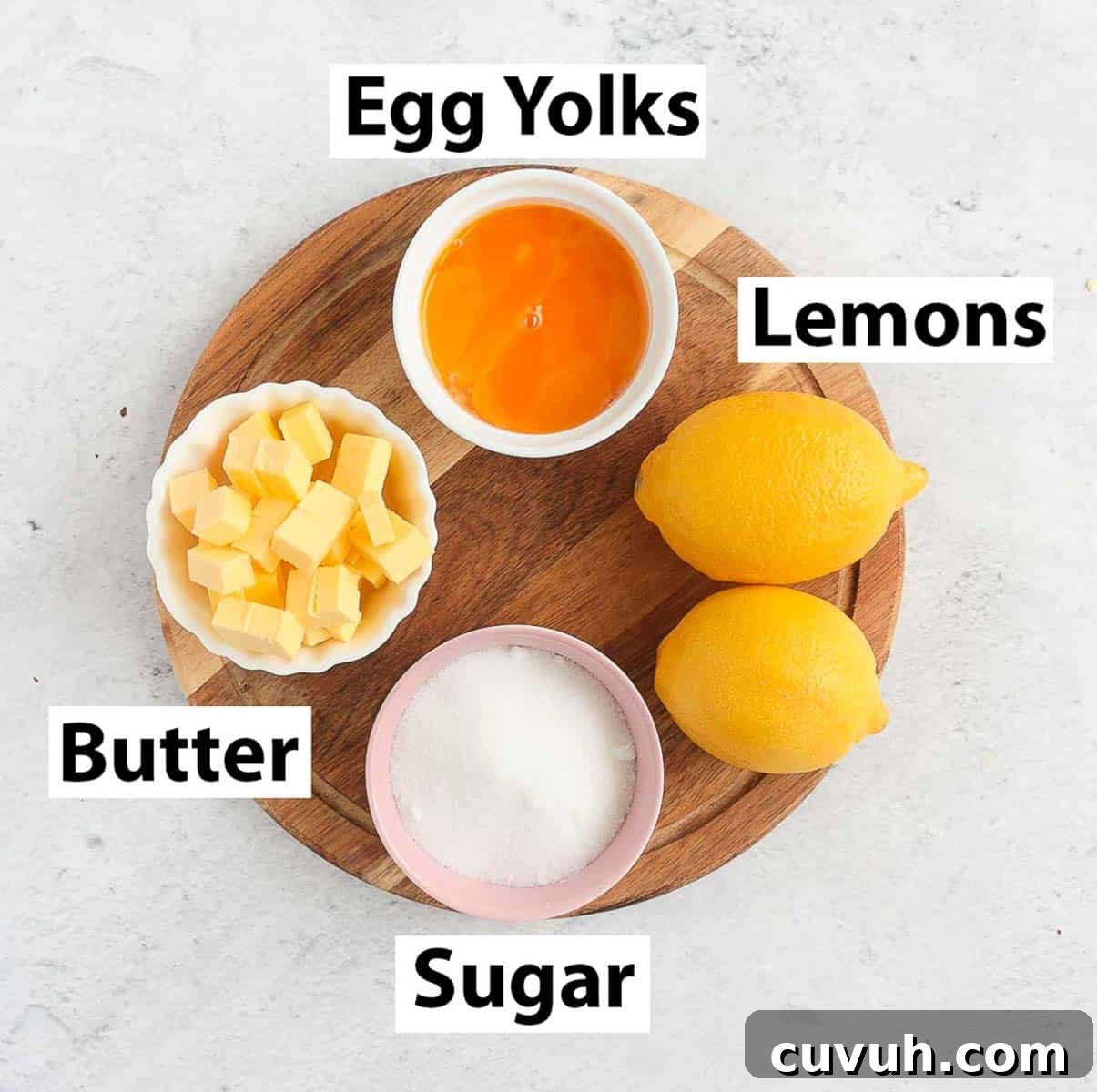
You only need four ingredients:
- Egg yolks — room temperature. (Save the whites for another recipe.)
- Sugar — caster sugar or fine granulated sugar. Liquid or sugar-free sweeteners will change the texture and preservation.
- Lemon — juice and optional zest. Depending on size, 2–4 lemons may be needed to reach the required volume; measure the juice rather than rely on a count of fruit.
- Butter — unsalted and at room temperature, cut into small cubes so you can add it gradually while cooking.
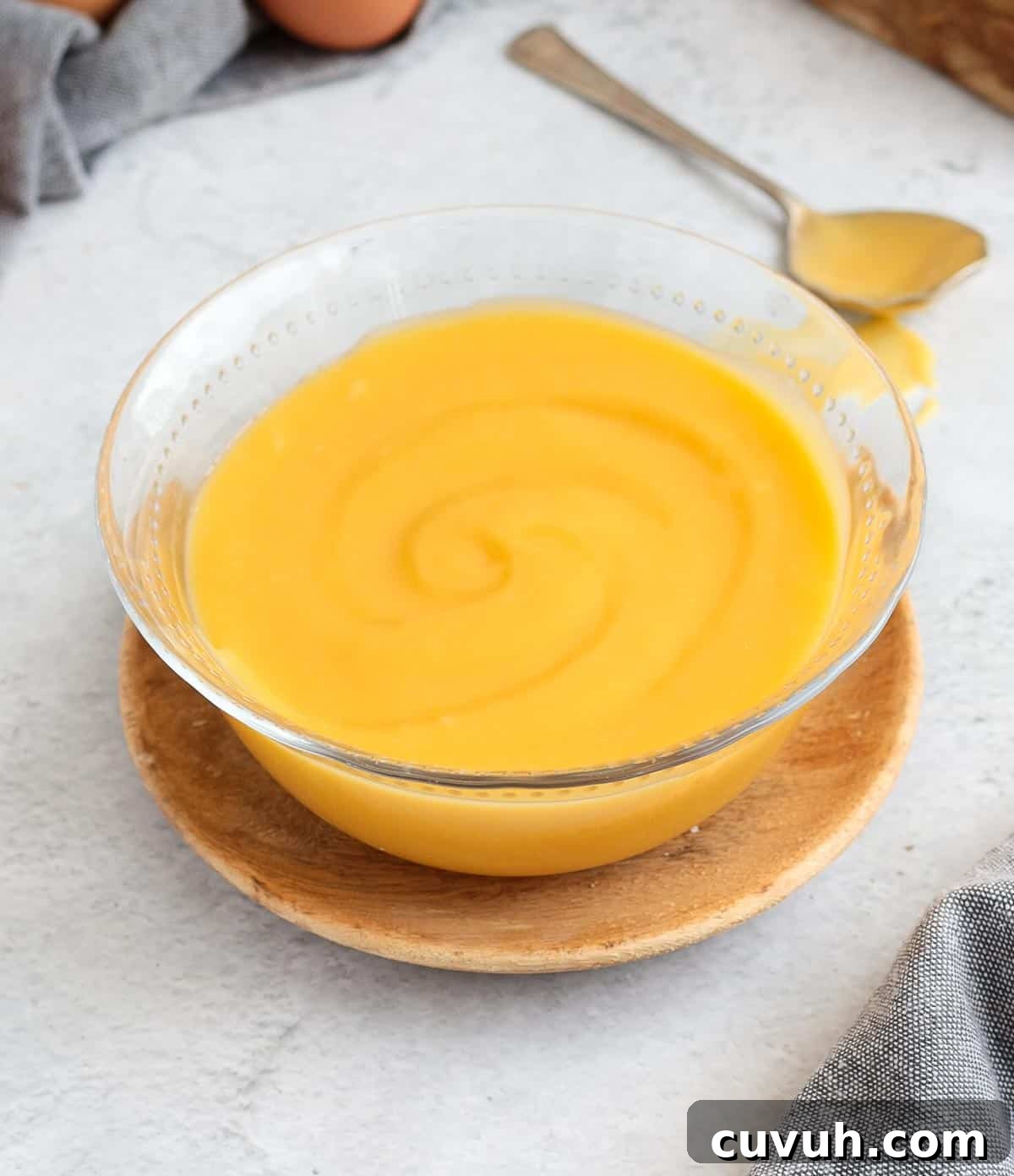
How to make Lemon Curd step by step
All the cooking happens in a small pot on the stove. Have a whisk, a zester and your measured ingredients ready before you begin. Separating yolks and cutting the butter into cubes first makes the process smooth and fast.
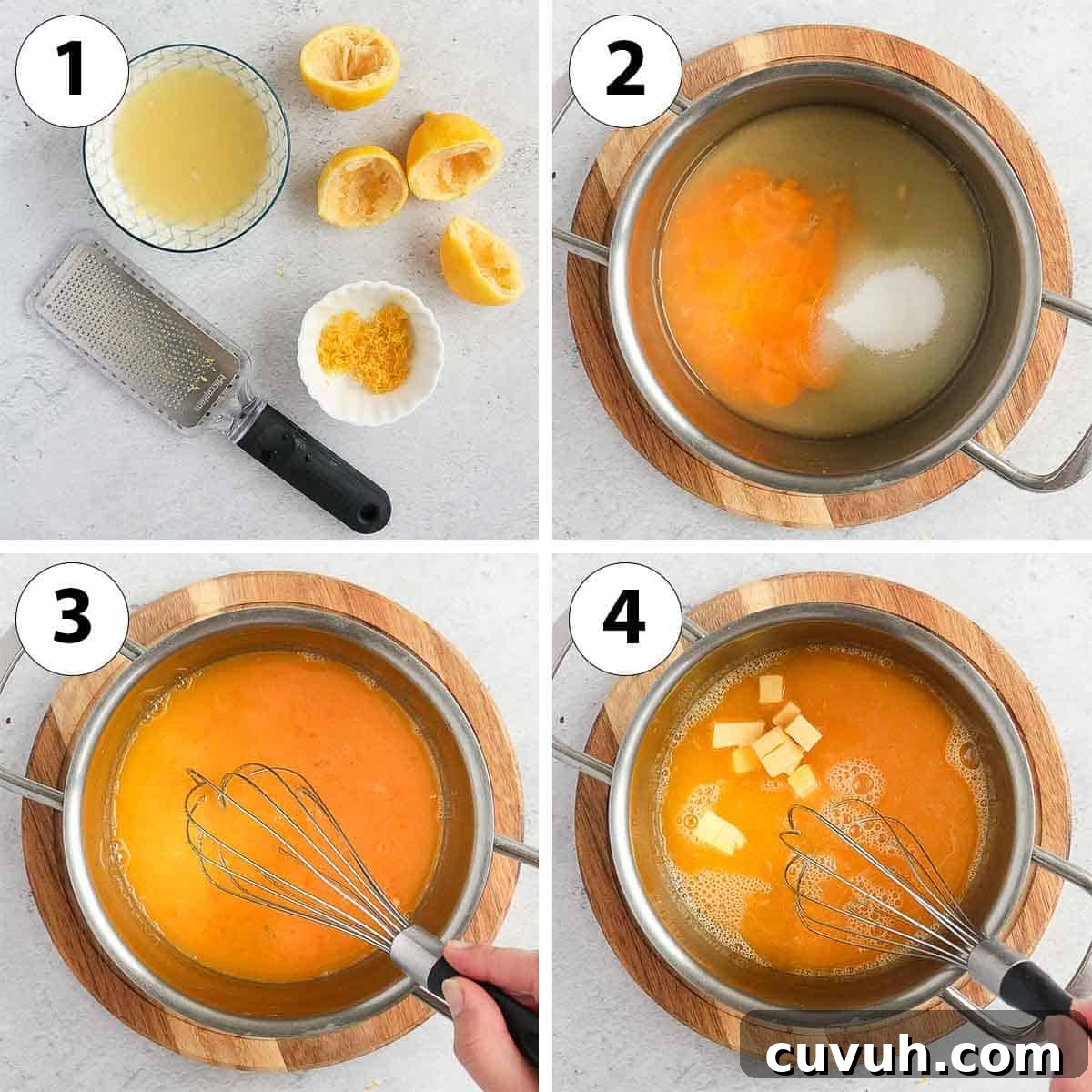
- Step 1: Zest and juice the lemons, measuring the liquid to match the recipe amount.
- Step 2: In a small pot combine the lemon juice, egg yolks and sugar. Whisk to blend.
- Step 3: Place the pot over very low heat and whisk constantly. Work slowly — low heat prevents the eggs from scrambling. After a few minutes the mixture will begin to thicken slightly; do not let it boil.
- Step 4: Add the butter in small cubes, a little at a time, whisking after each addition until fully incorporated. When all the butter is added, stir in the lemon zest if using.
- Step 5: Continue whisking over low heat until the curd thickens. Depending on stove temperature this can take from about 5 to 15 minutes. Keep it below boiling to avoid a grainy texture.
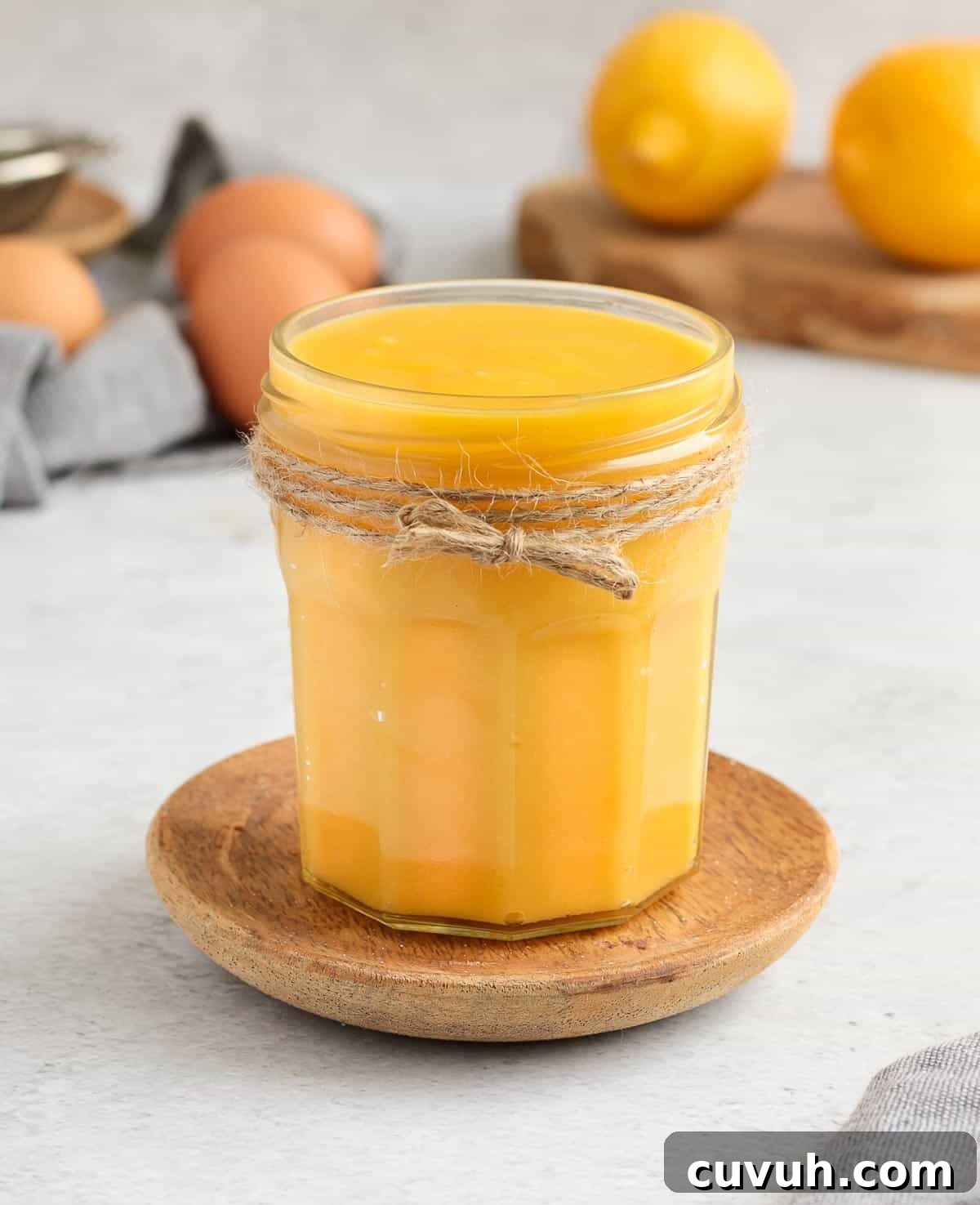
- Finish: For extra smoothness, optionally strain the curd through a fine mesh sieve to remove any tiny cooked bits. Transfer to an open jar or bowl, cool to room temperature, then refrigerate.
Tips to make this recipe
- Use room-temperature ingredients to reduce the chance of the curd splitting.
- Cook on very low heat and whisk constantly — patience at low temperature gives a silky curd. Never let the mixture boil.
- Add cold butter slowly; adding it all at once or using very cold butter can cause the curd to separate.
- Taste and adjust sweetness while it’s hot if you prefer a milder tartness; whisk in a little extra sugar until dissolved.
Troubleshooting
- Too thick: Strain the curd through a fine sieve and gently blend with an immersion blender if needed. You can thin slightly with a tablespoon of lemon juice at a time.
- Too thin: The curd will continue to set as it cools. If it hasn’t passed the spoon test, keep cooking on low until it thickens; sometimes it takes longer than expected.
- Split or curdled: This usually happens from too-high heat or cold butter. Try blending slowly with an immersion blender and strain. If needed, return to very low heat and whisk until it comes back together.
How to use Lemon Curd
Lemon curd has many uses: as a topping, filling, spread or dip. A few ideas:
- Spoon over lemon yogurt cake or ricotta cheesecake.
- Spread on scones or use as a filling for mini tarts and cheesecakes.
- Drizzle over pancakes, waffles or Japanese soufflé pancakes.
- Fill crêpes or thumbprint cookies, or serve as a bright dip for shortbread cookies.
Recipe FAQs
Yes. Once cooled, store the lemon curd in the refrigerator. Because this version is low in sugar, it is not recommended for home canning.
Stored in the fridge in a sealed jar, it’s best consumed within about a week due to the lower sugar content.
Yes — lemon curd freezes well for several months. Freeze in a freezer-safe container, bags or ice cube trays for single portions. Thaw overnight in the fridge and re-whisk briefly if fats separate.
Recipe
Tangy Lemon Curd
Ingredients
- 3 egg yolks, at room temperature
- 80 g (1/3 cup) caster sugar
- 100 ml (1/3 cup + 1 tbsp) lemon juice (about 2–3 large lemons)
- 60 g (4 tbsp) unsalted butter, room temperature, cut into small cubes
- 1 tsp lemon zest, optional
Instructions
- Prepare ingredients: separate yolks from whites, cut butter into cubes, zest and juice the lemons.
- Combine egg yolks, sugar and lemon juice in a small pot. Whisk to combine.
- Place the pot over very low heat and whisk constantly until the mixture begins to thicken (about 3–5 minutes). Do not let it boil.
- Add the butter gradually, whisking between additions until fully incorporated. Stir in lemon zest if using.
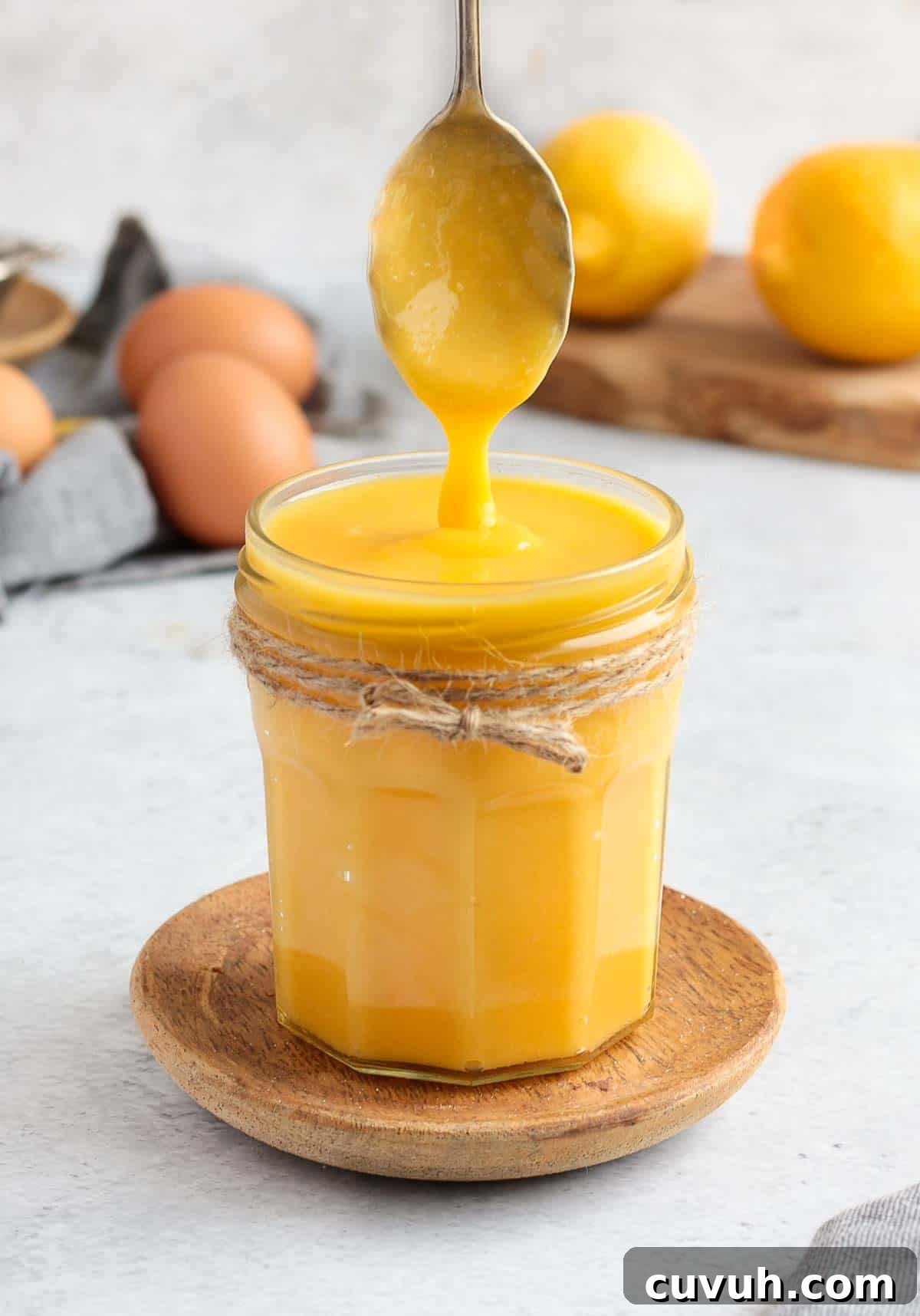
- Continue whisking over low heat until the curd thickens, about 5–15 minutes. Use the spoon test: dip the back of a spoon into the curd and draw a line; if the line remains clear, it’s ready.
- Optionally strain through a fine mesh sieve to remove any tiny cooked bits.
- Transfer to an open jar or bowl and let cool to room temperature before sealing. Refrigerate and consume within about a week.
Notes
Yield: Makes about 1 jar. Easily doubled or tripled.
Ingredient tips: Measure lemon juice by volume rather than relying on a count of lemons because sizes vary. Adjust sugar to taste while the curd is hot.
Technique tips: The curd will thicken slowly on very low heat. If butter is added too cold or all at once, the curd may split — add it gradually and whisk thoroughly between additions. The curd should reach about 80–85°C (175–185°F) for a fully set, safe texture.
Nutrition (per serving)
Carbohydrates: 89 g |
Protein: 9 g |
Fat: 63 g |
Sugar: 83 g
Made this recipe? Let us know by leaving a comment and tag us on Instagram @a.baking.journey with a photo of your creation!