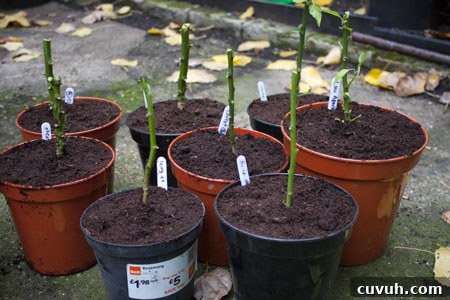
Now that winter is fast approaching, I’ve started preparing some of my chilli plants for the cold months ahead. As noted in our over-wintering guide, many chilli varieties are perennial rather than annual. By carefully overwintering your plants, you can get a substantial head start on next season and harvest many more ripe chillies earlier in the year.
This year I selected nine of my strongest, healthiest plants to carry through winter: three Chocolate Habanero, two Orange Habanero, one Birds Eye, one Apache, one Bulgarian Carrot, and one Super Chilli F1. I expect the greatest benefit from the habaneros, which took a long time to produce ripe fruit this season. Keeping these established plants alive will hopefully yield many more fruits from the slower-growing types in early spring.
The first task was to remove all remaining fruit. Cooler temperatures had slowed ripening, so any unripe pods were harvested to finish ripening off the plant. Fully ripe chillies will be eaten soon or frozen for use over winter.
Many of the habaneros are still quite small, even the ripe ones; these smaller pods are perfect for adding to dishes without overwhelming the heat. Because I planted my seeds late this year, some of these small pods are the first I’ve harvested from certain plants.
To give the plants the best chance of surviving winter, I pruned them back severely so they won’t waste energy maintaining foliage or ripening fruit during the cold season. Severe pruning may look harsh but it’s an effective strategy to reduce stress and conserve resources in the root system.
I cut the main stem back so that only about 10–15 cm remained above the root ball. I also loosened some of the old compost from the root ball and trimmed a little of the roots where needed. After refreshing the root area, I repotted each plant with fresh compost. Fresh potting mix helps give the plants a nutrient boost for the early growth phase next spring.
Once trimmed and repotted, I’ll move the plants indoors to a south-facing windowsill to maximize winter light and keep temperatures relatively stable and warm. They won’t need heavy watering over winter; the goal is to prevent drying out while avoiding waterlogged compost. Typically a light watering about once a week is sufficient, but check each pot because indoor conditions vary.
Keep plant labels with each pot so you’ll know the varieties when they burst back into growth in spring. Proper labeling makes it easy to track which plants respond best to overwintering and which varieties perform well early in the season.
I’ll post an update later in winter to share how they’re doing. Overwintering chillies takes a little effort but rewards you with earlier, larger harvests next year and helps preserve varieties you enjoy growing.