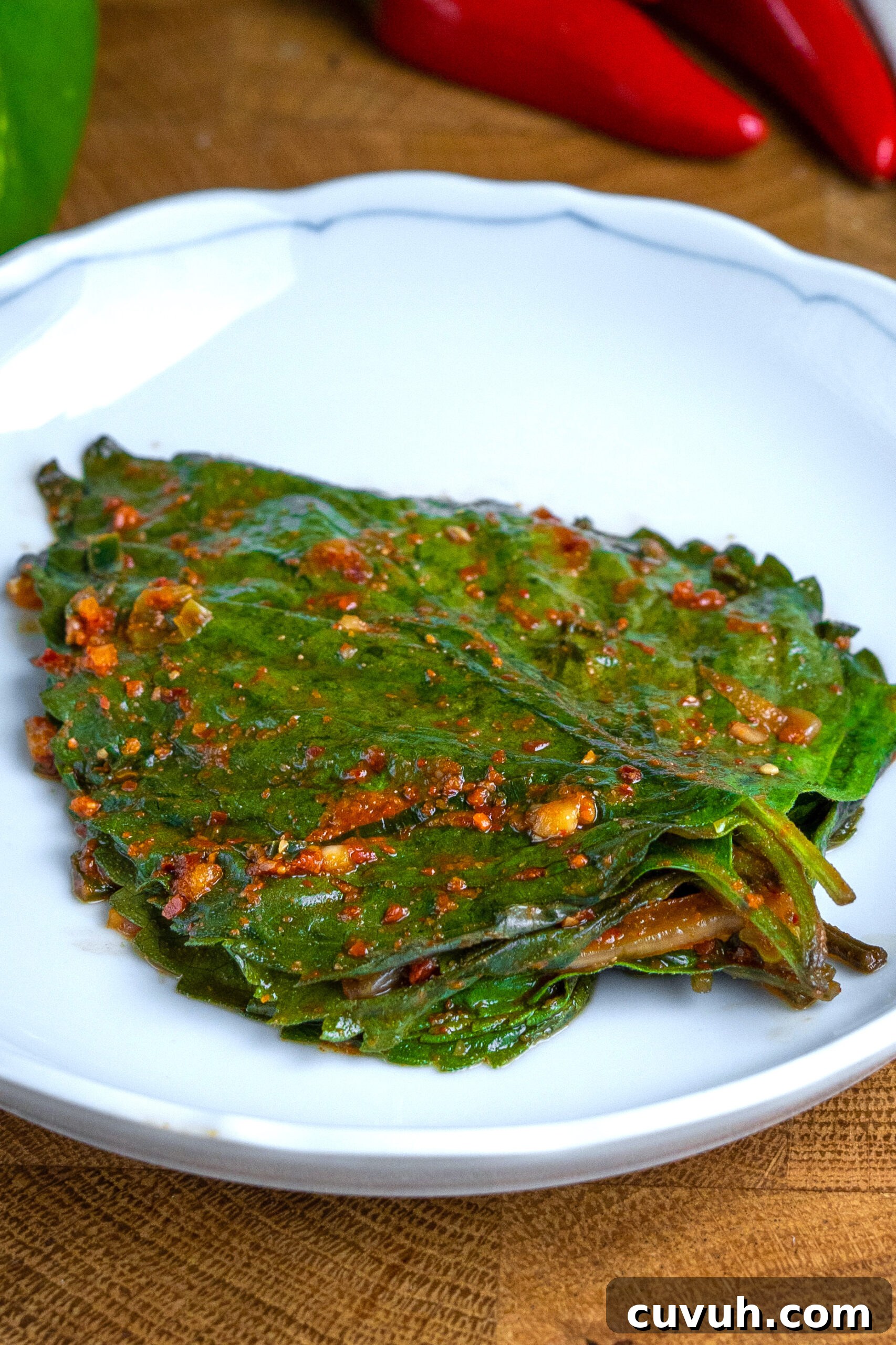
Perilla leaves (kkaennip) are my favorite herb, though I didn’t always appreciate them. Part of the mint family, perilla has a very strong, distinctive aroma and flavor that’s hard to compare to anything else.
As a child I disliked kkaennip—its bold, unfamiliar taste wasn’t for me. If you’ve never tried it, know that it’s an acquired flavor; some people adore it and others don’t. I’ll be honest: you may need a bit of a refined palate to truly enjoy this.
It wasn’t until my early twenties that I came to love perilla. My tastes changed, I became more adventurous with food, and I wanted to enjoy something my mother loved. Once I gave it another chance, I fell in love with its complex, savory profile.
If you haven’t tried it, give perilla a shot at least once. You’ll probably either love it or dislike it—very few people are undecided, like my husband who tolerates it but wouldn’t choose it first.
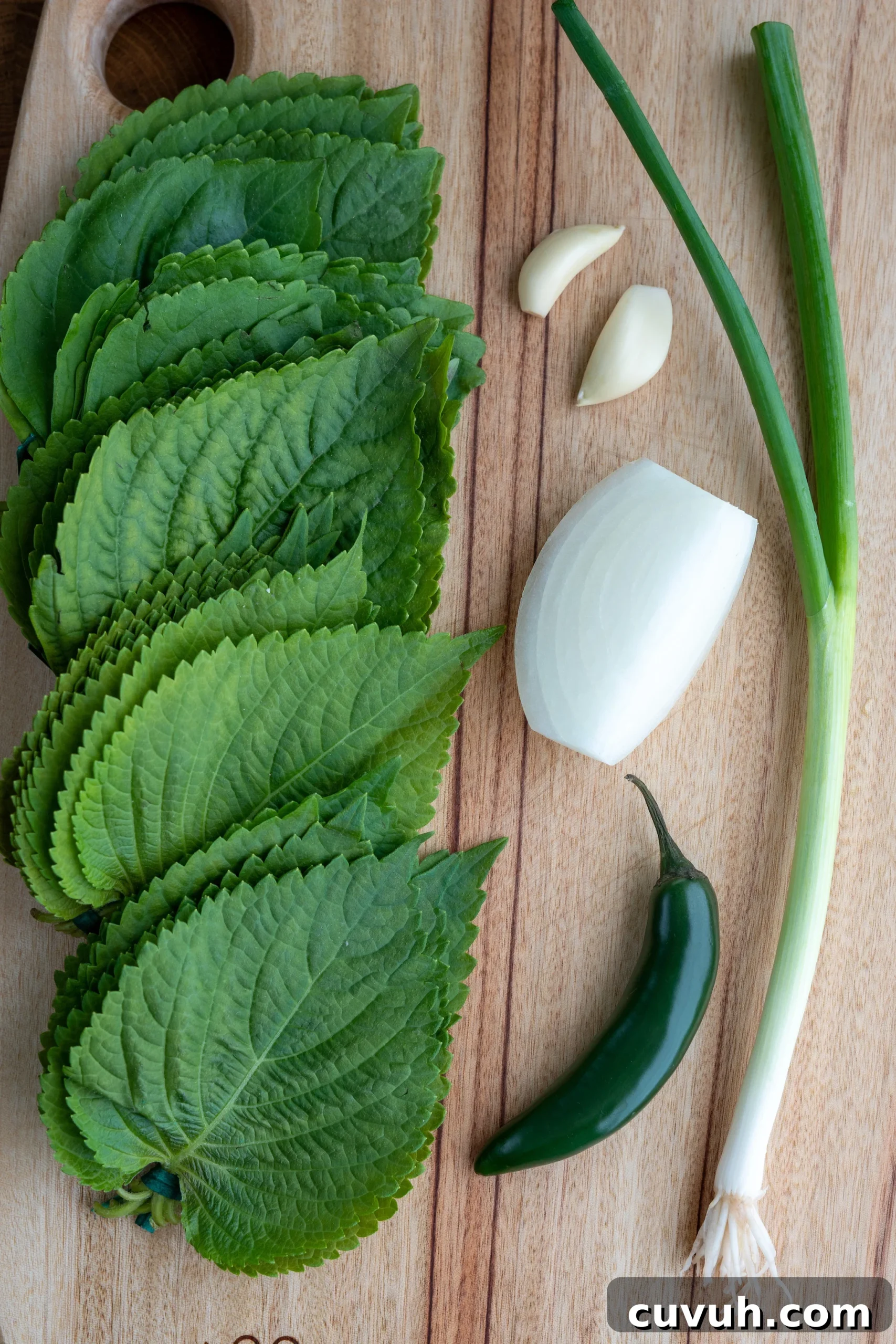
Ingredients:
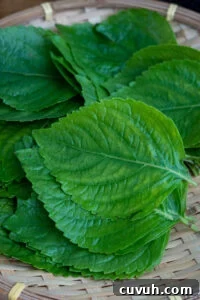
- Perilla leaves — essential; there’s no true substitute. Look for them at Korean markets.
- Onion — yellow or white, very thinly sliced.
- Green onion — chopped thinly.
- Serrano pepper — optional but recommended for flavor. Remove seeds and veins if you prefer less heat.
- Gochugaru — Korean red pepper flakes; use these for the authentic taste.
- Fish sauce — regular or vegan fish sauce works well.
- Soy sauce — any standard soy sauce. For uncooked dishes I often prefer naturally brewed yangjo soy sauce.
- Plum syrup — available at Korean supermarkets; substitute your preferred sweetener if needed.
- Garlic — use the amount specified; don’t overdo it.
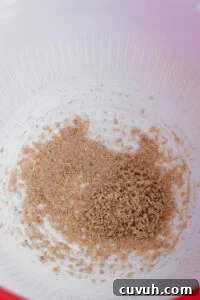
- Toasted sesame seeds — crushed into a fine powder (also called roasted sesame seeds).
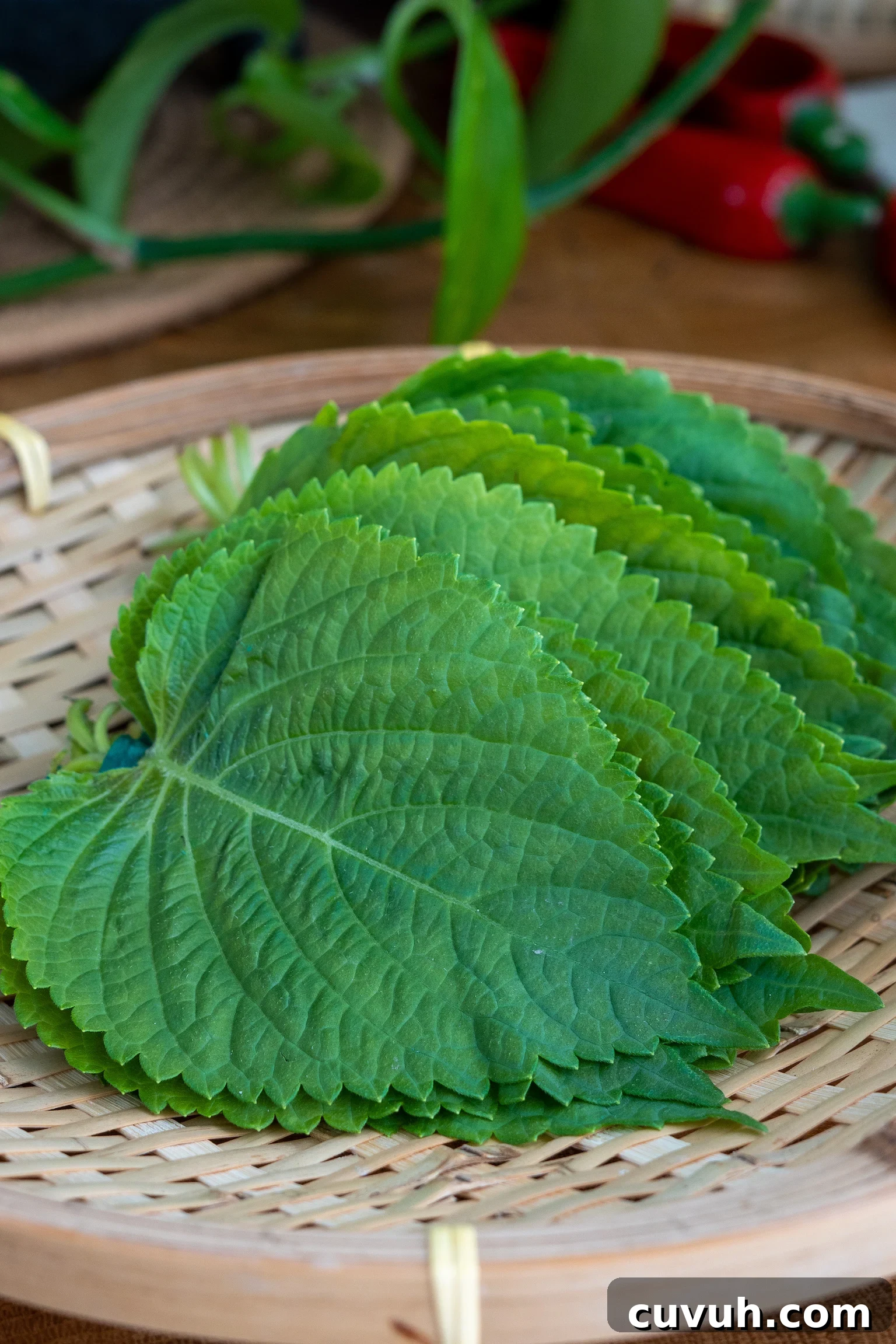
What are perilla leaves & how to eat them
Perilla is sometimes compared to Japanese shiso, but they’re not the same. Shiso leans more grassy and bitter, while perilla has a unique combination of minty, basil-like, and anise-like notes—distinct and delicious.
- Kkaennip kimchi is often called a “rice thief” because it pairs so well with steamed rice and umami-rich dishes. Enjoy it as a banchan (side dish) or simply with a bowl of rice.
- Perilla is fantastic at Korean BBQ served in wraps (ssam). A favorite combination: lettuce, perilla leaf, radish paper, grilled meat, ssamjang, jalapeño, and raw garlic — a true flavor explosion.
- Chiffonade perilla as a fresh garnish for many dishes, or add it to stir-fries like soondae bokkeum and tteokbokki.
- Deep-fry perilla to make twigim, the Korean version of tempura.
- Perilla also works well in jeon (savory pancakes) — leaves stuffed with a thin layer of meat, dipped in egg, and pan-fried until golden.
- Perilla seed powder and leaves feature in soups like gamjatang (pork neck bone soup), adding a distinctive depth to the broth.
How to store
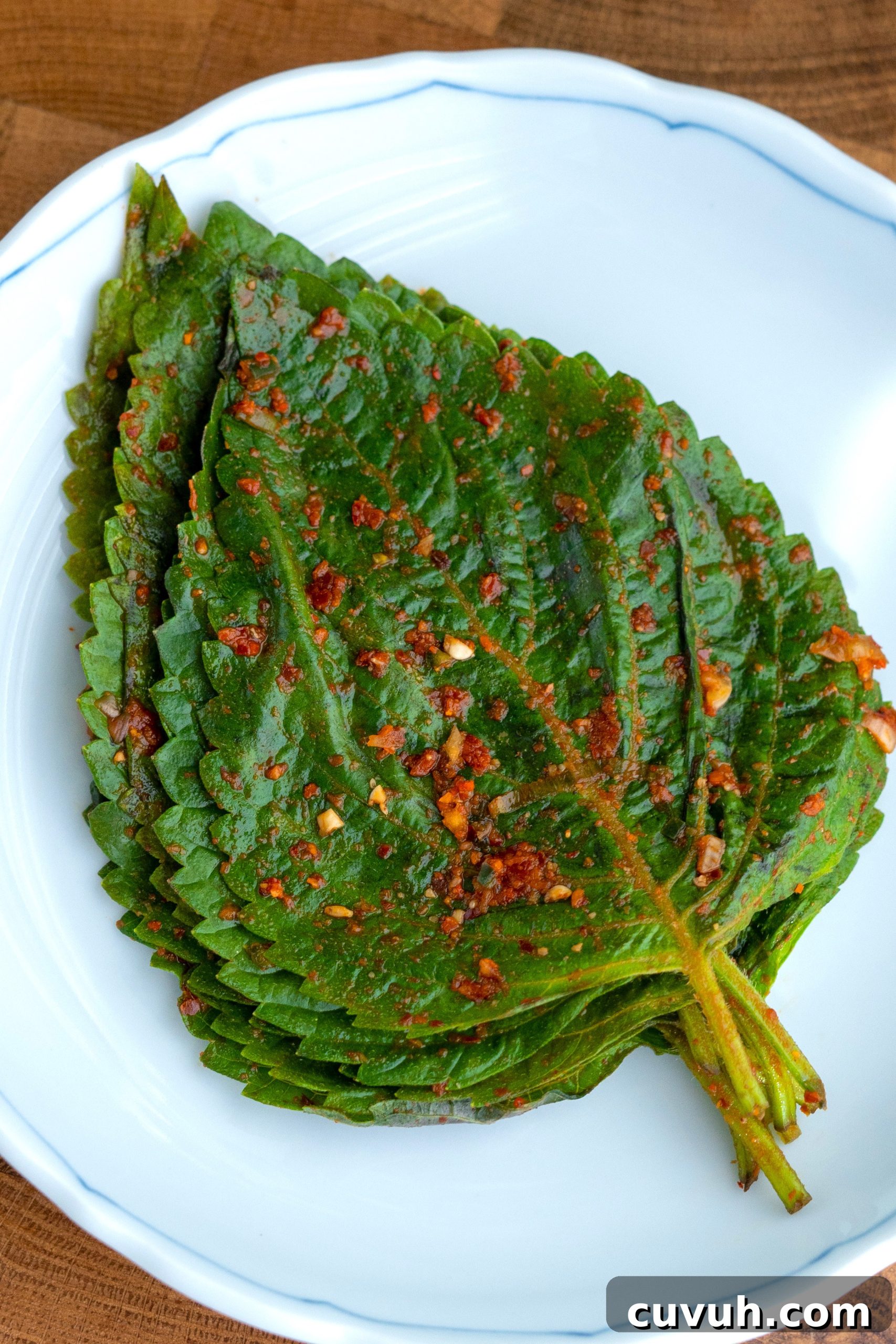
You can eat perilla leaf kimchi immediately, but the flavors improve after a day or two in the refrigerator. Store it in an airtight container for up to two weeks; the leaves will wilt over time, which is normal.
Perilla Leaf Kimchi
Pin Recipe
Rate Recipe
Print Recipe
Ingredients
- 50 perilla leaves
- 2 oz onion, thinly sliced
- 2 garlic cloves
- 1 green onion, chopped
- 1 serrano pepper, optional
- 2 tbsp gochugaru, Korean red pepper flakes
- 1.5 tbsp fish sauce
- 1 tbsp soy sauce
- 2 tsp plum syrup
- 1 tbsp crushed sesame seeds, toasted
Instructions
-
Trim any brown ends from the perilla stems, keeping as much stem length as possible so the leaves are easy to pick up. Wash the leaves and shake off excess water.

-
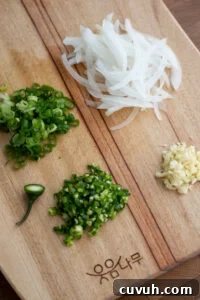
Prepare the vegetables: mince the garlic, thinly slice the onion, chop the green onion, and finely mince the serrano if using. The serrano adds brightness and heat.
-
Grind the toasted sesame seeds into a fine powder.
-
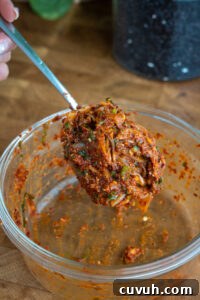
Make the seasoning paste by combining the chopped vegetables, crushed sesame seeds, gochugaru, fish sauce, soy sauce, and plum syrup. Mix until the texture resembles a thick paste.
-
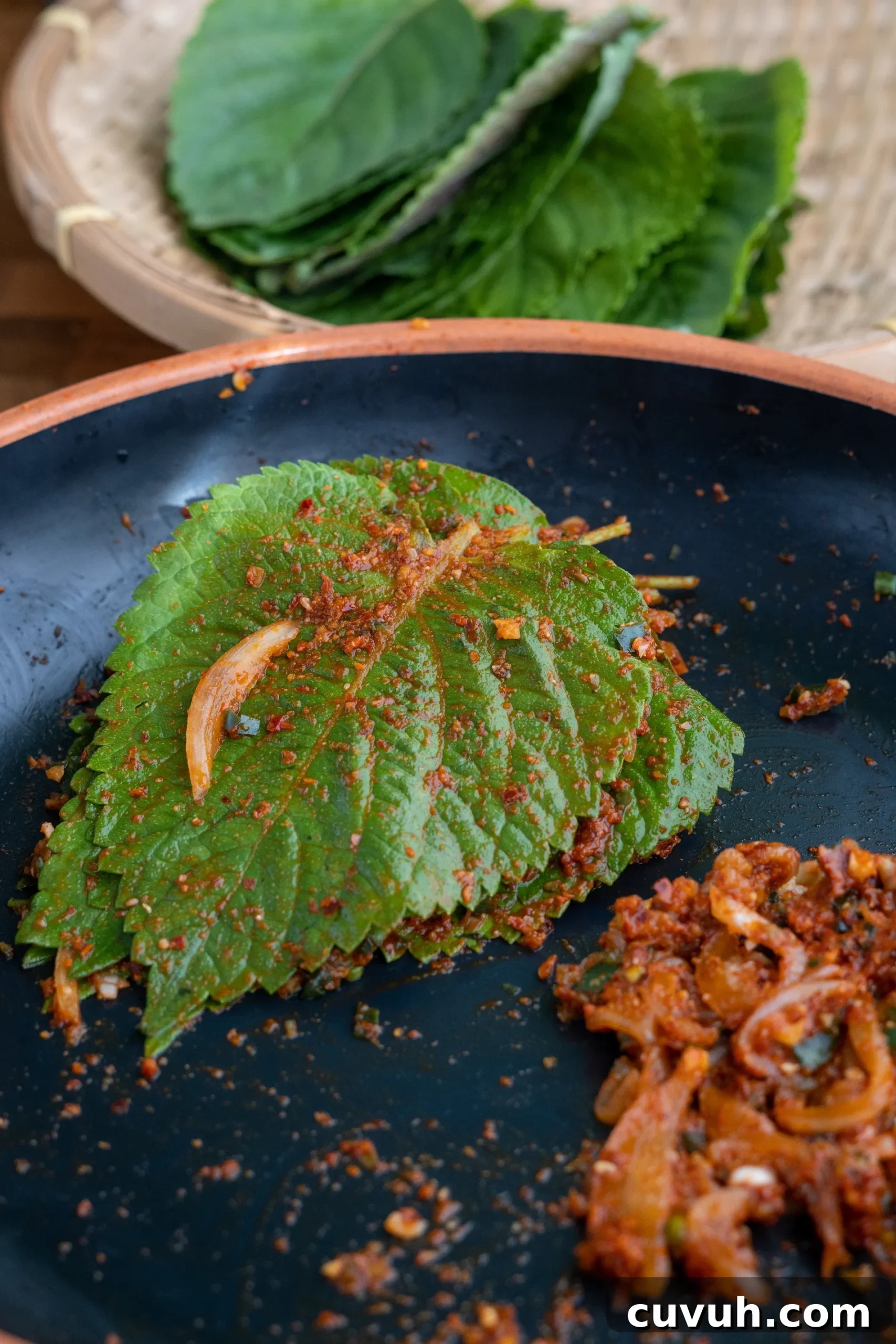
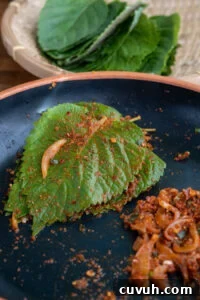
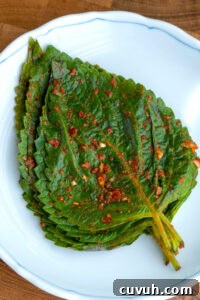
Spread a thin layer of the paste onto each perilla leaf. Stack the leaves neatly with the stems aligned. You don’t need to add a lot of paste to each leaf—just enough to coat them.
-
You can enjoy the kimchi right away, but it tastes better after resting in the fridge for a day or two. Keep it refrigerated in an airtight container for up to two weeks.
Nutrition information is approximate and for reference only.
Additional Info
Like this recipe? Leave a comment below!