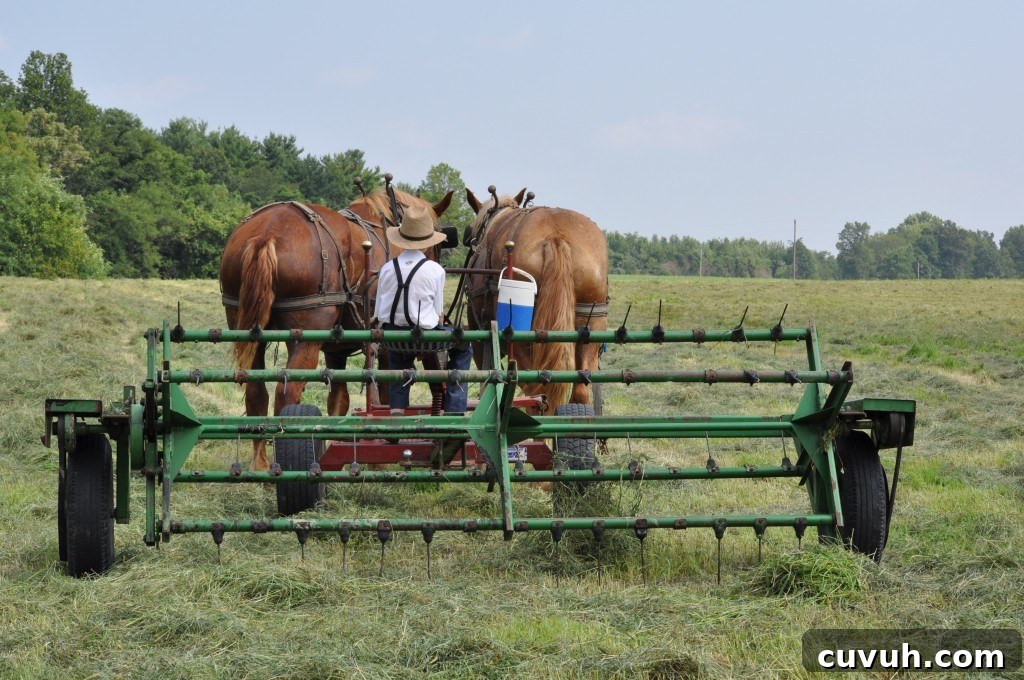
Gloria writes about what it means to be Amish. There may be small – and large – differences from community to community, but there are also many similarities
THE AMISH COOK
BY GLORIA YODER
Hello Friends,
I enjoy talking about the Amish way of life and appreciate your questions about what it’s like to be a young Amish woman and whether I would prefer a less strict lifestyle. Those inquiries inspired me to put my thoughts on paper.
So who are the Amish? Are we the characters in Beverly Lewis’s novels, the sensationalized figures in Amish Mafia tales, or an isolated group unwilling to interact with the outside world? The answer is: none of those descriptions are universally accurate. There is great diversity among Amish communities. Some view Amish identity primarily as a religion; communities like mine see it largely as a culture.
Our community chooses a more relaxed approach to daily life, but we do not claim that our practices are the only route to joy or salvation. We believe Jesus came to demonstrate God’s love through teaching, healing, and ultimately by giving His life so that, through repentance, we can be forgiven (see 1 John 1). Our aim is to live in radical obedience to the Bible, which for us includes a commitment to nonresistance—responding with love rather than retaliation when wronged or when faced with war or violence. Passages such as Matthew 5:38–42 and Romans 12:19–21 shape these convictions.
Horses and buggies, and sometimes bicycles, are our transportation of choice. This preference is not based on a belief that cars are sinful, but on the desire to protect family life. We see modern vehicles as encouraging a constant “on the go” mentality that can weaken time spent together at home.
We also avoid computers, cell phones, and the internet. These technologies are not inherently evil, but we view them as a potential doorway to influences and content that conflict with our values. Keeping such devices out of the home serves as a guard against that exposure.
Women and girls in our community do not cut their hair; it is twisted into a bun and covered with a white cap, following our understanding of 1 Corinthians 11. We also refrain from wearing makeup and jewelry. To some this may seem plain, but these practices express our convictions about modesty and humility.
When asked whether I would like a less strict lifestyle, I can answer honestly: I was raised Amish, and I have the freedom to choose whether to remain. For me, the decision is simple. I do not believe ours is the only true church, and we are far from perfect, yet I consider it a blessing to be part of this community. I do not wish to raise my children with constant access to modern technology. Even without many conveniences, I feel richly blessed as a child of God, filled with peace and His love.
There are notable differences among Amish groups, but also many similarities. For instance, in our community men and boys wear suspenders, while other communities may not. Hat styles vary, dress patterns differ slightly, and other small details can change from one settlement to another. These nuances are less important to us than the underlying principles—particularly modesty and simplicity.
If you have further questions, I’d be glad to answer them as best I can.
Meanwhile, it’s apple season—perfect for making an old-fashioned Amish apple pie. My grandmother often made this pie when my mother was a child, and sometimes baked extras to sell at a local Amish store in the fall.
The number of apples depends on their size; fill the crust so the slices mound nicely.
- GRANDMA’S APPLE PIE
- 1 9″ unbaked pie crust with a top pastry
- 4 apples, peeled and sliced (adjust for size)
- 2/3 cup sugar
- 1 teaspoon cinnamon
- 1/4 cup butter, cut into slivers
- 1 egg white, beaten
- Icing: 1/2 cup powdered sugar, 1 tablespoon water, 1/4 teaspoon vanilla
- Mix the sugar and cinnamon with the apple slices.
- Spoon the apple mixture into the unbaked bottom crust.
- Distribute the butter slivers over the apples.
- Place the top pastry over the filling.
- Trim any excess dough from the edges.
- Press the outer edges together and flute the rim.
- Cut decorative slits in the top crust to allow steam to escape.
- Brush the top crust with beaten egg white, shaping small peaks if desired.
- Bake on the bottom rack at 425°F (220°C) for 15 minutes.
- Reduce the oven temperature to 350°F (175°C) and bake for an additional 30 minutes, or until the crust is golden and the filling is bubbling.