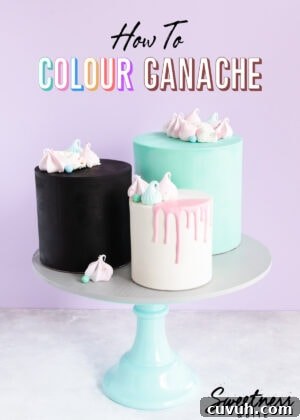
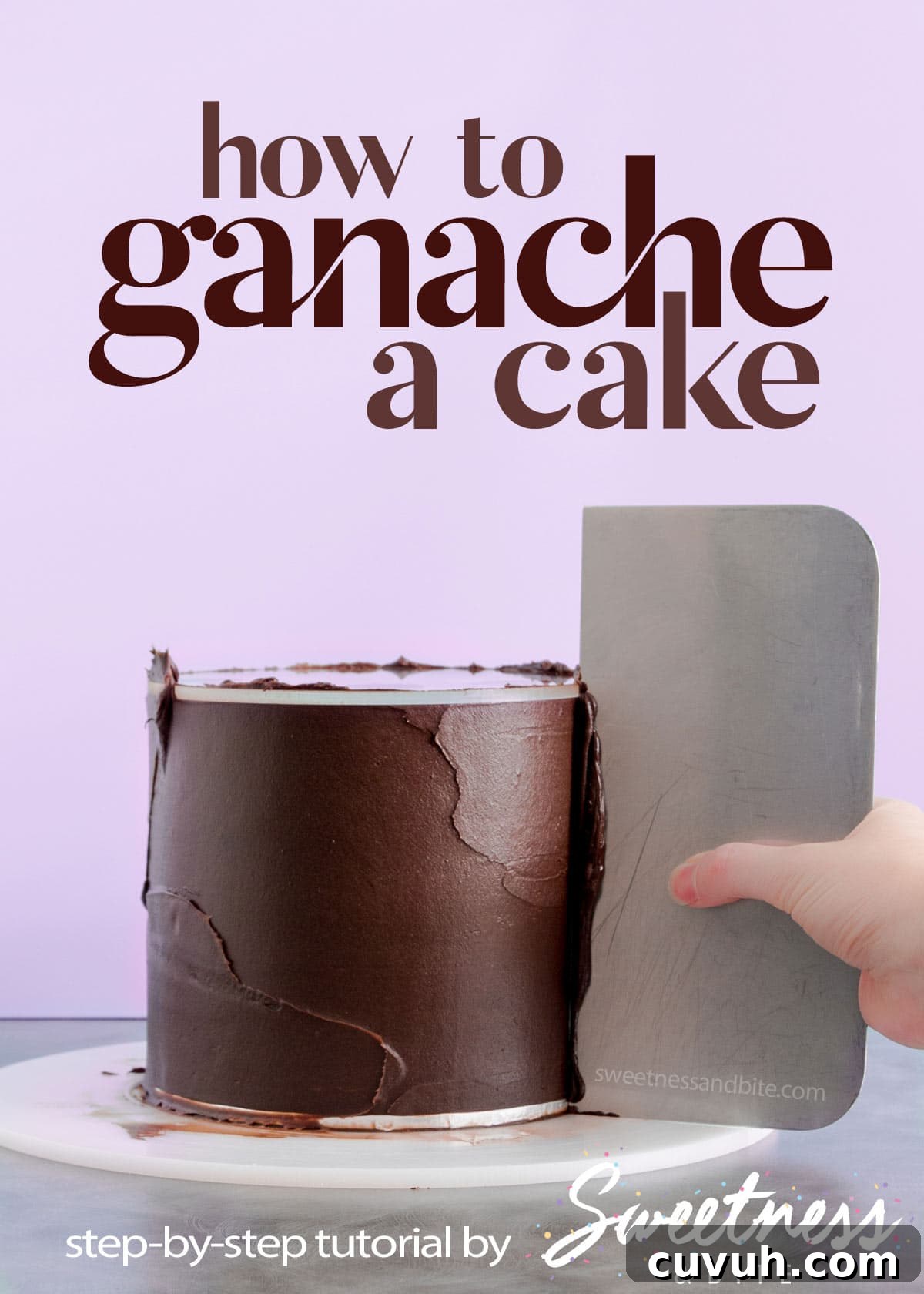
Learn how to ganache a cake with this step-by-step tutorial, including how to make ganache for covering a cake, chocolate ganache ratios, using ganache boards for sharp edges, and my favourite tips and tricks.
Ahh, ganache — the secret to sharp, professional cake edges. It can also be the source of frustration when you’re learning. I prefer ganache over buttercream when I want straight sides and a clean finish, especially if the cake will be covered in fondant.
It took me practice and experimenting with different methods before I developed a hybrid approach using ganache boards that gave me consistent, reliable results. If you’re new to working with ganache, this guide covers the benefits of ganache, how to make it, preparing your cake, using ganache boards, storing a ganached cake, and practical tips to help you succeed.
Read through the tutorial before you begin for the best results. Follow along step by step, and you’ll be ganaching with confidence in no time.
Why Use Ganache on a Cake?
Ganache offers stability that buttercream often can’t match. When made with the right chocolate-to-cream ratio for your environment, ganache sets firm at room temperature and doesn’t require refrigeration. That makes it ideal under fondant because it prevents condensation problems that occur when a chilled cake warms up.
Two keys to successful ganaching are: (1) using a second cake board or an acrylic ganache board on top of the cake while you smooth the sides, and (2) getting the ganache consistency right. I’ll explain both in detail below.
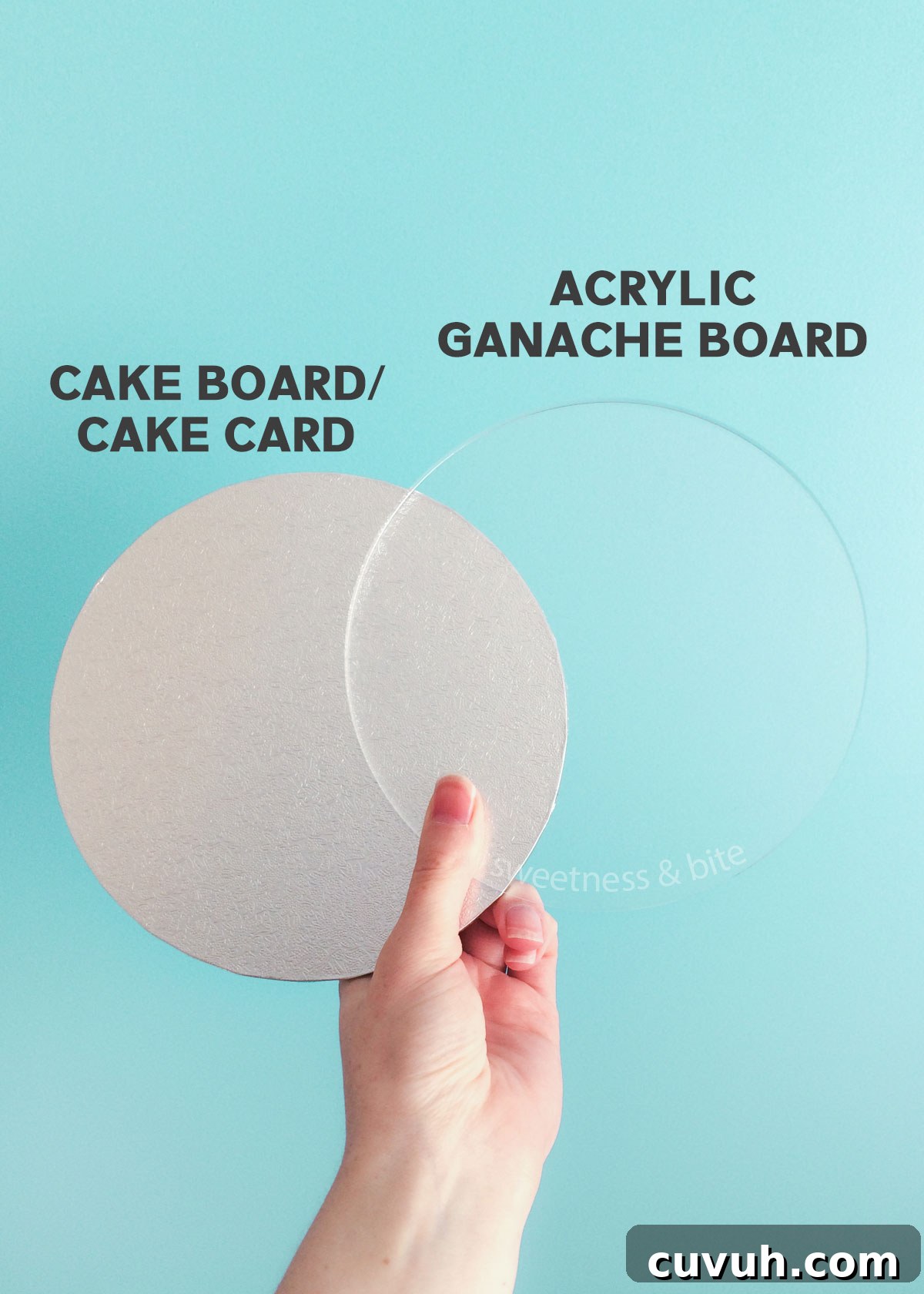
About Acrylic Ganache Boards
Ganache boards are clear acrylic discs that match your cake board size. You place one on top of the cake while smoothing the sides, using a scraper that sits against both top and bottom boards to remove excess ganache and create perfectly straight sides. If you don’t want to buy acrylic boards yet, a second cardboard cake board of the same size works fine for trying the technique.
When buying ganache boards, check measurements carefully — some boards and cake cards are slightly larger (e.g., 6.25″ vs 6″) and must match each other. I prefer whole-size boards and trim cake crusts, but match whatever system you choose.
Please note: images from this post have been used by some retailers without permission. I do not endorse those products. The boards I use and recommend are from Design at 409.
Ganache Consistency for Covering a Cake
Getting the right consistency is essential. Some decorators prefer a firmer ganache, others slightly softer. I tend to keep my ganache firmer for fillings, and soften it a little when coating the outside. Two useful reference consistencies are: peanut-butter-like (firmer) and Nutella-like (softer). After a few cakes you’ll know your preferred texture.
How To Make Ganache for Cake Decorating
Ganache has two ingredients: chocolate and cream. The ratio determines how firm it sets — more chocolate makes a firmer ganache.
Types of Chocolate For Ganache
You can use couverture (real chocolate made with cocoa butter) or compound chocolate (made with vegetable fats). Couverture tastes better; compound is often more stable. Many decorators use a mix of both for good flavour and stability.
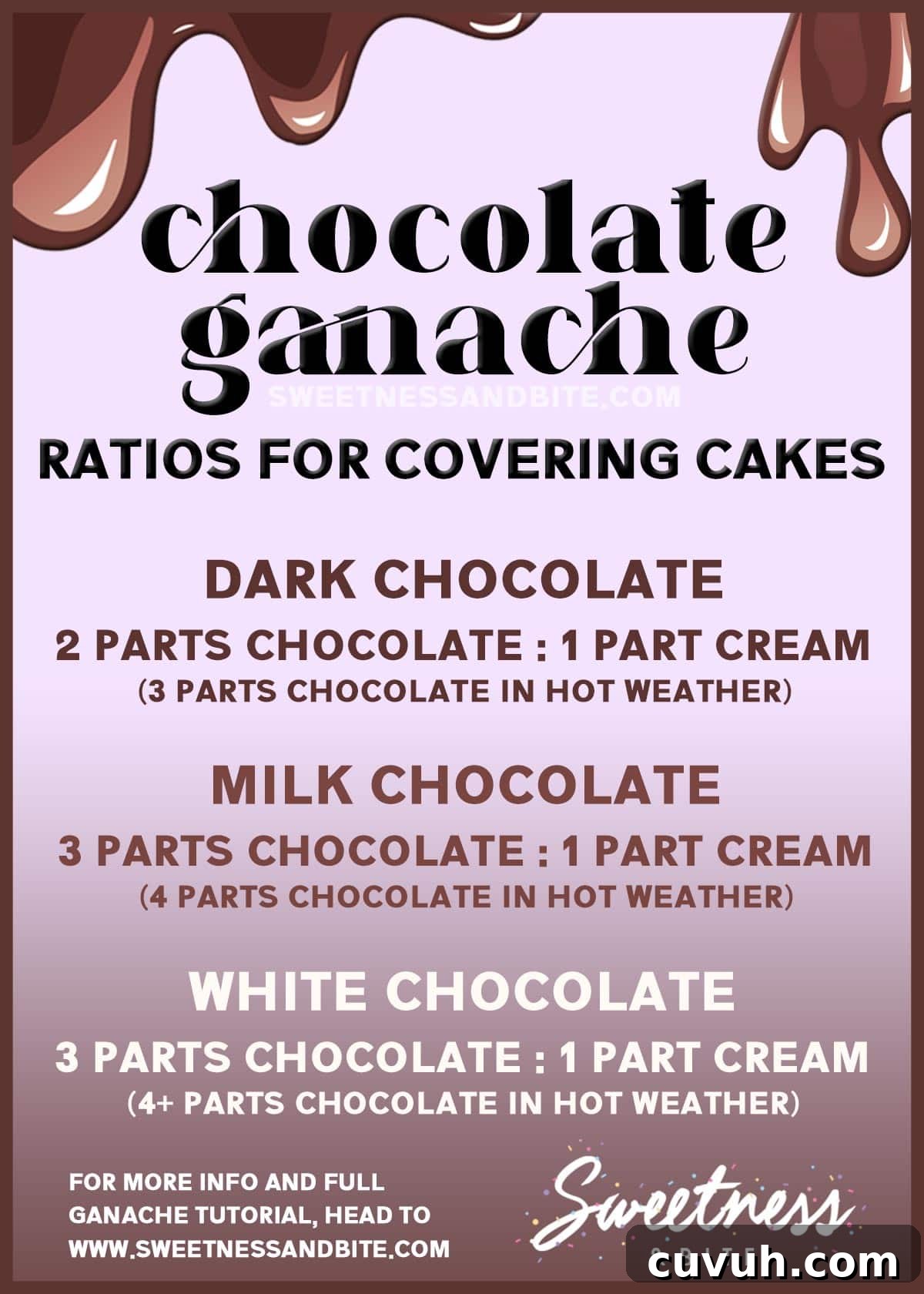
Ganache Ratios for Cake Decorating
Dark Chocolate Ganache (50–60% cocoa): 2 parts chocolate : 1 part cream. In warm weather increase chocolate to 2.5–3 parts.
Milk Chocolate Ganache (~30% cocoa): 3 parts chocolate : 1 part cream. In cool weather 2.5 parts may work; in warm weather increase to 3.5–4 parts.
White Chocolate Ganache: 3 parts chocolate : 1 part cream. In warm climates raise to 3.5–5 parts as required.
How Much Ganache Will I Need for My Cake?
Use a ganache calculator (sometimes called a Ganacherator) to estimate how much ganache you need for your cake’s dimensions and layers. The tool will give a total ganache weight, and you can apply the ratios above to calculate chocolate and cream amounts.
Example: For a 7″ round cake, 4″ high with 4 layers, estimate 1,430 g of ganache; round up to 1,500 g. For dark chocolate ganache (2:1), divide 1,500 g by 3 = 500 g cream and 1,000 g chocolate.
Chocolate Ganache For Cake Decorating
Ingredients
Dark Chocolate Ganache
- 2 parts chocolate
- 1 part cream
Milk Chocolate Ganache
- 3 parts chocolate
- 1 part cream
White Chocolate Ganache
- 3 parts chocolate
- 1 part cream
Instructions
- Chop the chocolate into small pieces (about 1/2″ or smaller).
- Weigh the cream into a saucepan, heat over medium-high until it just boils (bubbles across most of the surface). Watch carefully to prevent boiling over. Remove from the heat and let bubbles subside.
- Add the chopped chocolate, gently shake to cover with cream, and leave to melt for a few minutes without stirring.
- Stir with a silicone spatula or whisk until glossy and smooth. If lumps remain, place over very low heat and stir constantly until smooth.
- Optionally use a stick blender to smooth the ganache and ensure a perfect emulsion. If colouring ganache, do it now.
- Pour into a bowl, cool, cover the surface with plastic wrap, and leave at room temperature overnight to set. To speed up, chill in the fridge but stir frequently for even cooling.
- Store ganache at room temperature for a couple of days, refrigerate for up to a month, or freeze for longer. Adjust storage depending on ingredients and conditions.
Notes
Adjust chocolate ratios according to weather to ensure proper setting. Use the Ganacherator to estimate total ganache required, then apply the ratio chart to calculate chocolate and cream weights.
Cream: use pourable, unsweetened cream around 35% fat (varies by country: whipping cream, single cream, or full cream depending on where you are).
If ganache splits (looks dull, grainy, or oily), try blitzing with a stick blender, adding a splash more cream, or chilling and stirring periodically to rescue the emulsion.
Once your ganache has set overnight, you’re ready to ganache the cake. If this is your first time, be patient — achieving sharp edges takes practice, but it’s absolutely doable.
How to Ganache A Cake
This method is shown for a round cake but works for square cakes too with extra attention at the corners.
What you’ll need:
- Your cake, trimmed and leveled
- Prepared ganache
- Two cake boards the same size (or one cake board and an acrylic ganache board)
- 90° angled cake scraper (metal, acrylic, or rigid plastic)
- Baking paper/non-stick parchment
- Offset spatula
- Pencil & scissors
- Cutting board and serrated knife (for leveling layers)
- Turntable
- Two setup boards larger than your cake to protect the turntable
- Non-slip mat pieces
- Spirit level
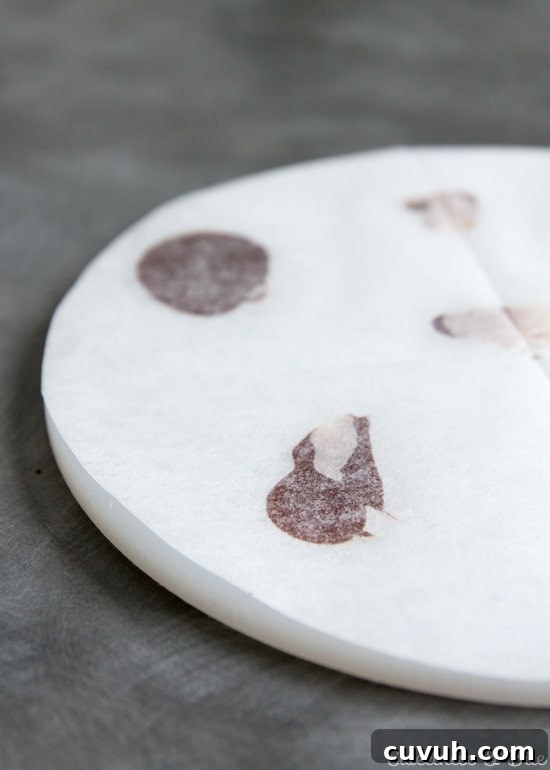
Label the top board as your “ganache board.” Trace its shape onto baking paper, cut out the circle, attach it to the ganache board with dabs of ganache, and chill so it’s ready to remove easily later.
Split your cake into even layers using your preferred method. Trim each layer so the final stack is slightly smaller than the cake board to allow a consistent ganache border. I aim for ¾–1″ cake layers.
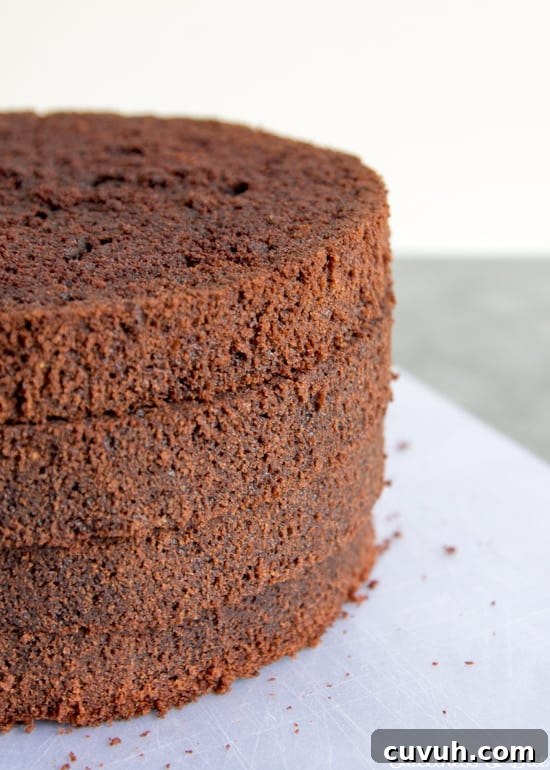
Warm your set ganache gently until it reaches a peanut-butter consistency for fillings. Assemble the layers, attaching the first layer to the cake board with a dab of ganache and keeping fillings even. Check alignment at eye level and correct any protruding layers.
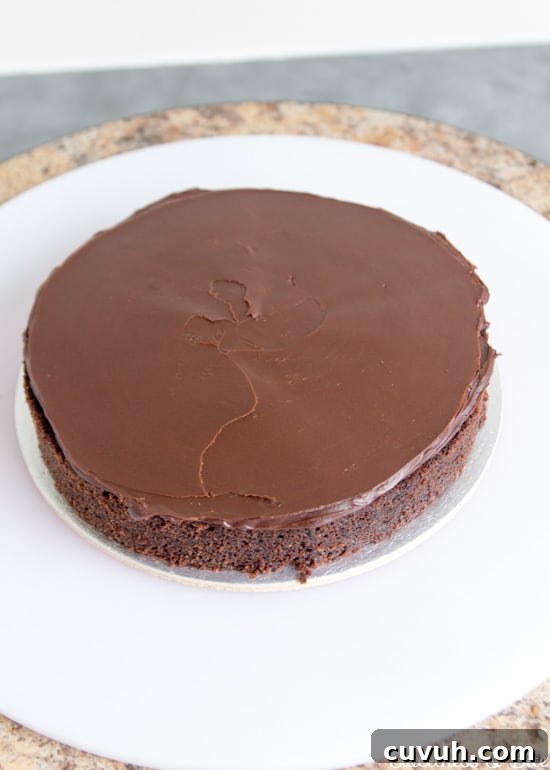
Place the prepared ganache board (with baking paper) on top, press gently to settle the layers, and refrigerate briefly so the top board doesn’t move. Add weight on top (plates) if desired to help settle the cake.
Warm ganache to a spreadable consistency and apply generously to the top edge and sides, avoiding dragging a spatula directly on cake layers to limit crumbs. You can do a thin crumb coat if preferred, then chill, but it’s optional.
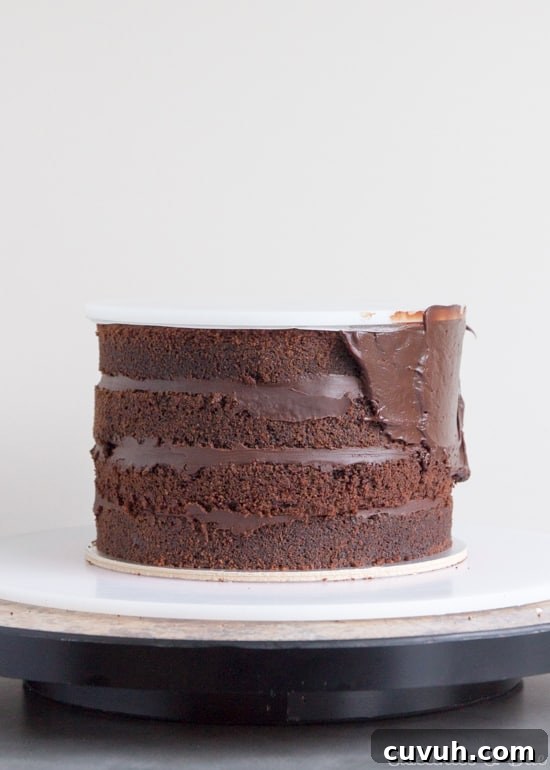
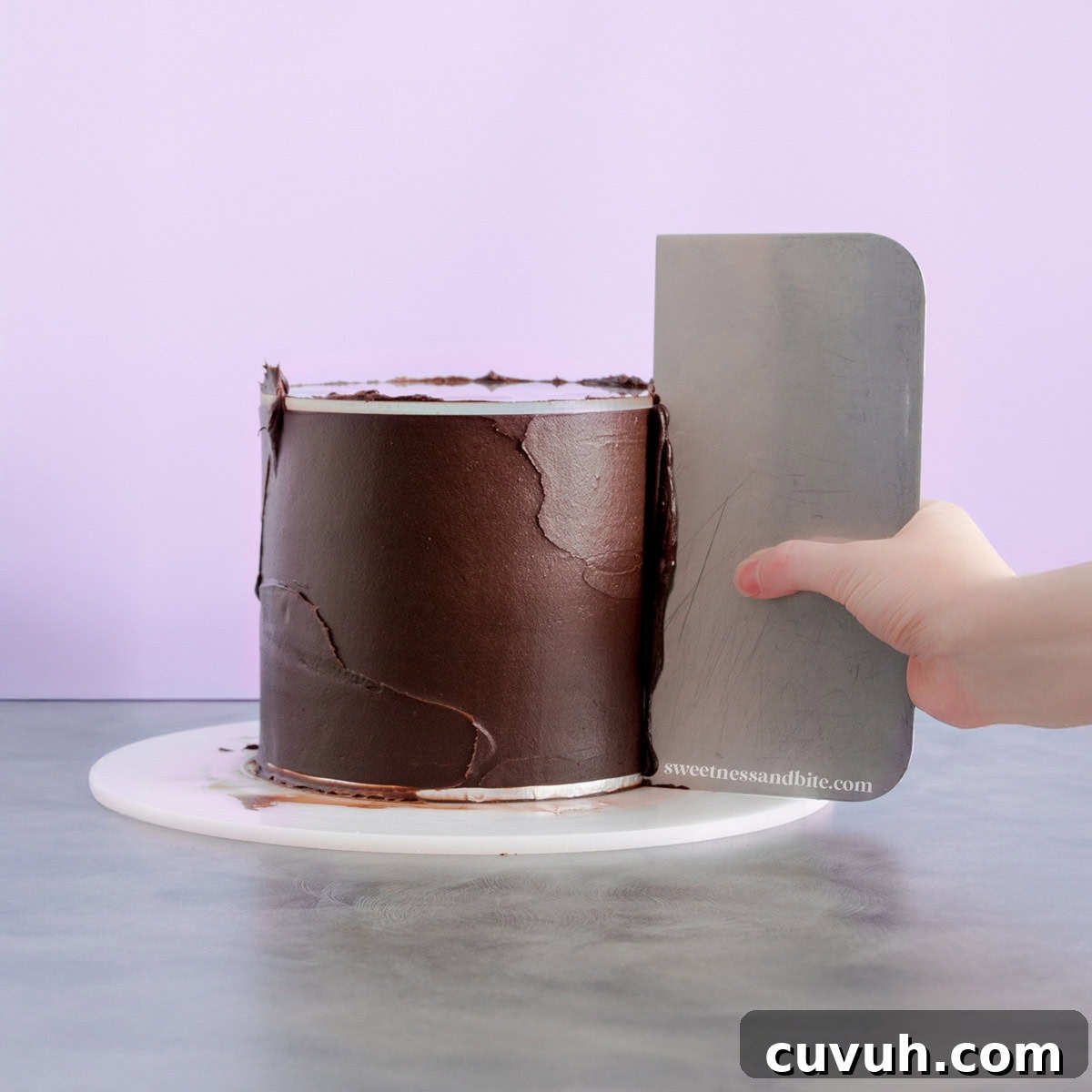
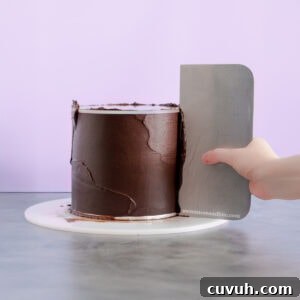
Once you’ve applied a thick layer of ganache that extends past both boards, hold a straight scraper so it rests on the top and bottom boards and rotate the turntable to remove excess ganache. Rinse and dry your scraper and repeat until the sides are smooth and even. Return the cake to the fridge to firm the ganache.
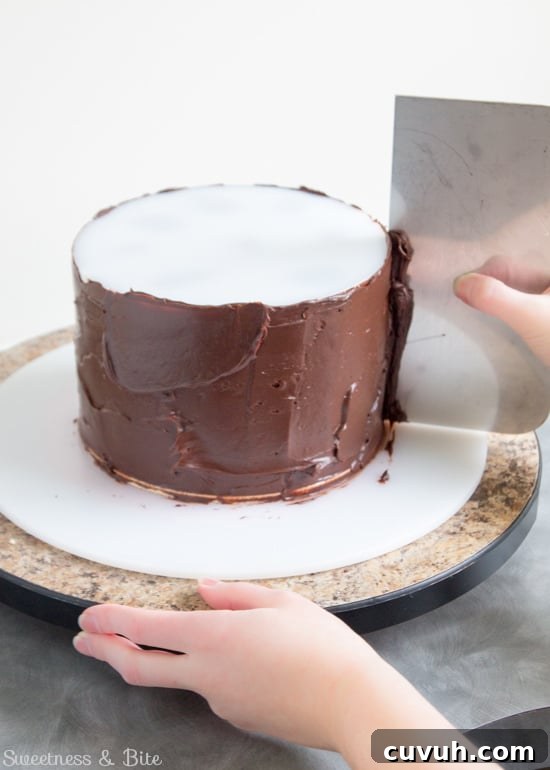
When the sides are set, slide a spatula between the ganache board and baking paper and lift the board off. Peel away the paper circle. Warm ganache to a softer, Nutella-like consistency and spread a thick layer on top, letting a little squeeze over the edge.
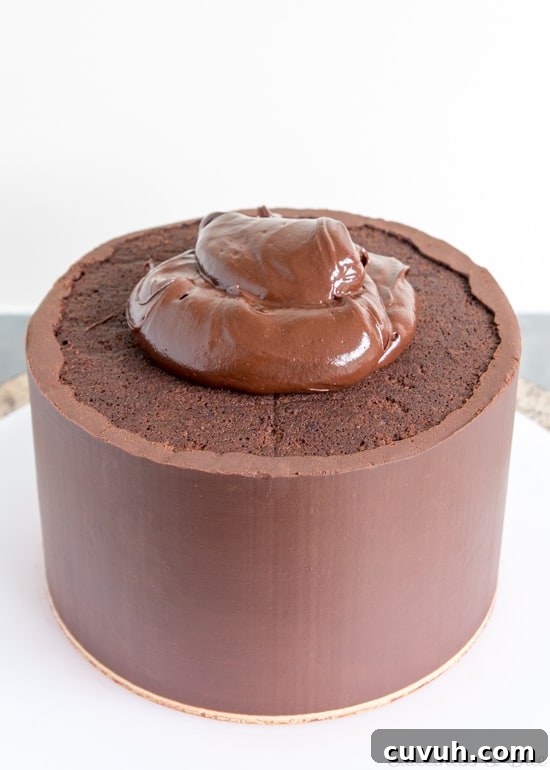
Cover the top with a sheet of baking paper, place another setup board on top and flip the cake over. Use a spirit level to press gently until the ganache squishes out the bottom edge and the cake is level. Clean any excess ganache from the bottom board now.
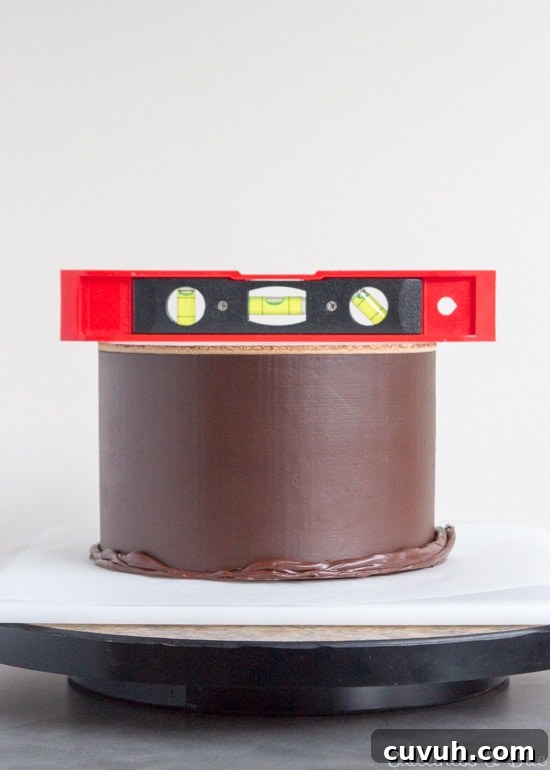
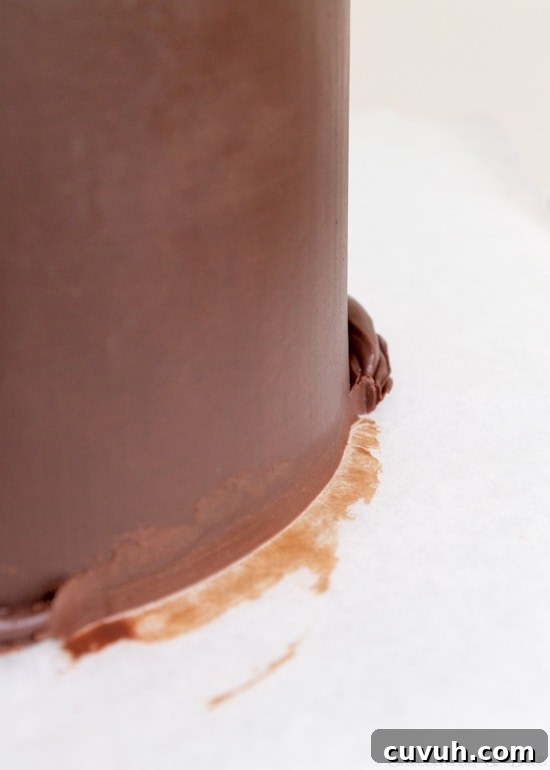
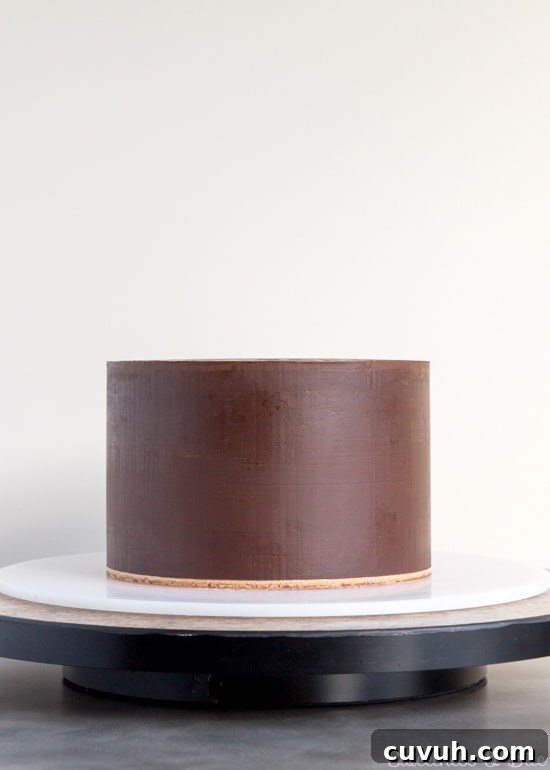
Warm your scraper under hot water, dry it, and scrape the excess ganache away while keeping the scraper straight to preserve the sharp sides. Fill any gaps and scrape again. Chill until firm.
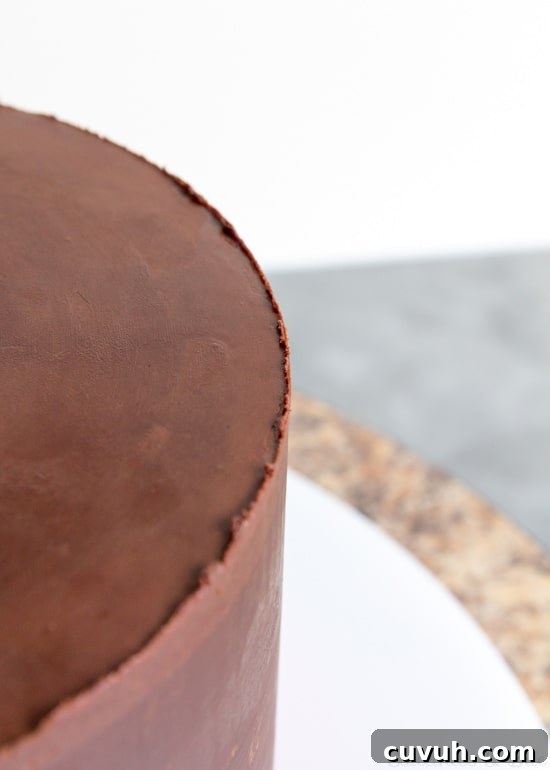
Flip the cake back, remove the baking paper, fill any small holes on top, and smooth with a warm spatula. If a ridge remains along the top edge, either warm and smooth it down or trim it off once the ganache is fully set. Warm the spatula one final time to refine the finish.
Allow the ganache to fully set before decorating. If you plan to cover the cake with fondant, let the ganache settle overnight for best results.
How to Store a Ganache-Covered Cake
Storage depends on fillings and climate. A ganache-covered cake does not usually need refrigeration unless it contains perishable fillings (fresh fruit, compote) or you are in a hot, un-air-conditioned environment. Store at cool room temperature in a cake box or cupboard to protect from dust and pests.
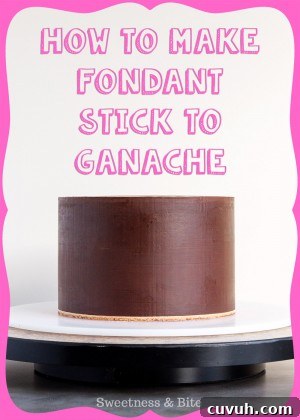
If you refrigerate a ganached cake and plan to cover it with fondant, bring it back to room temperature before applying fondant to avoid condensation and stickiness.
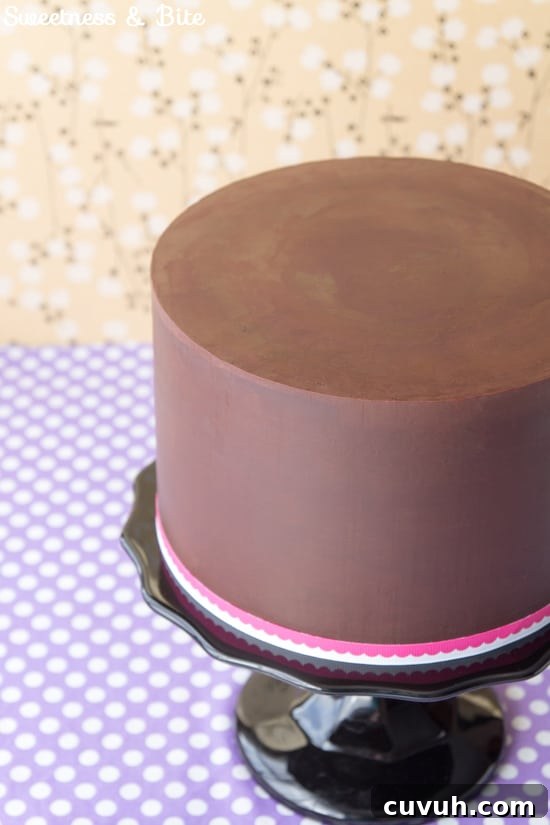
Now you know how to ganache a cake and achieve sharp edges. You can leave the cake as-is, cover it with fondant, or add further decorations. If you have specific questions about sticking fondant to ganache or troubleshooting, consult ganache FAQs or ask for help — practice is the key to mastering this technique.
I love seeing what you create! Tag me in your cake photos on Instagram @sweetness.and.bite so I can see your work. — Natalie
You Might Also Like…