
What is the deal with Listeria during pregnancy? Is it really that bad?
Pregnancy comes with a long list of precautions: avoid certain positions, limit intense exercise, and follow a number of dietary restrictions. Among the food-related warnings, concerns about Listeria often feel the most alarming. This article explains what Listeria is, why it’s a special concern during pregnancy, and which foods to avoid or handle carefully to reduce risk.
What is Listeria?
Listeria monocytogenes is a bacterium capable of causing infection, called listeriosis. It’s an opportunistic pathogen, meaning it causes illness especially in people with higher vulnerability. In this article I’ll refer to the bacterium simply as Listeria.
Where is Listeria found?
Listeria exists in many environments: soil, water, compost and animal or human feces. Because of that, it can contaminate fresh produce at pre-harvest or post-harvest stages. Food manufacturers implement controls to reduce contamination, but occasional lapses can lead to outbreaks tied to various foods.
What makes Listeria particularly concerning is its ability to survive and even grow at low temperatures. While most harmful bacteria slow or stop growing in a refrigerator (around 40°F), Listeria can persist and multiply at temperatures down to about 32°F. That refrigerator resilience is a key reason it poses unique risk.
What’s the deal with deli meat?
Approximately 90% of reported listeriosis outbreaks in the U.S. have been linked to contaminated deli meat. That doesn’t mean most deli meat contains Listeria, but it does show deli meat is a frequent source when outbreaks occur. Processed deli meats are handled and processed extensively, which increases opportunities for cross-contamination during production.
Because the bacterium can come from soil, water or other environmental sources, it can enter processing facilities and contaminate products. Typical measures used in processed meats, like salt and nitrites, are less effective against Listeria than they are against other pathogens such as Salmonella. Listeria can multiply on refrigerated meat even while the package is sealed.
To reduce risk, reheat deli meat to steaming hot (about 165°F) before eating. This kills Listeria and makes the meat safe. The same precaution applies to pre-cooked meats like hot dogs and sausages—thorough heating is important.
Why is Listeria during pregnancy so bad?
Listeria is dangerous in pregnancy because it can cross the placenta and infect the fetus. Pregnant women are about 20 times more likely than other healthy adults to develop listeriosis. While the mother often experiences only mild, flu-like symptoms, infection can have serious consequences for the fetus, including miscarriage, stillbirth, or long-term health problems.
Because of those risks, healthcare providers advise pregnant people to avoid foods commonly associated with Listeria outbreaks or to prepare them in ways that eliminate the bacterium.
What foods should I avoid?
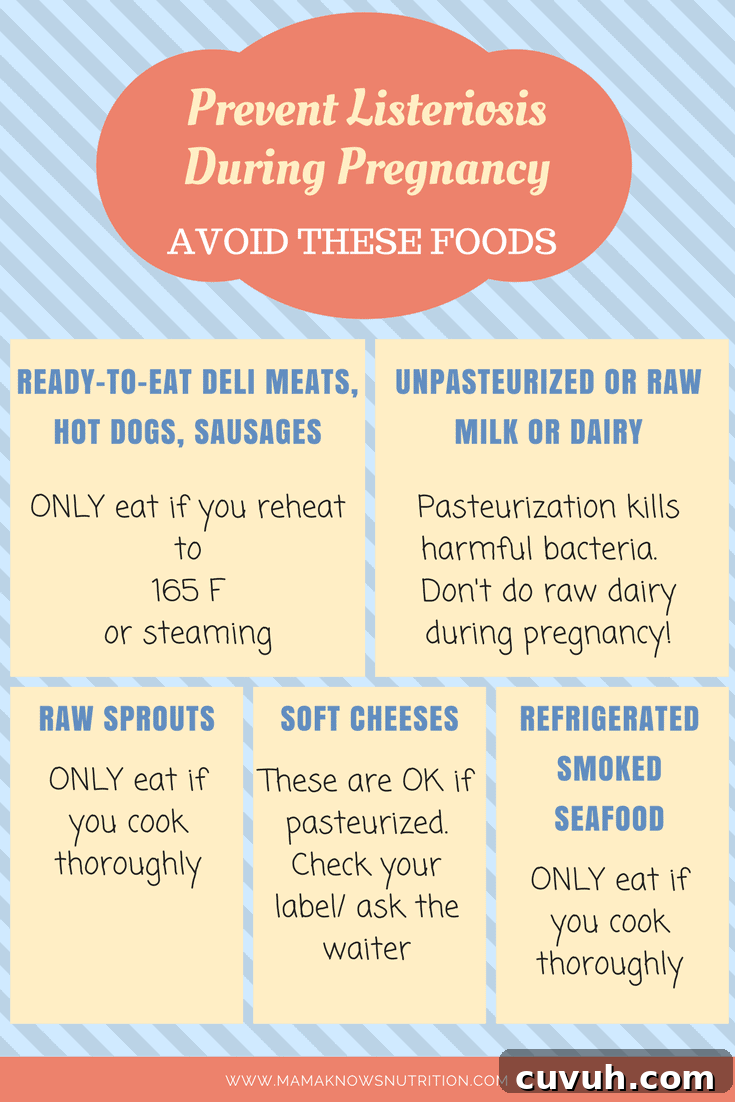
- Deli meat, hot dogs, pre-cooked sausages: These are acceptable only if heated thoroughly until steaming (about 165°F). Heating until steaming is the practical guideline when a thermometer isn’t feasible. Freshly baked in-house deli roasts may pose less risk than pre-packaged products, but should still be heated.
- Refrigerated smoked fish: Smoked salmon, lox and similar refrigerated smoked fish should be cooked thoroughly before eating to kill any Listeria present.
- Raw or unpasteurized milk and dairy: Pasteurization kills Listeria. Avoid raw milk and products made from unpasteurized milk during pregnancy.
- Unpasteurized cheeses: Soft cheeses are often singled out, but the key is pasteurization. Soft cheeses made from pasteurized milk are generally safe; check labels or ask when dining out.
- Raw sprouts: Alfalfa, bean and other raw sprouts can harbor bacteria and should be cooked thoroughly. Growing sprouts at home does not eliminate the risk of contamination.
If you want to dive deeper into the science of Listeria control in meat products, look for academic reports and systematic reviews on the topic. For everyday purposes, focus on avoiding high-risk foods or properly heating them to steaming before consumption to protect yourself and your baby.