What happens to skin when you lose weight?
Are you worried about loose skin after weight loss? If you’re on a weight loss journey, it’s common to wonder whether loose skin will go away and what steps you can take to improve its appearance. This article explains why skin becomes loose, what factors affect skin elasticity, personal experiences, and realistic options for managing excess skin after significant weight loss.

What Causes Loose Skin After Weight Loss?
When you gain weight, your skin stretches to accommodate the extra size. Over time, prolonged stretching can damage the structural fibers in the skin—collagen and elastin—reducing the skin’s ability to retract after weight loss. This is why people who lose a lot of weight may notice sagging or loose skin in areas that previously carried more fat.
Loss of Skin Elasticity
Several factors influence how much your skin will tighten after weight loss:
- Length of time you were overweight or obese
- Age—skin loses elasticity as you get older
- Genetics—some people naturally have more resilient skin
- Sun exposure, which can degrade collagen and elastin
- Smoking, which harms skin health and repair
- Speed and amount of weight loss
Problems from Loose Skin
Loose skin can be more than a cosmetic concern. Common problems include skin irritation, chafing, and infections in skin folds. For some people, loose skin can cause emotional distress or make certain physical activities uncomfortable. However, many people manage loose skin successfully with clothing choices, compression garments, and regular exercise.
Saggy Skin After Weight Loss: My Story with Before and After Photos
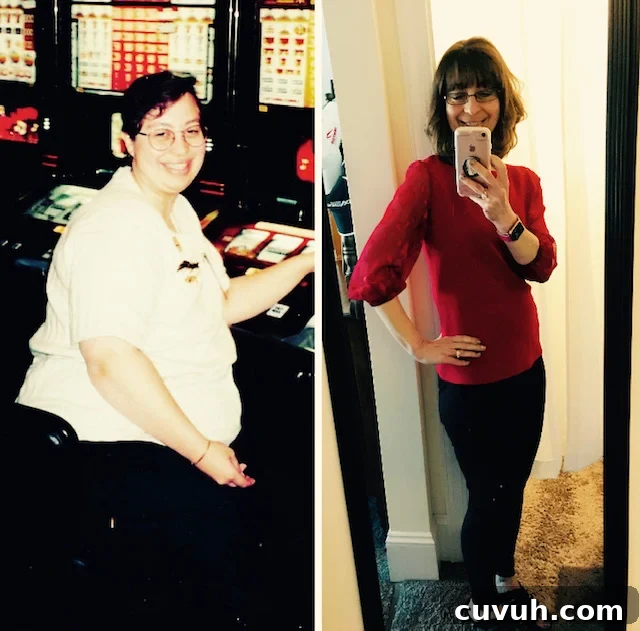
When I began my final weight loss journey I lost 80 pounds in the first year, hit a plateau in the second year, then lost another 20 pounds in the third year. That brought me to a total of 100 pounds lost, which I maintained for over a decade. I had some loose skin on my thighs, tummy, and arms, along with a bit of remaining body fat.
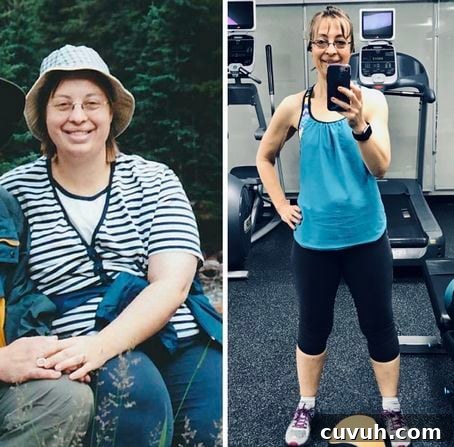
Over the following years I maintained my weight within about a 20-pound range. In 2021 I adopted a whole-food, plant-based diet and lost an additional 20 pounds, bringing my total weight loss to 130 pounds from my highest weight. I’m shorter in stature, and factors such as age and menopause have affected my skin’s appearance as well.
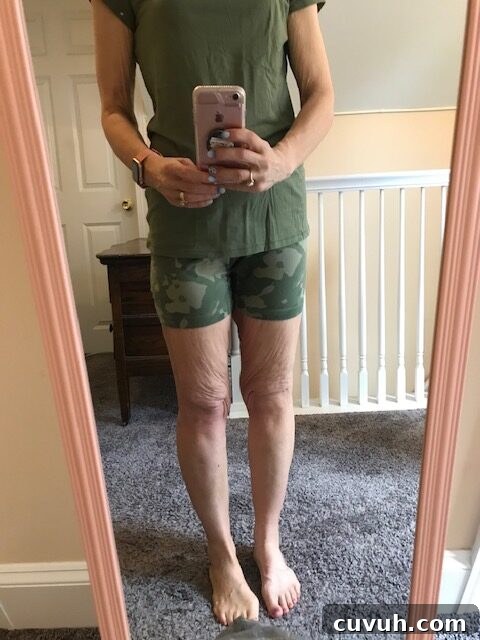
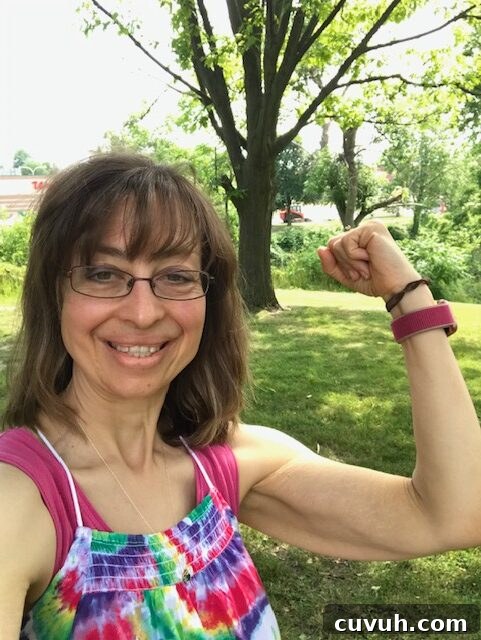
The photos below show what my loose skin looks like now. I have the most loose skin on my thighs, some on my arms, and a small tummy pooch. Weight training and cardio help build muscle and improve overall shape, but they don’t completely eliminate loose skin.


What Can I Do about Loose Skin after I Lose Weight?
Many people ask whether loose skin will go away and what they can do to prevent sagging while losing weight. The most important point is this: losing excess weight is far healthier than staying overweight out of fear of loose skin. Carrying excess weight increases the risk of serious health problems, whereas loose skin is largely a cosmetic or quality-of-life concern.
Realistic approaches and considerations:
- Accept that every body has imperfections and focus on health and function rather than appearance.
- Strength training helps build muscle and improve body contours, which can reduce the visual impact of loose skin.
- Hydration and proper skin care can improve skin appearance but will not fully reverse major sagging.
- Compression garments and shapewear can make activities more comfortable and provide a smoother silhouette.
- Surgical options such as body contouring, arm lifts, or tummy tucks can remove excess skin; costs and recovery vary and insurance may cover procedures if there are medical issues like recurrent infections.
- No cream, machine, or miracle product reliably removes large amounts of excess skin—the key factors are age, genetics, and how much and how long the skin was stretched.
- Work on mindset and self-acceptance. Improving how you view your body often makes a bigger difference than changing the skin itself.

Frequently Asked Questions (FAQ) about Excess Skin After Losing Weight
Some tightening often occurs over time, especially in younger people. However, if you had a lot of weight to lose or are older, the skin may not fully retract.
Is there anything I can do during weight loss to prevent saggy skin?
There is no guaranteed way to prevent loose skin. Genetics, age, and the amount of weight carried are the main factors. Maintaining muscle mass through resistance training and staying hydrated can help the skin’s appearance.
Why do I have loose skin on my breasts, belly, arms, or thighs after weight loss?
Fat distribution varies by person. Skin in areas that carried more fat may not fully tighten after the fat is lost.
How do I tighten loose belly skin?
Some retraction can occur over time; resistance training improves muscle tone and contour. Topical moisturizers can improve texture but won’t eliminate large amounts of excess skin.
How much does it cost to remove loose skin with surgery?
Surgical costs vary widely based on the procedures chosen and geographic location. If excess skin causes medical issues, insurance may cover part of the cost.
Your health matters most. If excess skin causes physical problems or significant emotional distress, discuss surgical and non-surgical options with a qualified professional. But don’t let fear of loose skin stop you from losing weight and improving your overall health. Many people view loose skin as a manageable part of an otherwise life-changing achievement.
More Weight Loss Posts for You
5 Things I am Embarrassed to Tell You About My Weight Loss Journey
When You Have a Lot of Weight to Lose
How to Choose the Goal Weight that’s Right for You
50+ Plant Based Weight Loss Recipes
Pin this Weight Loss Journey Post for Later