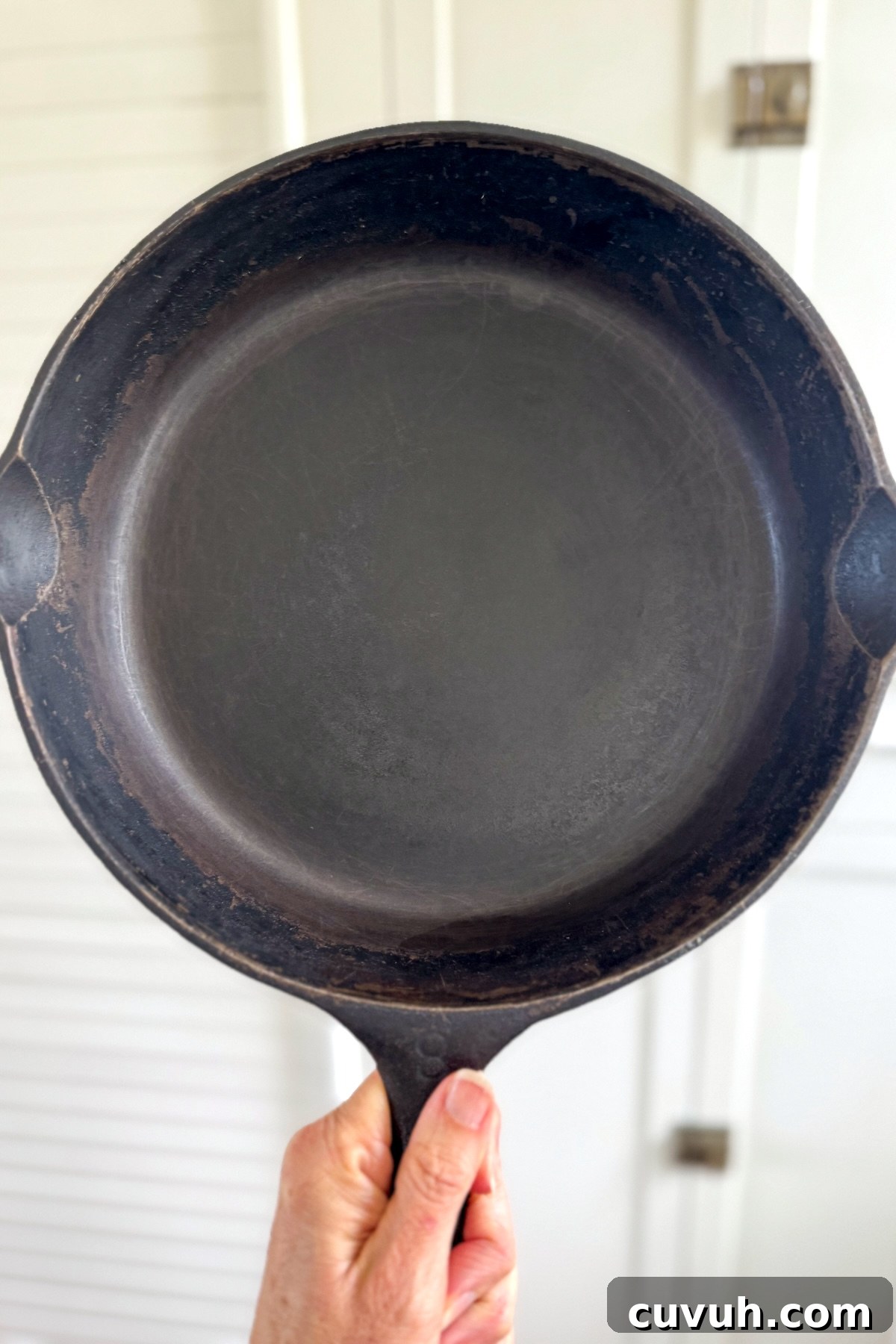
Have you ever wondered how to clean a cast iron skillet or how this durable pan can replace your nonstick cookware? In this guide I share what finally worked for me — from removing stuck-on food and rust to keeping cast iron well-seasoned — plus the single tip that made me stop buying nonstick pans. If you’ve had a love-hate relationship with cast iron, read on to say goodbye to rust and sticky food and hello to reliable, evenly cooked meals.
✩ What readers are saying…
“THAAAAAAAANK YOU!!!! I am one of those who heard how great they were, bought them, got frustrated and put them in the back of the pantry. This post gives me new hope!! Again…. THANK YOU!!!!!!” -Mackenzie
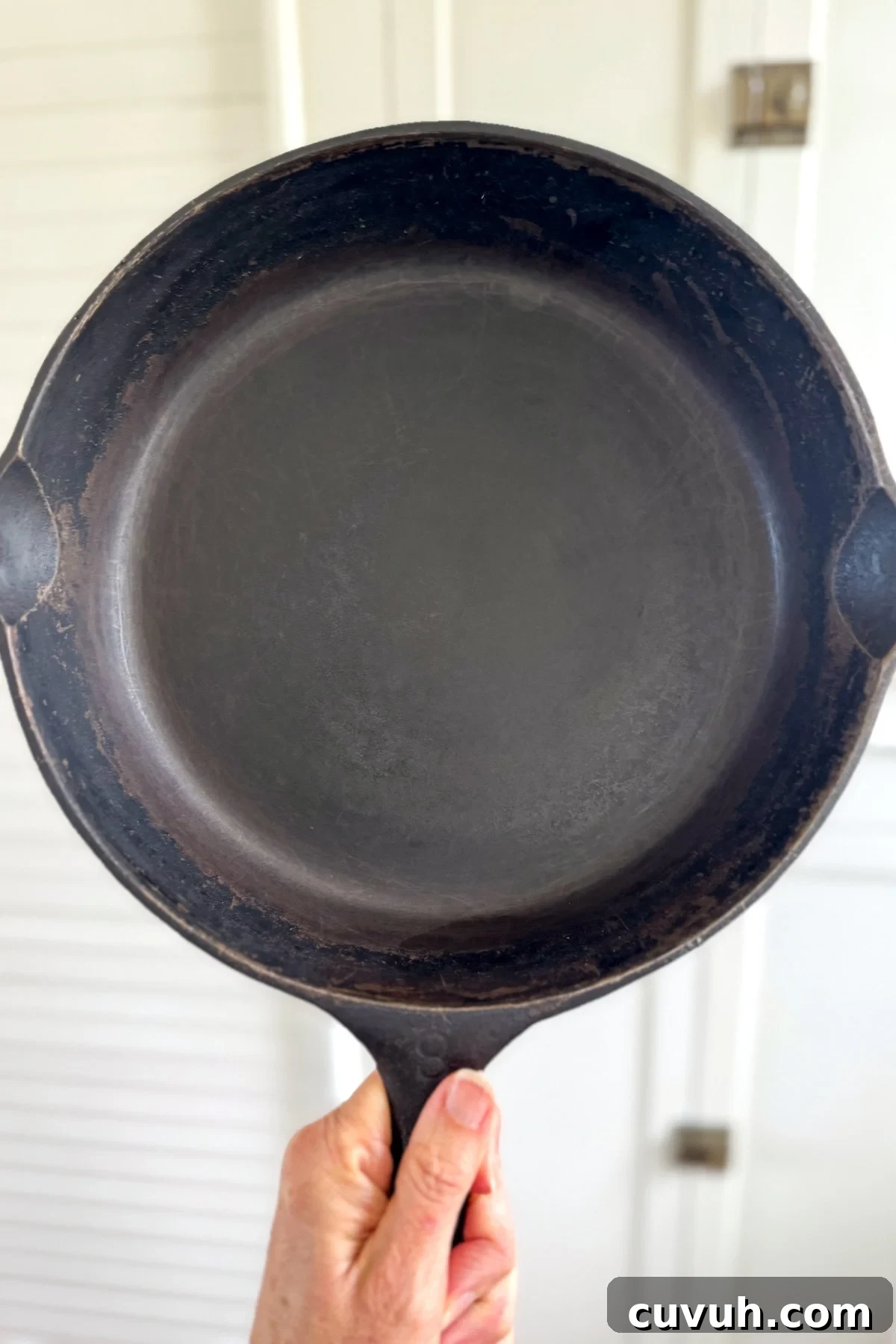
I’m excited to share how I finally learned to use cast iron successfully. For years mine stuck constantly — eggs, meat, everything — and I nearly gave up after about twenty years of frustration. I inherited a used pan early in my marriage and, despite hearing how great cast iron is — long-lasting, naturally nonstick when seasoned properly, and great at even heating — I couldn’t get it to behave. Scrubbing it hard only made things worse, stripping whatever layers it had.
After replacing nonstick pans multiple times because their coatings were peeling, I decided I wanted cookware that lasts. I researched how to restore and care for cast iron and followed a straightforward method to clean rust and re-season my pan.
How to Clean a Rusty Cast Iron Skillet
If your skillet is rusty, you can restore it with a few simple steps:
- Gently scrub any rust away with plain steel wool (not the kind with cleaners or added chemicals).
- Wash and dry the skillet thoroughly. I dry mine over the stove for a few minutes on medium heat.
- Coat the inside and outside with a layer of fat (see recommendations below).
- Place the pan upside down in a 350°F oven for one hour, then let it cool in the oven.
- Repeat the oiling and heating process as needed to build a solid seasoning; I did two rounds for my rusty pan.
My #1 Tip To Finally Loving Cast Iron
The single change that transformed my cast iron was the fat I used to season it. Instead of industrial vegetable oils like canola or corn, I used rendered animal fat — specifically, bacon grease. You can also use lard or coconut oil. Avoid olive oil for seasoning because its low smoke point makes it less suitable for building durable seasoning.
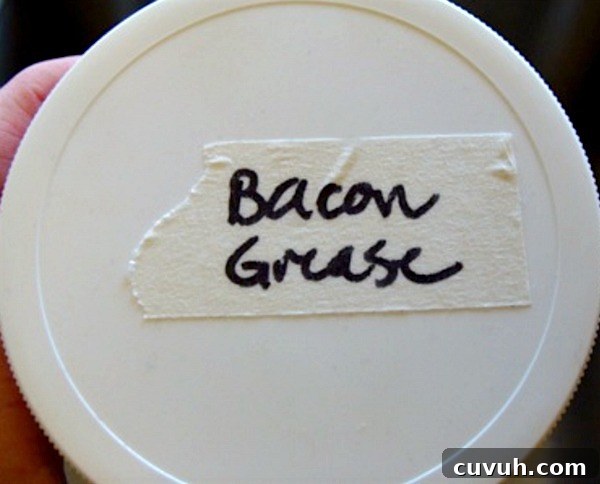
I like bacon grease because it’s free if you cook bacon, and it behaves similarly to rendered lard when used sparingly to build layers of polymerized fat on the pan’s surface. The result is a stable, nonstick seasoning without the off smell I used to get from industrial oils.
Why the coating matters
Industrial vegetable oils are processed and oxidize differently than rendered animal fats. Over time they can create sticky residues and that unpleasant “old oil” smell on pans. Using rendered fats like bacon grease, lard, or stable saturated oils helps build a resilient, pleasant-smelling seasoning. When applied in very small amounts (less than 1/8 teaspoon for routine upkeep) they don’t leave a bacon flavor or obvious smell in normal cooking.
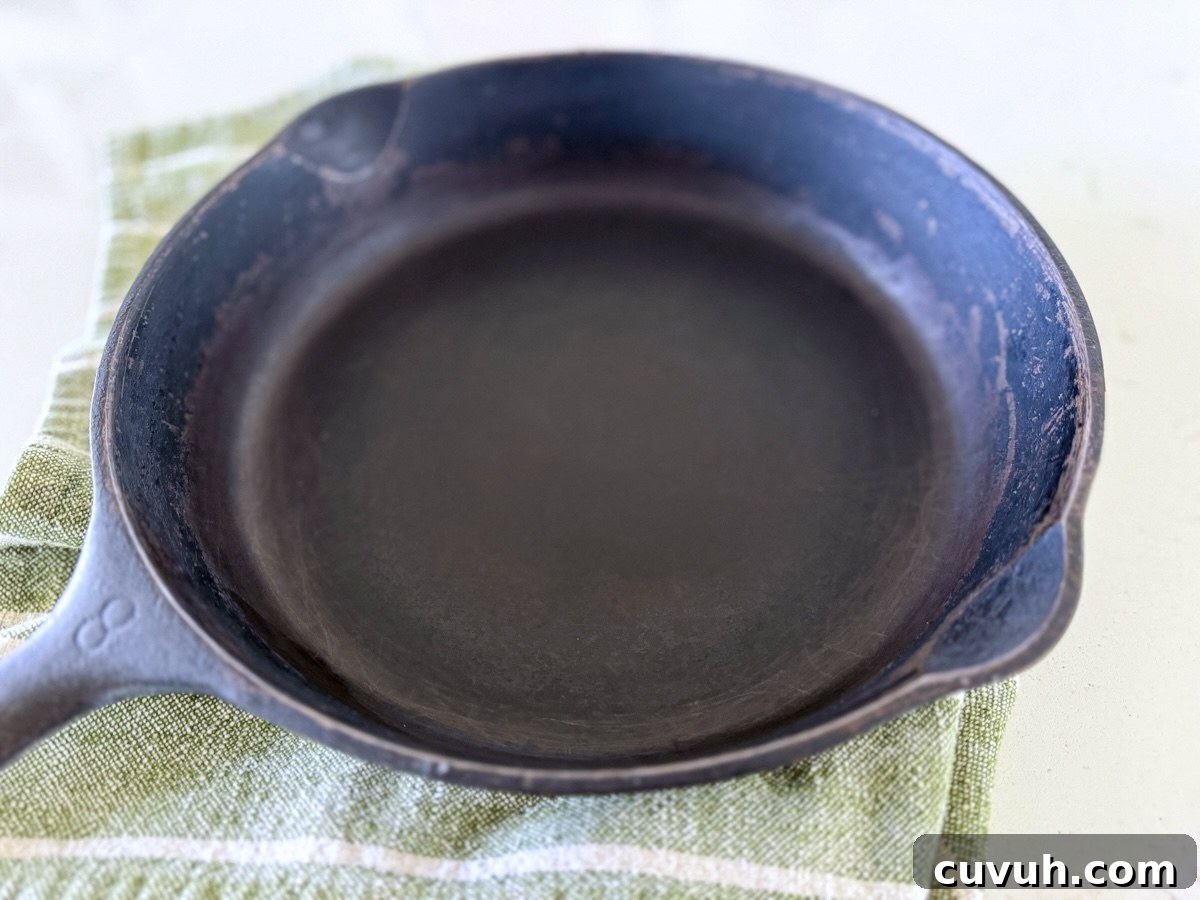
Does food taste like bacon after seasoning with bacon grease? I wondered the same thing. During re-seasoning the pan smells like bacon briefly, but in everyday cooking there’s no noticeable bacon flavor. You use very little fat to maintain the seasoning, and it’s best to use the clear rendered portion of the grease.
The ultimate test for me was scrambled eggs. After re-seasoning, I initially cooked greasy foods to build more seasoning — bacon, sautéed mushrooms, browned ground beef — and then tried scrambled eggs. I was thrilled to find eggs no longer glued to the pan. Over time the surface has become almost fully nonstick.
How to Clean A Cast Iron Skillet: Step-by-Step
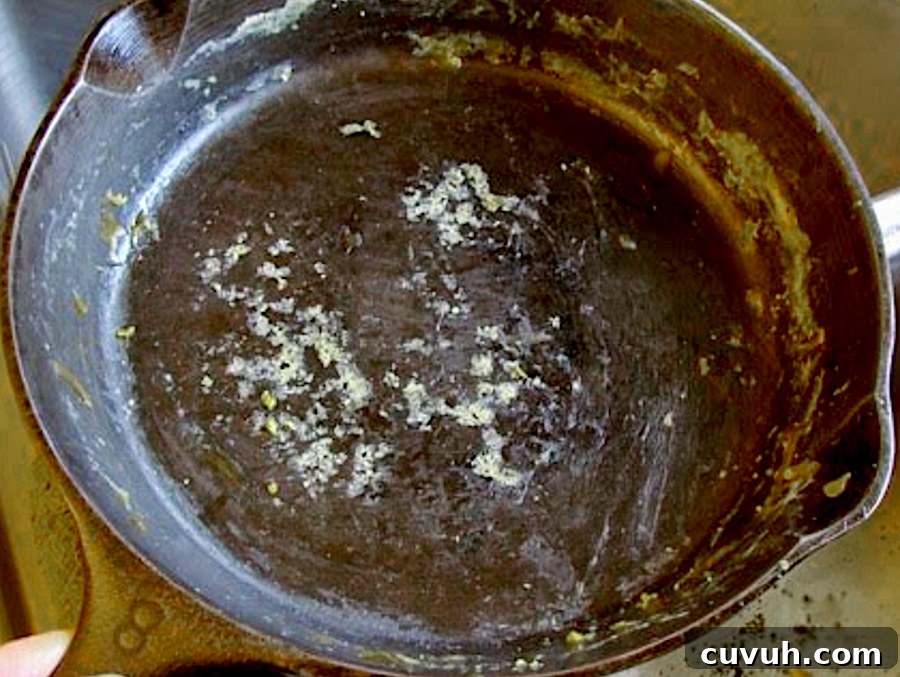
Step 1: Remove cooked-on residue. Tip: after serving, leave a little water in the pan on the stove until you’re ready to clean it.
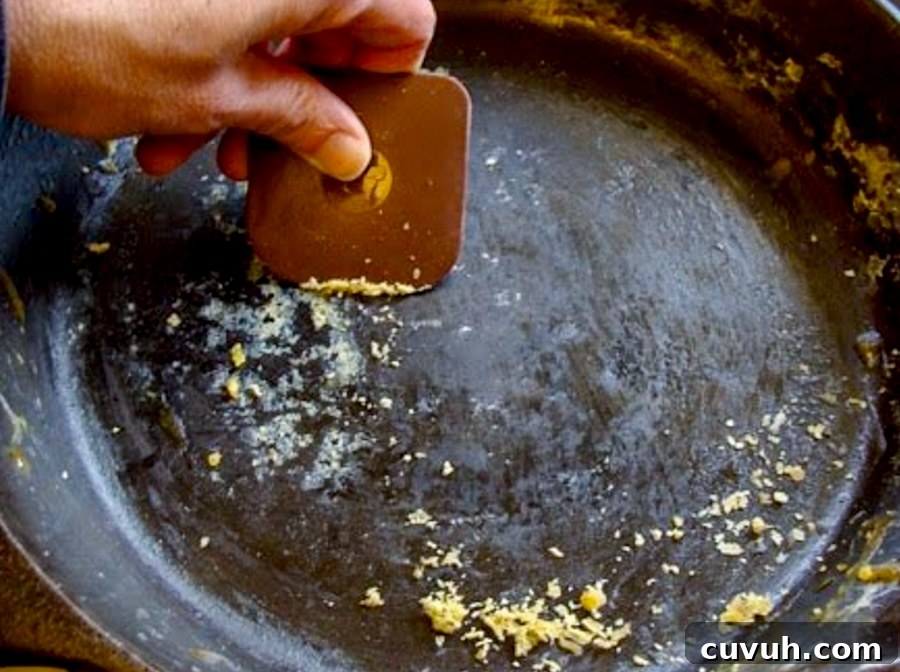
Use a non-metallic scrubber — plastic, walnut, or a rubber scraper — so you don’t damage the seasoning.
Tip: Coarse salt is a traditional abrasive for tough stuck-on bits. I avoid waste, but salt works well for residue after browning meat.
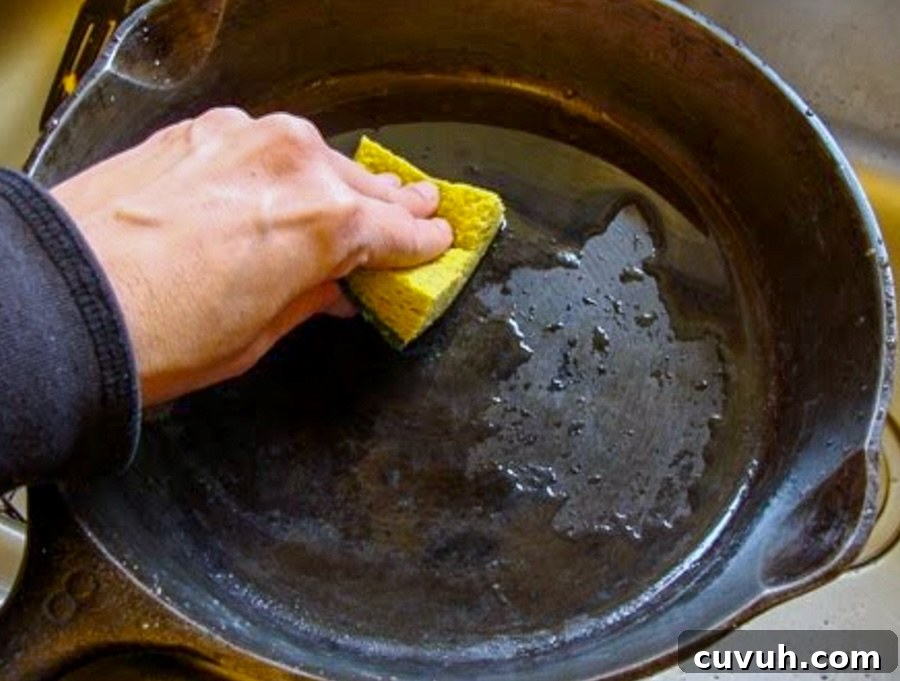
Step 2: Wash with hot water only (no soap) when possible. Occasional mild soap is okay if needed, but heavy detergents can strip seasoning. A walnut scrubber or the scrub side of a sponge usually does the job without damaging the seasoning.
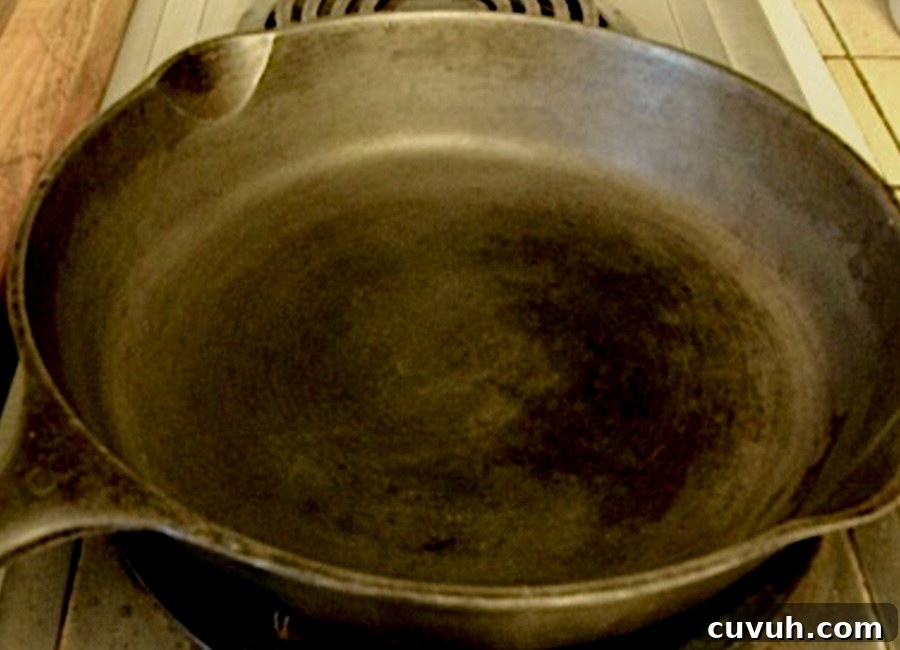
Step 3: Dry thoroughly on the stove. Heat for a minute or so on medium-high to evaporate any moisture — don’t leave it unattended.
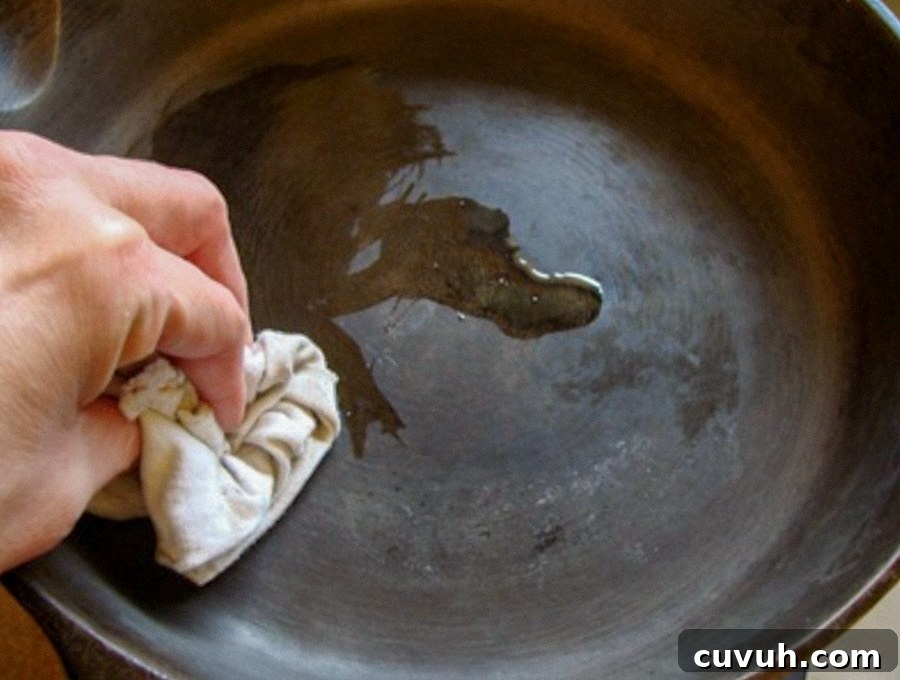
Step 4: Season. Remove the pan from the burner, turn it off, and use a cotton rag or paper towel to apply a thin smear of bacon grease (or lard/coconut oil) all over the inside of the warm pan. Apply a light coat to the outside occasionally when it looks dry.
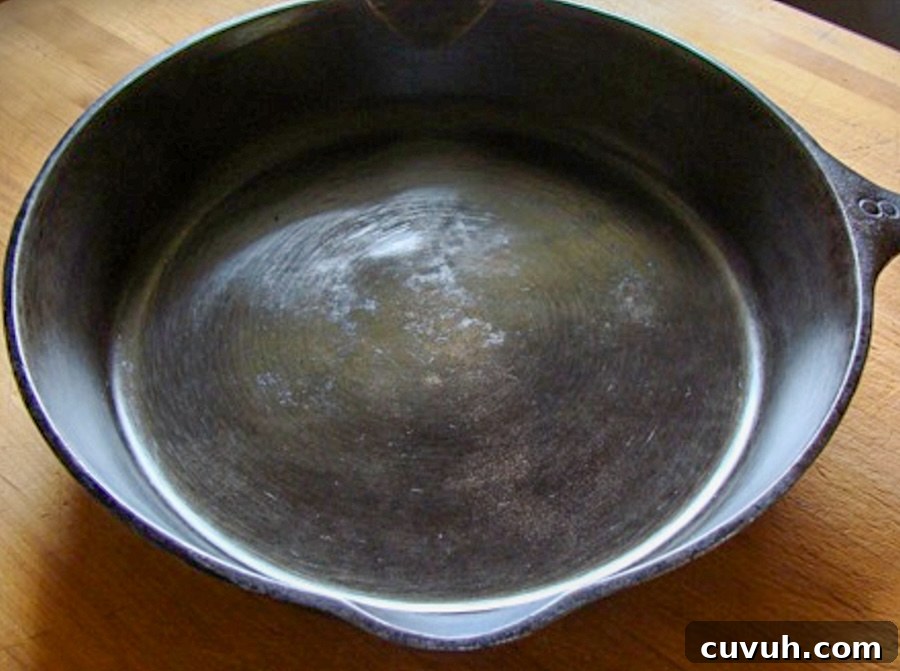
Step 5: Let cool on the still-warm burner before storing. This helps set the seasoning.
That’s all it takes. It’s a little more hands-on than rinsing a nonstick pan, but the payoff is cookware that lasts and performs better over time.
Common question:
“When I wipe the pan after seasoning the paper towel looks gray and ashy. Is that normal?”
Yes — that gray residue is iron and loose seasoning. It’s not dirt, and you shouldn’t scrub it all away because the built-up seasoning is what creates the nonstick surface.
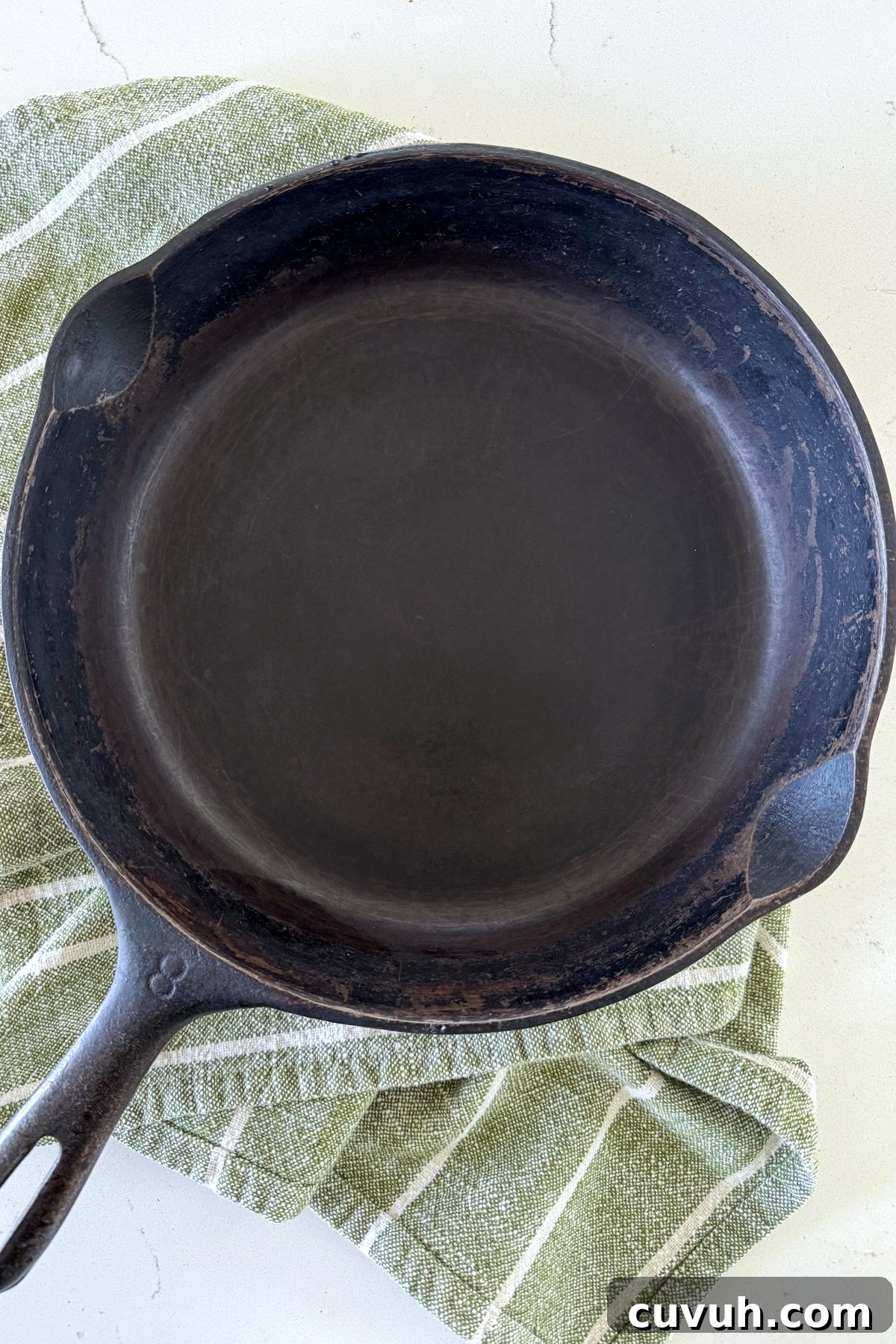
Tips to Maintain Cast Iron
- Follow these cleaning steps every time you use the skillet to keep a bright, seasoned surface that performs like nonstick.
- Regularly cook items with a bit more fat — bacon, browned ground beef, fritters or other sautéed foods — to help maintain seasoning.
- If seasoning seems thin, re-season with a layer of fat and heat in the oven or on the stove as described above.
- Avoid long simmering of acidic foods such as tomato sauces in cast iron; acid can strip seasoning. Reserve long tomato-based cooking for stainless steel if you don’t want to risk the seasoning.
With routine care these pans become second nature to use and can easily replace disposable nonstick cookware in your kitchen.
Reader Raves
“You are far from alone! I have two cast iron pans that are currently sitting in my pantry shelf… This has given me the gumption to drag them out, clean them up and season them! Thanks for the quick tips and I also never gave the bacon grease thing a thought!” -Sue
“I started off many years ago trying to season and use a cast iron pan, but with no luck. I gave up and switched to nonstick, but now I’m going to give it a try again.” -Erika
“My husband insisted on seasoning with bacon grease and now cleanup is a breeze and nothing sticks!” -Kylie
Have you had problems with cast iron, or do you already love it? Share your experience in the comments — you’re not alone.
How to Clean and Maintain Cast Iron
5 mins
5 mins
Materials
- Any cast iron skillet, pot, or pan
- 1 rubber scraper or other non-metallic scraper
- Sponge or dish cloth
- 1/8 teaspoon bacon grease (or lard, or coconut oil)
- Small cotton rag or paper towel
Instructions
- Step 1: Remove any cooked-on residue using a plastic or walnut scrubber. Tip: After serving, leave a bit of water in the pan until you clean it.
- Use coarse salt rubbed with a sponge if food is really stuck on.
- Step 2: Wash with hot water (avoid soap when possible).
- Step 3: Dry the pan on the stove for a minute or so on medium-high heat. Set a timer; don’t walk away.
- Step 4: Season: with the pan warm and off the burner, rub a thin smear of bacon grease over the inside with a rag or paper towel. Add to the outside if it looks dry.
- Step 5: Let cool on the warm burner before storing.
To Maintain Cast Iron
- Repeat these cleaning steps after each use to keep a shiny, seasoned surface.
- Cook fatty foods regularly and avoid long simmering of acidic dishes in cast iron.
- If seasoning wears thin, re-season using the oven method described above.
To Re-Season (and remove rust, if needed)
- Gently scrub rust with plain steel wool.
- Wash and dry the skillet, then coat inside and outside with bacon grease, lard, or coconut oil.
- Place upside down in a 350°F oven for one hour, then let cool in the oven.
- Repeat as needed.
More Reader Tips
This post originally appeared in 2011 and was one of my early viral pieces. People shared their own restoration and maintenance tips in the comments. A few reader suggestions worth noting:
- Renewing a rusted pan: Some readers use oven cleaner in a sealed bag outdoors to strip old layers, followed by rinsing, vinegar rinse to neutralize, and thorough washing before re-seasoning. Others use a self-cleaning oven cycle to ash off residue, then re-season.
- Cleaning with oil: Once a pan is well seasoned, some cooks wipe it clean with a little oil instead of water. If anything remains, a touch of hot water can help; avoid long soaking.
- Oiling frequency: Many readers find they don’t need to apply oil after every single use — frequent cooking with butter or other fats helps maintain the seasoning.
- Preheat your pan: Preheating helps the seasoning perform. Warm the pan on low or medium, then add your cooking fat and proceed. Avoid high heat and leaving the pan unattended.
More Easy Cooking Tips
- How to Freeze Bacon Slices for Recipes, Convenience & Storage
- Kitchen Tip: Easy Way to Stir Natural Peanut Butter
- 17 Healthy Pantry Staples For Quick Meals + Recipes