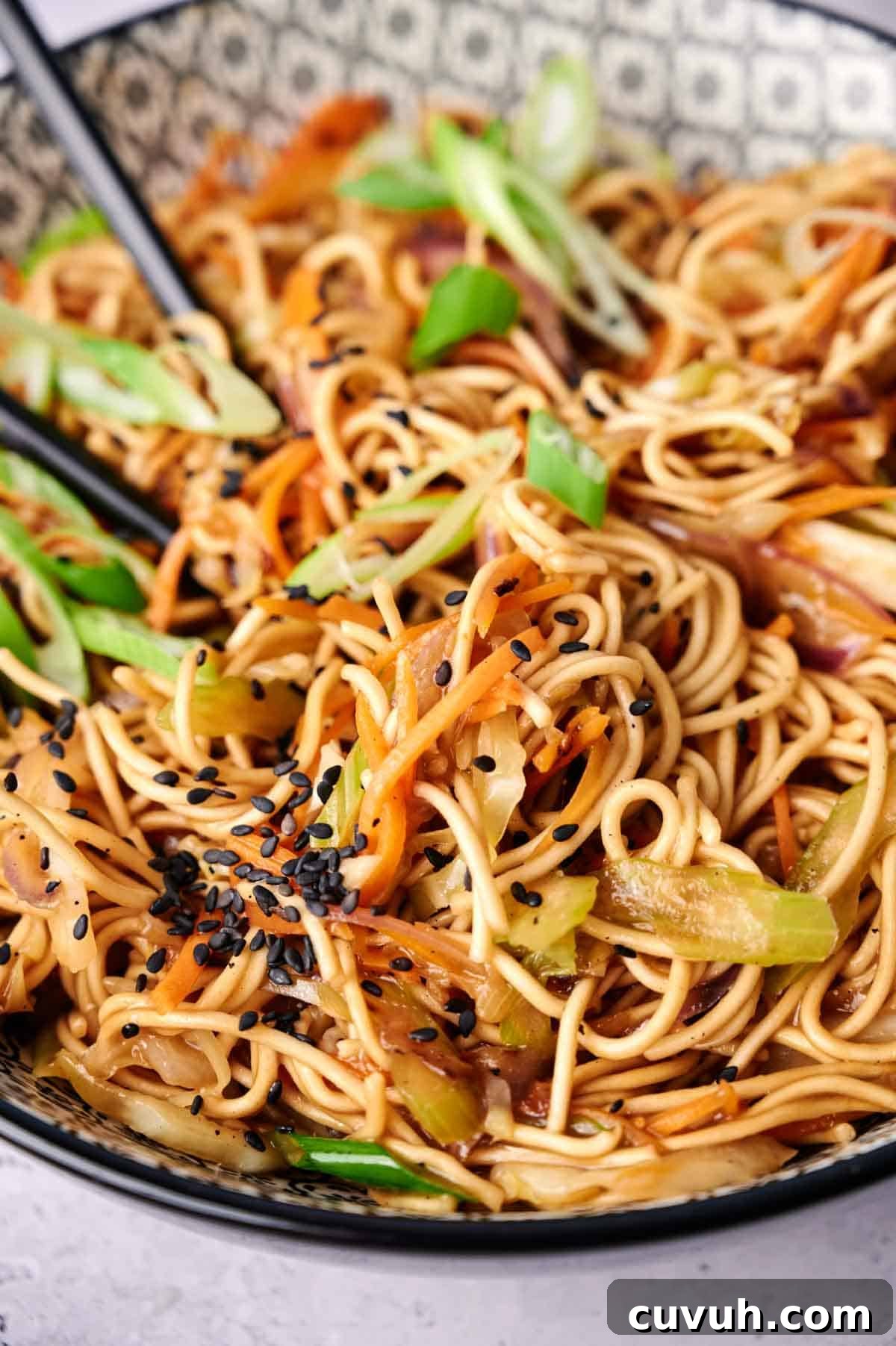
This easy Chow Mein recipe recreates a classic takeout favorite at home—no delivery required. Tender noodles are tossed with crisp vegetables and a savory, slightly glossy sauce for a quick, satisfying dinner that’s full of flavor. It’s fast to prepare, highly customizable, and ideal for busy weeknights.
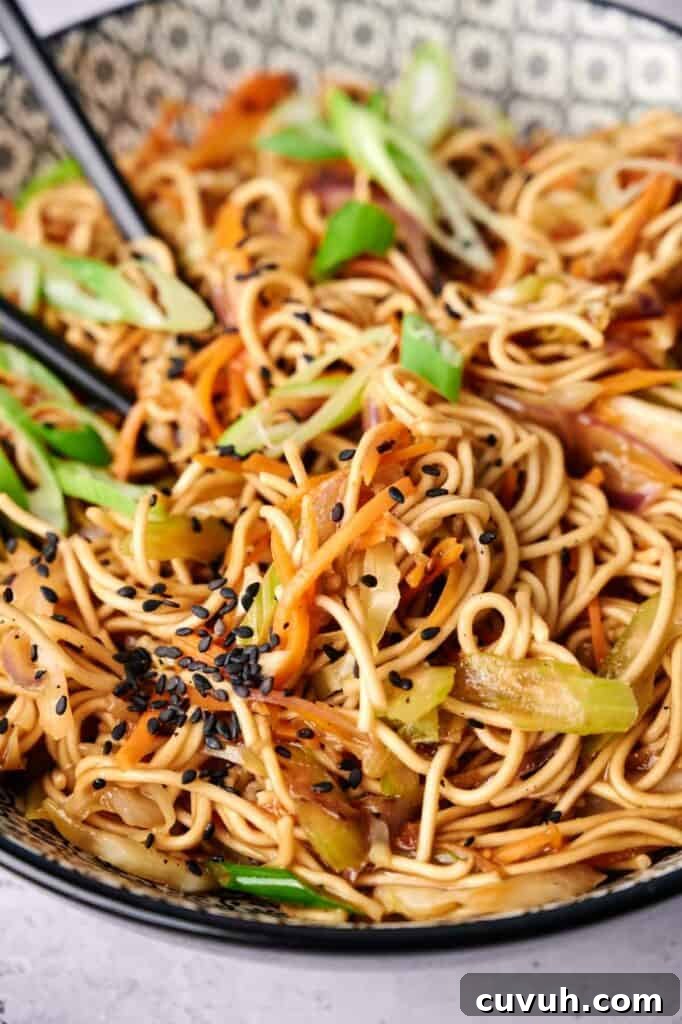
Why you will love making Chow Mein
Making Chow Mein at home is a game-changer. It’s fast, flexible, and lets you control ingredients and seasoning. Below are the main reasons this recipe shines:
- Quick and Easy: Ready in about 20 minutes, faster than ordering in.
- Customizable: Use any vegetables or protein you have—an excellent way to use up produce.
- Healthier Than Takeout: You control the oil, salt, and sauces to suit your diet.
- Flavorful: Soy sauce, oyster sauce, and toasted sesame oil create an authentic, savory profile.
- Family Friendly: Loved by kids and adults alike.
- Great Leftovers: Develops extra flavor overnight—perfect for next-day lunches.
Ingredients You’ll Need
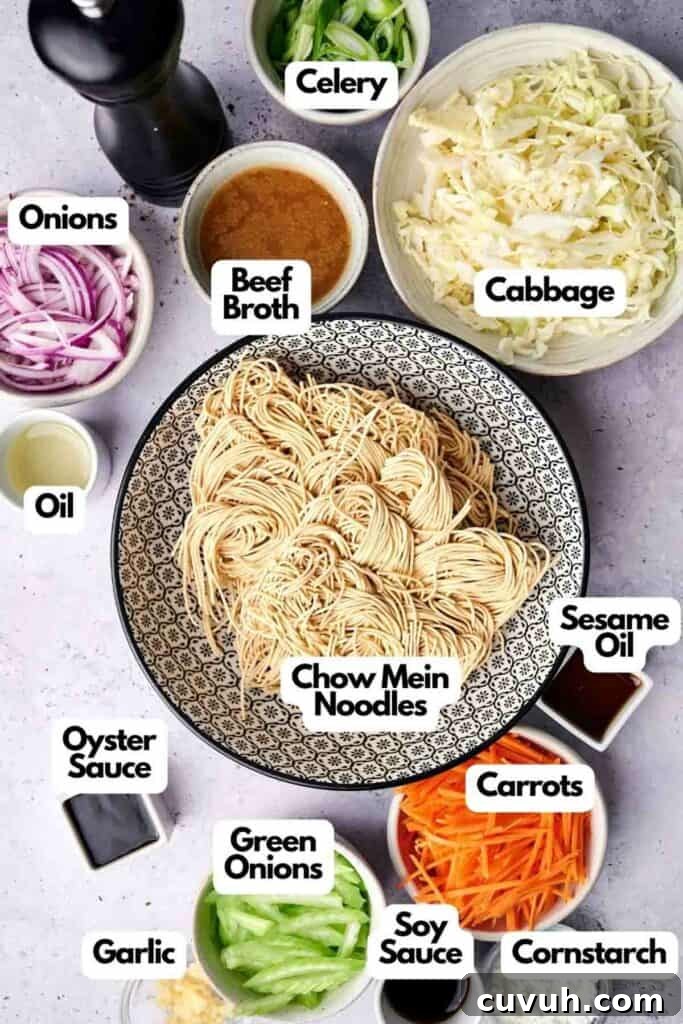
The ingredients shown in the photo include noodles, cabbage, celery, onion, carrots, green onions, sauces, and seasonings. Quantities are provided in the recipe card below.
How to make Chow Mein with Step-By-Step Instructions
A printable recipe card with exact measurements in US customary and metric units is included below. Follow these steps for a reliable result:
Prepare the Sauce
In a small bowl, combine soy sauce, oyster sauce, toasted sesame oil, minced garlic, beef broth, and cornstarch. Stir thoroughly so the cornstarch dissolves and the mixture is smooth.
Cook the Noodles
Bring about 3 cups of water to a boil and soak the chow mein noodles for 6–7 minutes or until just soft. Drain well and set aside. Avoid overcooking—they’ll finish cooking in the wok.
Stir-Fry the Veggies
Heat a wok or large skillet over medium-high heat and add vegetable oil. When hot, add cabbage, celery, onion, and carrots. Sauté for a couple of minutes until the vegetables begin to soften but remain crisp.
Combine and Cook
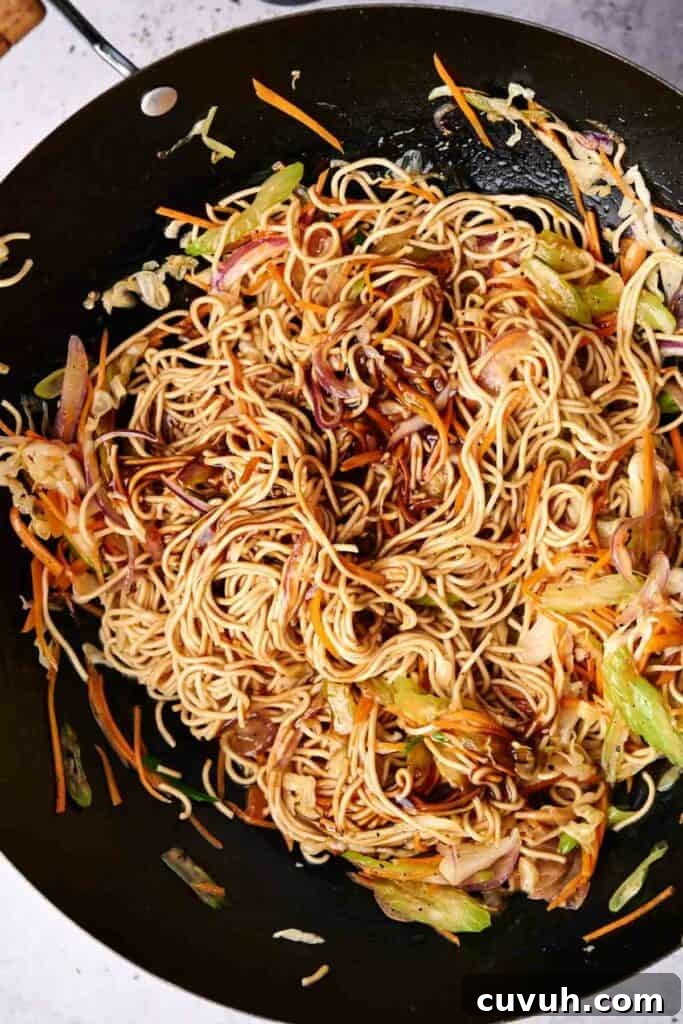
Pour the prepared sauce over the vegetables, then add the drained noodles. Toss well so the noodles are evenly coated. Cook for a few minutes until the sauce thickens and clings to the noodles.
Serve and Enjoy
Finish with sliced green onions and a sprinkle of sesame seeds. Serve hot and enjoy your homemade, steamy plate of chow mein.
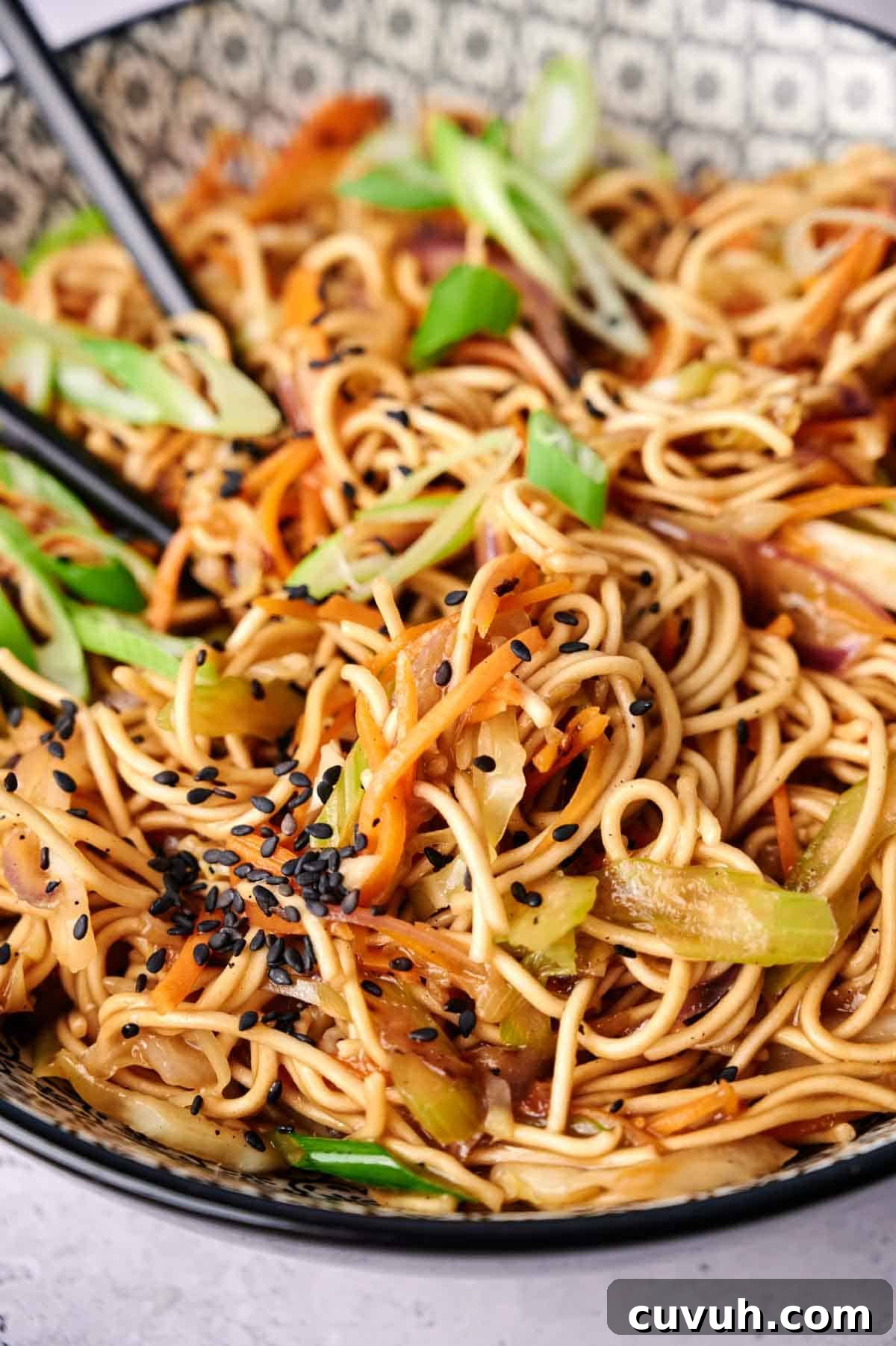
Chow Mein Recipe (Better Than Takeout!)
Ingredients
- 16 ounces chow mein noodles
- 2 tablespoons vegetable oil
- 2 cups thinly sliced cabbage
- 1 cup thinly sliced celery
- 1 red onion, sliced
- 2 small carrots, thinly sliced
- 2 green onions, thinly sliced
- Sesame seeds, for garnish
For the sauce:
- 4 tablespoons soy sauce
- 4 tablespoons oyster sauce
- 2 tablespoons toasted sesame oil
- 2 cloves garlic, minced
- 1/2 cup beef broth (swap for vegetable stock to make vegetarian)
- 1 tablespoon cornstarch
Instructions
- In a small bowl, whisk together the sauce ingredients until the cornstarch is fully dissolved. If it settles, stir again before using.
- Bring 3 cups of water to a boil. Soak the chow mein noodles for 6–7 minutes or until just soft. Drain and set aside.
- Heat a wok over medium-high and add the vegetable oil. When hot, add cabbage, celery, onion, and carrots. Sauté for a couple of minutes until they begin to soften.
- Add the sauce to the vegetables, then toss in the noodles. Mix well and cook for a few minutes until the sauce thickens and coats the noodles.
- Serve topped with green onions and a sprinkle of sesame seeds.
Notes
- Noodle Prep: Do not overcook the noodles. Rinse under cold water after boiling to stop cooking and remove excess starch.
- Noodle Substitutes: Spaghetti, egg noodles, or linguine can work—cook al dente. Rice noodles are a gluten-free option.
- Soy Sauce: Light or dark soy sauce both work. Use tamari for a gluten-free version.
- Sauce Thickness: If the sauce is too thin, mix a little more cornstarch with water and stir in gradually until it thickens.
- Meat or Seafood: Add cooked chicken, beef, or shrimp if you want more protein—cook and set aside before stir-frying the vegetables.
- Vegetarian: Swap beef broth for vegetable stock and replace oyster sauce with a vegan alternative.
- Spice: Add chopped chili or hot sauce to taste.
- Other Vegetables: Snap peas, bok choy, broccoli, bean sprouts, bell peppers, or fresh ginger are excellent additions—add according to their cooking times.
Storage and Reheating Instructions
- Cool and Airtight: Cool to room temperature before storing in airtight containers.
- Refrigerate: Keep leftovers in the fridge and consume within three days.
- Reheat: To reheat, add a splash of water and briefly stir-fry on high heat to restore texture. Avoid microwaving when possible.
Nutrition
Recipe Notes and Expert Tips
Use these tips to ensure great results every time you make chow mein.
- High Heat: Maintain medium-high heat while stir-frying so vegetables stay crisp and the sauce reduces quickly.
- Fresh Ingredients: Fresh vegetables give the best texture and flavor—slice them uniformly for even cooking.
- Adjust Seasonings: Taste and tweak soy, sugar, or garlic as needed to suit your preferences.
- Timing: Add vegetables according to how long they take to cook so everything finishes at the same time.
How to Store Leftover Chow Mein
Proper storage preserves quality and safety. Cool the chow mein to room temperature, transfer to airtight containers, refrigerate, and eat within three days. For best texture, reheat in a hot skillet with a splash of water rather than using the microwave.
Our Top 3 Money-Saving Tips for This Recipe
These simple strategies keep costs down while delivering great flavor:
- Use a Wok: A wok cooks quickly and evenly, saving oil and energy.
- Make Homemade Stock: Use vegetable scraps and bones to create stock instead of buying it.
- Prep In-House: Buy whole vegetables and slice them yourself rather than buying pre-cut produce.
What to Serve with Chow Mein
Balance your meal with light, complementing sides and proteins.
Side Dishes
A cucumber salad with a light vinegar dressing or a shredded carrot salad with sesame dressing provides a refreshing contrast to the savory noodles.
Proteins
Serve additional proteins like kung pao chicken, teriyaki chicken, Asian-style pork chops, or sesame-crusted tofu to round out the meal. These pair nicely with the flavors in the chow mein.
Soups
A light miso soup or hot and sour soup makes a soothing starter that complements the main course.
More Comfort Food Recipes You Will Love
- Elevated Ramen Noodles
- Panda Express Honey Walnut Shrimp
- Korean Corn Dogs Recipe
- Chicken Noodle Soup Recipe
- Tuna Noodle Casserole Recipe